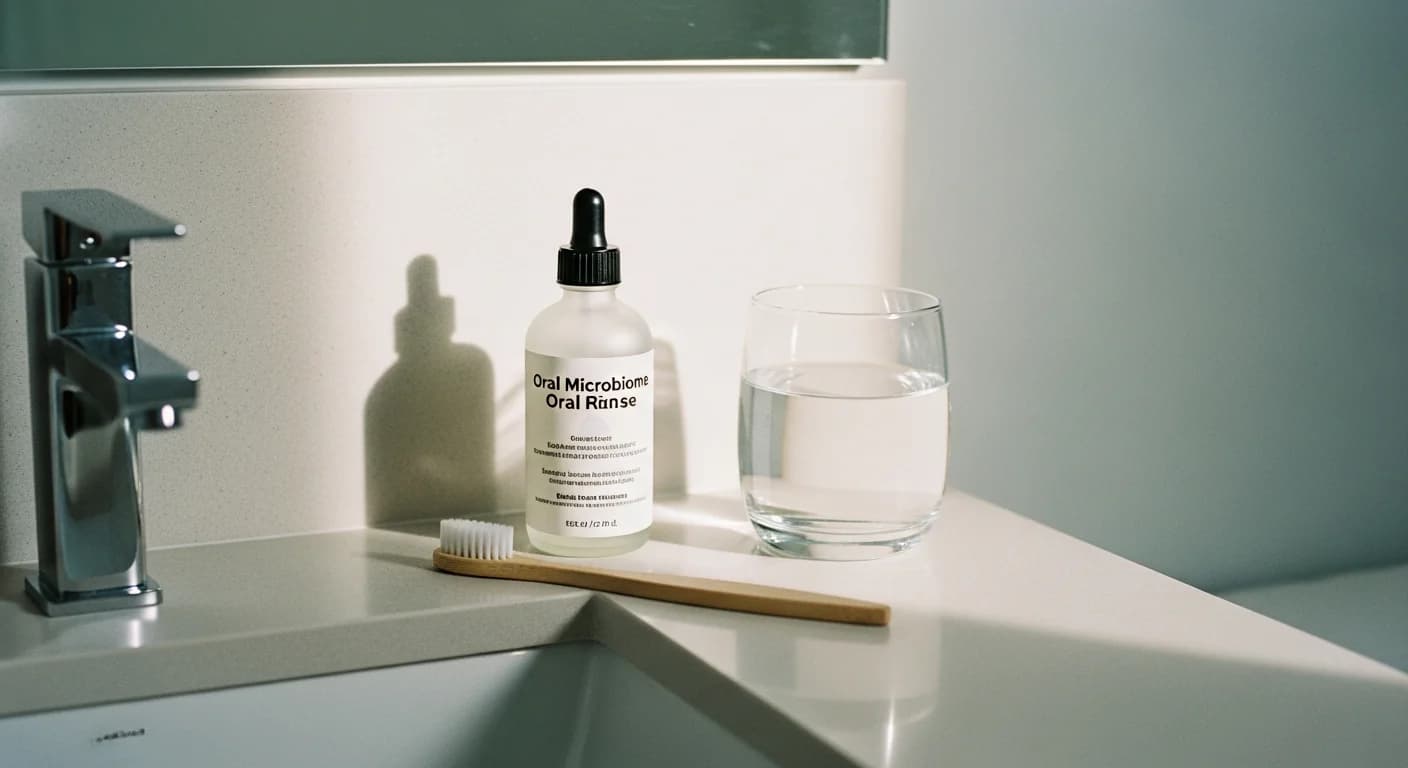

Tonsil stones are not really food stuck in the throat. They are tiny calcified clumps of bacteria that build up in the deep pockets of the tonsils. The fix usually combines a specific oral probiotic (BLIS K12), gentle hygiene like a low-pressure water flosser, and cutting back on dairy.
It is rarely just "food stuck in the throat." It is usually an oral microbiome imbalance.
- The Root Cause: Tonsil stones (tonsilloliths) are tiny calcified clumps of bacteria, also called biofilms. They form when certain sulfur-emitting bacteria settle into the deep pockets, called crypts, of your tonsils.
- The Probiotic Fix: We use Streptococcus salivarius K12, sold as BLIS K12. This is a friendly mouth bacteria that releases proteins to crowd out the stone-forming bacteria.
- The Dairy Connection: Dairy can drive thick, calcium-rich mucus that acts like the "glue" for tonsil stones. For many patients, a temporary dairy break is the most useful single change.
Why Do Tonsil Stones Keep Coming Back?
Tonsil stones keep coming back when the balance of bacteria in your mouth has shifted. In my practice, I often see patients who are otherwise very healthy. They are active, they brush and floss, and they still deal with these stones. The mechanism makes sense once you see it.
In a balanced oral ecosystem, the mouth is dominated by a beneficial bacteria called Streptococcus salivarius. In stone formers, this protective strain has often been pushed out by anaerobes (bacteria that grow without oxygen) and other opportunistic microbes. These "bad tenants" hide deep in the tonsil crypts, feed on mucus and cellular debris, and slowly calcify into stones.
Guidance from the Clinic
"I often see tonsil stones appear after a round of broad-spectrum antibiotics. The medication wipes out the native 'security guard' bacteria in the mouth, and the stone-forming bacteria move into the empty space. So we clear the area and then repopulate the neighborhood."
Who Is This Plan For?
This plan is for adults whose tonsil stones come from microbiome imbalance rather than an active infection.
Primary candidates:
- The "healthy" stone former: You are 20 to 40, generally well, but deal with persistent stones despite good oral hygiene.
- Chronic halitosis (bad breath): Your breath does not improve with brushing because the source is further back in the throat rather than on the teeth.
- Post-antibiotic cases: You noticed this issue started after a course of antibiotics for an unrelated problem.
Who This Is Not For
- Active strep throat: If you have a fever, white pus patches on the tonsils, and severe pain, we need to rule out an active infection first. This strategy is for prevention, not acute care.
- Severe tonsil enlargement: If your tonsils are very large ("kissing tonsils") and cause sleep apnea or block your airway, you need a structural solution. That usually involves an ENT (ear, nose, and throat specialist) evaluation.
What Is the Step-by-Step Plan to Stop Tonsil Stones?
The plan to stop tonsil stones works in three phases: clear the environment, reseed the friendly bacteria, then cut off the fuel that feeds the bad ones.
Phase 1: Clearing the Crypts (Weeks 1 to 2)
We need to clear the environment before friendly bacteria can move in.
- Low-pressure irrigation: A water flosser (such as a Waterpik) on the lowest setting can gently flush the crypts and dislodge visible stones. Please be gentle. High pressure can damage delicate tonsil tissue.
- Warm saltwater gargle: Twice daily (morning and night) helps loosen debris and soothe any inflammation in the crypts.
Fishtown Medicine
A 90-minute conversation with Dr. Ash. A written plan you can follow.
Phase 2: The Reseeding (Weeks 1 to 12)
- The specific strain: We use BLIS K12 (S. salivarius).
- Dose: 1 lozenge daily.
- Strategy: Brush teeth, then floss, then use mouthwash, then dissolve the lozenge on your tongue.
- Key step: This needs to happen last thing at night. We want the friendly bacteria to colonize the throat while you sleep, without being washed away by food or water.
- Brands: Look for products that name the specific K12 strain on the label. Examples include Nature's Plus (Adult Ear, Nose, and Throat), NOW Foods (OralBiotic), or Life Extension (Florassist).
Phase 3: The Fuel Cut (Maintenance)
- Dairy elimination trial: For many patients, cutting cow's milk and cheese is the single highest-yield change. Dairy tends to thicken mucus and provides the calcium and casein that act as "glue" for stones.
- Hydration: A dry mouth promotes calcification. Aiming for 2 to 3 liters of water daily keeps saliva thin and protective.
Case Study: The 35-Year-Old Fishtowner
- Profile: A 35-year-old man, an avid runner, otherwise healthy. He came in frustrated by a "constant feeling of something stuck in the throat" and weekly stone formation.
- The Pivot:
- We noticed his strong antiseptic mouthwash habit was likely killing his beneficial bacteria along with the bad ones.
- We started him on BLIS K12 nightly.
- He swapped the milk in his lattes for oat milk.
- The Outcome: Stone formation stopped after about 3 weeks. He now only notices recurrence when he eats heavy dairy or stops the probiotic for long stretches.
Actionable Steps in Philly
A simple, week-one starting plan.
- Buy a water flosser and use it on the lowest setting once a day: gentle, not intensive.
- Switch to an alcohol-free mouthwash or warm saltwater rinses: protect the friendly bacteria you still have.
- Start a BLIS K12 lozenge nightly after your full oral hygiene routine: last thing before bed, no food or water after.
- Trial 4 weeks without cow's milk and cheese: oat or almond milk are easy swaps.
- Hit 2 to 3 liters of water daily: a dry mouth is a stone-friendly mouth.
Scientific References
- Burton, J. P., et al. (2006). "A preliminary study of the effect of probiotic Streptococcus salivarius K12 on oral malodour parameters." Journal of Applied Microbiology.
- Zupancic, K., et al. (2017). "Microorganisms in the oral cavity and their role in human health and disease." Slovenian Medical Journal.
- Tagg, J. R., and Dierksen, K. P. (2003). "Bacterial replacement therapy: adapting germ warfare to infection prevention." Trends in Biotechnology.
- Ferguson, M., et al. (2017). "Tonsilloliths: A review of the literature." Journal of Otolaryngology.
Related at Fishtown Medicine
- Strep Throat Treatment - same-day evaluation for throat symptoms
- Sinus Infection Treatment - the upper-respiratory workup
- Same-Day Sick Visit - how same-day acute care works
- GERD and Gastritis - the reflux picture that shares the bad breath and throat-clearing symptoms
- A Lump in the Throat - what that stuck feeling usually turns out to be

Frequently Asked Questions
Common Questions
Deep-Dive Questions
Ready when you are
The chat is our AI assistant, answering from our published guides. To talk it through with Dr. Ash himself, start with the intake.