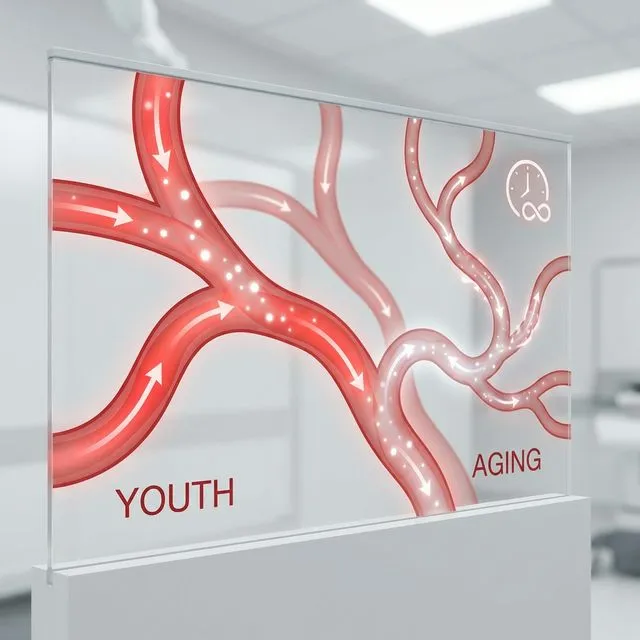

Biological age is how fast your body is breaking down, measured by changes in your DNA called methylation. The DunedinPACE test gives you a rate of aging score. Aging at 0.8 years per chronological year means you are buying time. Aging at 1.2 means you are speeding up.
We all know someone who looks 40 but is 55. We also know the opposite, the 30-year-old executive who looks worn out before their first meeting. Genes explain some of that. The rest is a measurable physiological state driven by methylation, the process by which your body turns genes on and off.
In my practice, I have watched two patients with the same birthday show very different aging rates on the same panel. One was a Fishtown bartender pulling double shifts on 4 hours of sleep. The other was a remote engineer in Northern Liberties walking the river trail every morning. Same age on paper. Different speedometer reading.
What is the difference between chronological and biological age?
Chronological age and biological age tell two different stories about how you are aging.
- Chronological age: Fixed. Moves forward at 1.0 year per year.
- Biological age: Malleable. Can move faster (greater than 1.0) or slower (less than 1.0) depending on inflammation, stress, and metabolic health.
If you are aging at a rate of 1.2 years per calendar year, your body is wearing down faster than time itself. If you are aging at 0.8 years per calendar year, you are effectively buying time.
Why do generic wellness biological age tests fall short?
Generic wellness biological age tests fall short because they rely on noisy blood markers that swing with everyday illness and stress. Many basic biological age tests on the market are built on blood markers like albumin, creatinine, and CRP (C-reactive protein, a marker of inflammation). This is called phenotypic age. It is useful, but it changes if you have a cold or a bad night of sleep.
We go deeper. We analyze DNA methylation, the chemical tags on your genome that turn genes on or off. Those tags are far more stable than a single blood draw, which means the signal is cleaner.
What is the DunedinPACE test and why does it matter?
The DunedinPACE test (Pace of Aging Calculated from the Epigenome) measures how quickly your body is aging right now, using methylation patterns from a blood sample.
Older clocks (like the Horvath clock) acted like an odometer, telling you total miles driven. DunedinPACE acts like a speedometer, telling you your current velocity.
- The metric: Your current rate of aging.
- The goal: Slow the car down.
Why measure biological age? Validating the work.
Data without action is vanity. We measure biological age to validate the work we are doing together.
If we put you on a Medicine 3.0 strategy, Rapamycin, Metformin, Zone 2 training, or advanced sleep architecture, we want to know if it is working.
- Baseline: Rate of aging = 1.05.
- Intervention: 6 months of focused optimization.
- Retest: Rate of aging = 0.85.
That is proof. That is return on investment for your time, money, and effort.
Longevity Medicine
A personalized longevity strategy starts with knowing your real baselines.
Actionable Steps in Philly
A simple plan to start measuring and slowing your rate of aging.
- Establish a baseline: Run a DunedinPACE test through a verified provider (we use TruDiagnostic) before changing anything else. You need a starting line.
- Audit the four big levers: Review your sleep duration, resistance training frequency, ApoB level, and fasting insulin. These four move the speedometer more than any supplement.
- Retest at 6 to 12 months: Repeat the test after a focused intervention period. Compare the new rate of aging score to your baseline to confirm progress.
Key Takeaways
- Speed matters: It is easier to slow the car down than to put it in reverse. Start early.
- Stress ages you: High cortisol strips methylation tags off your DNA. Stress management is anti-aging.
- Metabolic integrity matters most: The single biggest accelerator of biological aging is metabolic dysfunction (insulin resistance).
Scientific References
- Belsky DW, et al. "DunedinPACE, a DNA methylation biomarker of the pace of aging." eLife, 2022.
- Horvath S. "DNA methylation age of human tissues and cell types." Genome Biology, 2013.
- Levine ME, et al. "An epigenetic biomarker of aging for lifespan and healthspan." Aging, 2018.
- Lu AT, et al. "DNA methylation GrimAge strongly predicts lifespan and healthspan." Aging, 2019.
- Fiorito G, et al. "DNA methylation-based biomarkers of aging were slowed down in a two-year diet and physical activity intervention trial." Aging Cell, 2021.
Related Articles:
- ApoB & Heart Health
- VO2 max: the longevity vital sign
- Grip strength and healthy aging
- Advanced Cancer Screening - layering liquid biopsy and whole-body MRI on top of standard screening
- What the NHS-Galleri Trial Showed - the honest read on the largest multi-cancer early detection trial ever run
- Stroke Prevention in Philadelphia - the 2024 AHA/ASA guideline applied across BP, GLP-1, diet, CRF, and insulin resistance
- Sleep & Recovery
Dr. Ash is a board-certified internal medicine physician at Fishtown Medicine in Philadelphia. He uses advanced geroscience to help patients quantify and control their aging process.
Related at Fishtown Medicine
- Cognitive Health - the longevity-relevant inputs to brain health
- Sleep & Recovery - sleep architecture as a longevity lever
- Oral Health and Longevity - the oral microbiome's link to systemic disease
- Bone Density - DEXA, osteoporosis, and the case for early bone monitoring
- Coffee and Longevity - what the data says about coffee for healthspan
- The Performance Physical - the 4 functional numbers that track alongside a biological age result
- Is Whole Genome Sequencing Worth It? - the genome you were born with, read next to the aging clock you can move

Frequently Asked Questions
Common Questions
Deep-Dive Questions
Ready when you are
The chat is our AI assistant, answering from our published guides. To talk it through with Dr. Ash himself, start with the intake.