
FishtownFish wrapped around the rod of AsclepiusMedicine
Philadelphia Primary Care
How It Works
What People Say
Patient reviews across 6 platforms
Articles
Symptoms
What your body is telling you
Treatments
Protocols, prescriptions, therapies
Longevity
Medicine 3.0 strategies
Heart Health & Risk
Protect your heart & vessels
Metabolism
Insulin, blood sugar, weight
Hormones
TRT, thyroid, menopause, andropause
Performance
VO2 max, muscle, sleep, gut
Playbooks
Step-by-step frameworks
About
Meet Dr. Ash
Your Physician
GERO·SPAN
Our Clinical Framework
FAQ
Common Questions
Book a Free Call
Catching It Early: Advanced Screening
Fishtown Medicine•6 min read
4.96 (124)

Catching It Early: Advanced Screening

Ashvin Vijayakumar MD

Medically Reviewed

Ashvin Vijayakumar MD•Updated May 23, 2026
On This Page
  • What does standard cancer screening miss?
  • What advanced cancer screening tools actually work?
  • 1. Liquid biopsy (Galleri)
  • 2. Whole body MRI (Prenuvo)
  • 3. Genetic risk mapping
  • Where can I get advanced cancer screening in Philadelphia?
  • Actionable Steps in Philly
  • Key Takeaways
  • Common Questions
  • Is the Galleri test FDA approved?
  • Is advanced cancer screening covered by insurance?
  • Does a negative cancer screening test mean I am safe?
  • How often should I get a Galleri test?
  • How often should I get a whole body MRI?
  • Can a whole body MRI find every cancer?
  • Are there risks to whole body MRI screening?
  • Does Galleri replace a colonoscopy?
  • Deep Questions
  • How does liquid biopsy actually detect cancer?
  • Why do pancreatic and ovarian cancers have such high mortality?
  • What is the role of insulin in cancer biology?
  • How does inflammation drive cancer development?
  • What is the value of BRCA testing?
  • How does Lynch syndrome affect cancer risk?
  • What lifestyle changes most reduce cancer risk?
  • Should I worry about radiation from cancer screening?
  • How is Galleri different from a typical tumor marker test?
  • Can stress raise my cancer risk?
  • How does air quality in Philadelphia factor in?
  • What is the role of HPV in cancer prevention?
  • How do I handle anxiety around screening results?
  • What is the relationship between visceral fat and cancer?
  • Can intermittent fasting reduce cancer risk?
  • How does sleep affect cancer screening labs?
  • Scientific References

Get a preventive doctor that knows you.

Consult Dr. Ash
TL;DR · 30-second take

Advanced cancer screening goes beyond mammograms and colonoscopies. Liquid biopsy (Galleri) checks blood for tumor DNA across more than 50 cancers. Whole body MRI (Prenuvo) scans your organs without radiation. Together, they catch cancers that standard screening misses, often early enough to cure.

Beyond the Mammogram: Advanced Cancer Screening in Philadelphia

TL;DR: Standard cancer screening (colonoscopy, mammogram, Pap smear) is essential but incomplete. It misses some of the deadliest cancers, like pancreatic and ovarian. At Fishtown Medicine, we layer Medicine 3.0 tools, liquid biopsy (Galleri) and whole body MRI (Prenuvo), on top of standard care to cast a wider net.
We all fear the C-word. But fear is not a strategy. Early detection is. Cancer at Stage 1 is often curable with simple surgery. Cancer at Stage 4 is a full-body crisis. Our goal is to shift the timeline left, finding cancer when it is small, slow, and treatable.

What does standard cancer screening miss?

Standard cancer screening misses most cancer deaths because it only covers five cancers and only at certain ages. Your insurance covers screening for breast, cervical, colorectal, prostate, and lung (scans only for heavy smokers). Those five account for less than 30 percent of cancer deaths in the United States. The other 70 percent, including pancreatic, stomach, liver, and ovarian cancer, have no standard screening guidelines until you have symptoms. By the time symptoms appear, the cancer has often spread.

What advanced cancer screening tools actually work?

The advanced cancer screening tools that actually work are liquid biopsy, whole body MRI, and genetic risk mapping. We use all three together so each one covers the gaps of the others.

1. Liquid biopsy (Galleri)

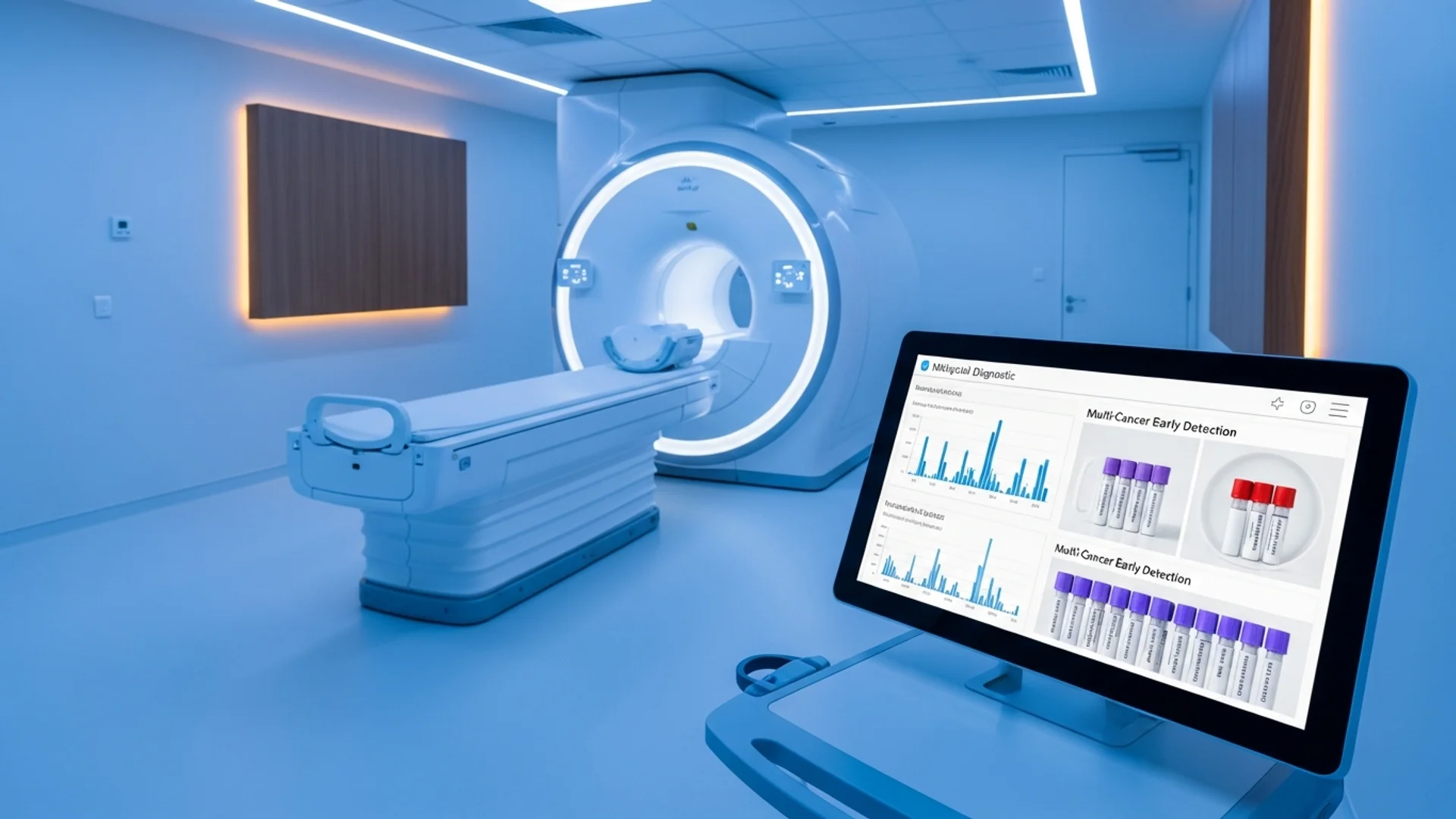
We use the Galleri multi-cancer early detection test. Galleri is a blood draw that looks for cell-free DNA (cfDNA), which are genetic fragments shed by tumors into the bloodstream.
  • The reach: Detects specific signals shared by more than 50 types of cancer.
  • The precision: A very low false-positive rate (under 0.5 percent), so we are not chasing ghosts.

2. Whole body MRI (Prenuvo)

Whole body MRI (Prenuvo) is radiation-free imaging that looks at your solid organs, including liver, pancreas, kidneys, and brain.
  • Why MRI: CT scans expose you to ionizing radiation. MRI does not. That makes MRI safe for repeated screening in healthy people.
  • The insight: MRI can detect solid tumors as small as a dime, often years before they would cause pain or systemic symptoms.

3. Genetic risk mapping

Genetic risk mapping tests your DNA for inherited vulnerabilities. Do you carry a BRCA or Lynch syndrome variant? If so, your screening schedule needs to look completely different. For example, starting colonoscopies at 25 instead of 45 if you carry Lynch.

Where can I get advanced cancer screening in Philadelphia?

Longevity Medicine

A personalized longevity strategy starts with knowing your real baselines.

Start Your Longevity Assessment
You can get advanced cancer screening in Philadelphia through Fishtown Medicine, which coordinates scans and tests so you do not have to navigate the system alone.
  • Galleri: We perform the blood draw right here in Philadelphia (or via mobile phlebotomy at your home).
  • Whole body MRI: We coordinate scans based on your location.
    • Prenuvo: Dedicated center in Wayne, PA.
    • Ezra: Partner locations in Newtown, PA and Cherry Hill, NJ.
Dr. Ash reviews the images from both providers to make sure nothing falls through the cracks.

Actionable Steps in Philly

Build a layered cancer defense.
  1. Confirm standard screening is current: Check that your colonoscopy, mammogram, Pap smear, and (if applicable) lung CT are all up to date before adding anything new.
  2. Review family history: Pull together a one-page family cancer history (relatives, cancer type, age at diagnosis). This drives whether genetic testing is worth doing.
  3. Layer in advanced testing: Once standard screening is current, consider Galleri annually and a whole body MRI every 1 to 3 years based on your risk profile.

Key Takeaways

  • Layering, not replacing: Galleri and MRI do not replace your colonoscopy or mammogram. They are additive layers of defense.
  • The false positive reality: Critics worry about false positives. The risk is real on a first scan but drops sharply with repeat screening over years. We verify findings before reacting.
  • Collaborative decisions: We do not push these tests. We weigh your family history, genetic risk, and anxiety tolerance together. It is a conversation, not a mandate.
  • Metabolic defense matters: The best way to prevent cancer is to make your body inhospitable to it. Lowering insulin and inflammation is step one.

Scientific References

  1. Klein EA, et al. "Clinical validation of a targeted methylation-based multi-cancer early detection test using an independent validation set." Annals of Oncology. 2021.
  2. Lennon AM, et al. "Feasibility of blood testing combined with PET-CT to screen for cancer and guide intervention." Science. 2020.
  3. Zugazagoitia J, et al. "Current Challenges in Cancer Treatment." Clin Ther. 2016.
  4. Liu MC, et al. "Sensitive and specific multi-cancer detection and localization using methylation signatures in cell-free DNA." Annals of Oncology. 2020.
  5. Saslow D, et al. "American Cancer Society guideline for the early detection of cervical neoplasia and cancer." CA Cancer J Clin. 2002.

Related Articles:
  • ApoB & Heart Health
  • Biological Age Testing
  • Metabolic Health

Dr. Ash is a board-certified internal medicine physician at Fishtown Medicine in Philadelphia. He partners with patients to build a proactive cancer defense strategy using the latest diagnostic technology. Medical Disclaimer: This resource provides clinical context for educational purposes. In the world of precision medicine, there is no one-size-fits-all approach. The right plan must be matched to your unique lab work, physiology, and performance goals. Consult Dr. Ash to determine if this approach is right for you, especially if you have chronic health conditions or are taking prescription medications.
Ashvin Vijayakumar MD (Dr. Ash)

Fishtown Medicine | Longevity

2418 E York St, Philadelphia, PA 19125·(267) 360-7927·hello@fishtownmedicine.com·HSA/FSA Eligible

Book Your Assessment

Frequently Asked Questions

Common Questions

The Galleri test is not yet FDA approved. It is available as a CLIA-certified Laboratory Developed Test (LDT). Major health systems like the Cleveland Clinic and Mayo Clinic use it in active clinical studies.
Advanced cancer screening is generally not covered by insurance. Standard screenings (colonoscopy, mammogram) are covered. Advanced tools like Galleri and Prenuvo are typically out-of-pocket. We frame this as biological insurance for high-risk or proactive patients.
A negative cancer screening test does not mean you are completely safe. No test is 100 percent sensitive. A negative result reduces risk but does not eliminate it. That is why we combine multiple modalities (blood, imaging, and physical exam).
Most patients on the Galleri test do an annual draw. Annual testing balances early detection benefit with cost and false positive workups. Some high-risk patients (strong family history, BRCA carriers) may benefit from a tighter schedule.
Most patients on whole body MRI repeat the scan every 1 to 3 years. The interval depends on baseline findings, family history, and personal risk. Patients with prior abnormalities are often scanned annually.
A whole body MRI cannot find every cancer. It is excellent for solid organ tumors but less reliable for blood cancers, very small lung nodules, and some hollow organ cancers. That is why we pair MRI with Galleri and standard screening.
The main risk of whole body MRI screening is incidentaloma findings, which are small spots that may not be cancer but trigger anxiety and follow-up imaging. We manage this by reading scans carefully and only acting on findings with clear clinical significance.
Galleri does not replace a colonoscopy. Colonoscopy is the only screening test that can both detect and remove precancerous polyps. Galleri may flag colorectal cancer signals, but it cannot prevent the cancer the way colonoscopy does.

Deep-Dive Questions

Liquid biopsy detects cancer by analyzing cell-free DNA in the blood for methylation patterns specific to tumor cells. Cancer cells shed DNA fragments with abnormal chemical tags. Galleri uses machine learning to match those tags to a likely organ of origin.
Pancreatic and ovarian cancers have high mortality because they grow in deep, silent locations and only cause symptoms once they have spread. By the time pain or weight loss appears, the cancer is usually Stage 3 or 4. Earlier detection through Galleri or MRI is the only realistic path to changing those numbers.
Insulin in cancer biology acts as a growth signal. Many tumors express insulin and IGF-1 receptors and grow faster when blood insulin runs high. Chronic hyperinsulinemia (high fasting insulin) is associated with higher risk for several cancers, including colorectal and endometrial.
Inflammation drives cancer development by creating a microenvironment that promotes DNA damage, blood vessel growth, and immune evasion. Chronic inflammation from obesity, smoking, infections, or autoimmune disease raises baseline cancer risk in measurable ways.
The value of BRCA testing is that it changes the entire screening playbook. BRCA1 and BRCA2 carriers face significantly higher lifetime risk of breast, ovarian, pancreatic, and prostate cancer. Knowing the variant lets us start screening earlier and consider risk-reducing surgery.
Lynch syndrome affects cancer risk by impairing the body's ability to fix DNA copying errors. Carriers face up to 80 percent lifetime risk of colorectal cancer and elevated risk of endometrial, ovarian, and stomach cancers. Screening usually starts in the 20s.
The lifestyle changes that most reduce cancer risk are stopping smoking, limiting alcohol, maintaining a healthy weight, regular movement, and adequate sleep. Diet matters less than the headlines suggest, except that ultra-processed food intake correlates with higher risk for several cancers.
You can reasonably worry about radiation from CT-based cancer screening. Each CT scan delivers a measurable dose, and repeated CTs add up. MRI and ultrasound carry no ionizing radiation, which is why we prefer them for serial screening in healthy people.
Galleri is different from a typical tumor marker test because it screens broadly across more than 50 cancers using methylation patterns. Tumor markers like CA-125 or PSA are organ-specific and used mostly for tracking known disease, not population screening.
Stress can raise cancer risk indirectly. Chronic stress drives inflammation, suppresses immune surveillance of abnormal cells, and pushes behaviors (poor sleep, alcohol, smoking) that raise risk on their own. The direct effect on cell biology is real but smaller than those behavioral pathways.
Air quality in Philadelphia, especially near I-95 and industrial corridors, contributes modestly to lung and bladder cancer risk. We screen accordingly when patients live or work near heavy traffic or industrial sites.
The role of HPV in cancer prevention is huge. HPV (human papillomavirus) drives most cervical, anal, and oropharyngeal cancers. The HPV vaccine series prevents the variants responsible for the vast majority of those cancers and is a high-impact intervention through age 45.
You handle anxiety around screening results by setting expectations before testing and by working with a physician who can interpret findings in context. Most incidental findings are benign. The right partner can prevent unnecessary biopsies and the spiral of follow-up testing.
The relationship between visceral fat and cancer is well established. Visceral fat (the fat around organs) drives chronic inflammation and insulin resistance, both of which raise risk for at least 13 cancers, including colorectal, endometrial, pancreatic, and postmenopausal breast cancer.
Intermittent fasting may reduce cancer risk indirectly by improving metabolic health and lowering insulin. The direct anti-cancer signal in humans is still mixed. The bigger payoff is usually weight and metabolic improvement, which themselves cut risk.
Sleep affects cancer screening labs through hormones and inflammation. Chronic short sleep raises CRP and disrupts hormones tied to breast and prostate cancer risk. Acute poor sleep does not change a Galleri result but matters for long-term risk reduction.

Still have a question?

He answers personally. Usually within a few hours.

Related Intelligence

Longevity Strategies | Fishtown Medicine

Longevity Strategies | Fishtown Medicine

Strategies to extend your healthspan and optimize lifespan in Philadelphia.

Read Deep Dive
Biological Age Testing (DunedinPACE) Philadelphia | Longevity

Biological Age Testing (DunedinPACE) Philadelphia | Longevity

You have a birthdate, but how fast are you aging? Dr. Ash uses advanced epigenetic clocks (DunedinPACE) to measures your rate of aging.

Read Deep Dive
Metabolic Health

Metabolic Health

Why you feel tired at 3 PM, and how to fix it.

Read Deep Dive

Talk it through with Dr. Ash.

If anything you read here raised a question, this is a free 20-minute Warm Invitation Call. Pick a time and we’ll work through it together.

HSA/FSA eligible
No initiation or cancellation fees
No copays

Loading scheduler...

Having trouble with the scheduler? Book directly on Dr. Ash’s calendar

FishtownFish wrapped around the rod of AsclepiusMedicine
Philadelphia Primary Care
2418 E York St, Philadelphia, PA 19125Home visits in Greater Philadelphia

Serving Fishtown · Art Museum · Bella Vista · Callowhill · Center City · Center City West · Chestnut Hill · East Kensington · Fairmount · Fitler Square · Graduate Hospital · Logan Square · Manayunk · Northern Liberties · Old City · Olde Richmond · Poplar · Port Richmond · Queen Village · Rittenhouse · Roxborough · Society Hill · Southwark

Explore by topic

Women’s Health
  • Perimenopause
  • Menopause 3.0
  • PCOS
  • Fertility
Men’s Health
  • TRT Therapy
  • TRT Safety
  • TRT vs Enclomiphene
  • Low Libido
Metabolic
  • Medical Weight Loss
  • Ozempic vs Metformin
  • Fasting Protocols
  • Visceral Fat
Cardiovascular
  • apoB & Heart Health
  • apoB vs LDL
  • Lp(a) Cholesterol
  • ED & Heart Risk
Longevity + Performance
  • Healthspan vs Lifespan
  • Biological Age
  • VO2 Max
  • Zone 2 Training
Supplements
  • Magnesium
  • Creatine
  • Omega-3
  • Foundational Stack

Content is for educational purposes only and does not constitute medical advice.

TermsPrivacyScope of PracticeClinical Independence