
Environment is one of three Modulators in our GER·O·SPAN framework, alongside Genetics and Relationships. It is the physical world that shapes your biology every hour: air quality, water, light, temperature, the chemicals in your house and on your hands at work, and the digital inputs you bring home. Individually most exposures look small. Cumulatively, they decide how much room your Fundamentals have to work.
Willpower is finite. Design is permanent.
In our GER·O·SPAN framework, Environment is a Modulator. It is not a lever you pull each morning. It is the room you wake up in, the air on your commute, the light at your desk, the cookware in your kitchen, and the feed on your phone. Most patients underestimate how much of their biology runs on these defaults. A messy room is not the issue. A house full of bright evening light, fragranced cleaning products, and a thermostat at 72 at midnight is a biological problem that no supplement can outrun.
This page lays out how we think about Environment, what we screen for in Philadelphia, and the design moves that pay back the fastest.
The Philly-specific picture
Where you live matters. Philadelphia is a port city with a history of heavy industry, an aging housing stock, and a regional air shed shared with refineries and interstates.
- Air quality. Fine particulate matter (PM2.5) and ground-level ozone are the 2 exposures we pay the most attention to. Both are linked to cardiovascular events, accelerated cognitive decline, and worsened metabolic health. Wildfire smoke now adds a few high-exposure weeks per summer on top of the baseline. We watch the local PM2.5 trend the way we watch lab work, and our Philadelphia AQI guide breaks down what to do at each tier. We screen for indoor-source amplifiers (gas stoves, certain candles, poor ventilation).
- Pets and pests, pollen and dander. Philadelphia is a pet-heavy city. A large share of our patients live with at least 1 dog or cat (and a meaningful number live with birds, rabbits, reptiles, or small mammals). That is a meaningful environmental input, and it runs in both directions: positive for movement, companionship, and microbiome diversity; mixed when allergens, mold-amplifying litter, or pest dynamics (rodents and cockroaches in older housing) drive chronic respiratory or skin symptoms. When the symptom pattern fits, a regional IgE panel is one of our most useful tools. It sorts pet, pollen, pest, and tree/grass exposures into something actionable instead of a guess.
- Walkability and geography. Where you can safely walk shapes your daily movement more than any gym membership does. We talk about this plainly. A 12-minute walk to a grocery store, or a 12-minute Indego ride to the river trail, is a different biology than a 12-minute drive. Philadelphia's bike-share is one of the better environmental design moves the city has made for adult health; we mention it more often than patients expect. More on this in our walkability and health guide.
What is in your house
Most of the environmental exposure that matters is indoor exposure, because that is where Americans spend roughly 90% of their time.
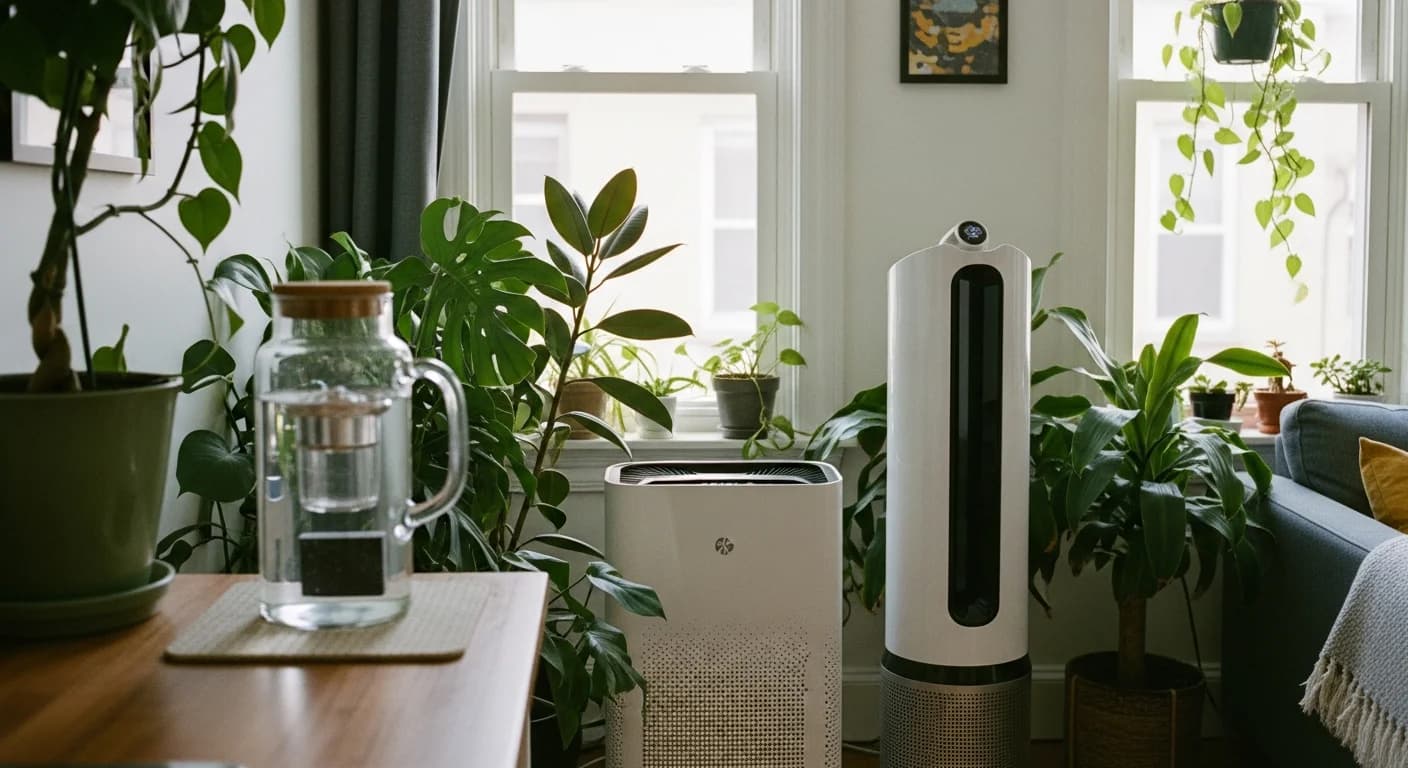
- Indoor air. A HEPA filter in the bedroom is one of the highest-return purchases in the entire GER·O·SPAN framework. If you cook on a gas stove, an open kitchen window or a strong range hood matters more than people realize. Mold investigation is on the table when the symptom pattern fits.
- Light and circadian. Bright morning light fixes more sleep problems than melatonin. Bedroom darkness at 2 a.m. matters as much as the hour you went to bed. We talk about blackout curtains the way we talk about strength training.
- Temperature. A bedroom at 65 to 68 degrees Fahrenheit makes deep sleep work the way it is supposed to. A bedroom at 72 does not.
- Cookware and kitchen plastics. PFAS-coated nonstick pans and heat-cycled plastic storage are 2 of the exposures we do change. Stainless, cast iron, glass storage, and a kettle for hot water are cheap, durable, and one-time decisions.
- Water. A carbon block filter handles most of what comes out of a Philadelphia tap. We add a separate filter for cooking and tea. Bottled water is not the answer. Most bottled water is municipal water in plastic, with the plastic added in.
Chemical exposures we can do something about
We do not chase every chemical headline. We pay attention to the categories with mechanism, dose, and a realistic intervention.
- Endocrine-disrupting chemicals (EDCs). Phthalates, bisphenols (BPA, BPS), and certain parabens show up in plastics, receipts, fragrances, and personal care products. The interventions are mundane and effective: glass storage, fragrance-free body and home products, reducing receipt handling.
- PFAS ("forever chemicals"). Nonstick coatings, water-resistant fabrics, certain cosmetics. The half-life is years. The intervention is reducing inputs and supporting the body's normal clearance through liver health and fiber intake.
- Microplastics. The exposure is documented and the biology is plausible, while the outcome data is still developing. We do not panic about it. We take heated plastics out of the kitchen and move on. Our microplastics guide has the highest-leverage swaps.
- Pesticides. The "dirty dozen" / "clean fifteen" guidance is a reasonable starting point for produce washing and selective organic buys when the budget allows.
- Occupational exposures. Restaurant cooks, painters, hairstylists, healthcare workers, construction trades, and dry cleaners are the patient profiles where we ask about specific exposures and adjust screening. A bartender in a heavy-smoke venue has a different respiratory and cardiovascular conversation than a remote worker.
The digital environment
The phone is part of your environment whether you call it that or not. It changes light exposure, attention, anxiety baseline, and sleep onset.
- Light at night. Phone in bed at midnight is not a "discipline" problem; it is a light exposure problem with measurable effects on melatonin and sleep architecture.
- Attention fragmentation. Notification volume correlates with cortisol patterns. Most patients can drop notifications by 80% in an afternoon and feel the difference inside a week.
- Doomscrolling. Chronic news/social input is a stress exposure. We ask about it the way we ask about caffeine.
- Signal-to-noise. The point is not to be unreachable; it is to keep the channels that matter (family, work, your doctor) open while closing the ones that do not.
What we test, and what we change
Two filters, same as everywhere else in the practice.
Fishtown Medicine
A 90-minute conversation with Dr. Ash. A written plan you can follow.
- Will the result change what we do next?
- Is the evidence strong enough to act on?
When both answers are yes, we test or screen. When either is no, we move to design.
What we screen when indicated
- IgE regional panels. When symptoms point to allergy, chronic congestion, recurrent sinusitis, asthma flares, eczema patterns, or "I always feel worse in this house," a regional IgE panel sorts pet dander, pollens, pests (mouse, cockroach), and mold into a clear picture. The result frequently changes the plan in concrete ways: targeted air filtration, bedroom-only changes for pet exposure, immunotherapy referral, or a specific medication change.
- Indoor air when respiratory symptoms, headache patterns, or a new home raise the question. A consumer-grade PM2.5 monitor at home is often the cheapest "test" we can do.
- Mold when the symptom pattern, the building history, or visible evidence supports a workup.
- Heavy metals and water when housing history, occupation, hobbies (shooting, soldering), pregnancy, or kids in the household raise the question.
What we usually do not test
- Hair mineral analysis, "toxic burden" panels, full-body urine PFAS screens for healthy adults. These rarely change the plan in a way the design moves do not already achieve.
- Speculative panels with no defined treatment threshold.
What we almost always recommend
- HEPA filter in the bedroom.
- Carbon block water filter.
- Bedroom temperature 65 to 68 Fahrenheit, blackout to taste.
- Morning light within an hour of waking.
- Glass food storage. Stainless or cast iron for cooking. Skip the nonstick.
- Fragrance-free personal care and home products as the default.
- Phone out of the bedroom.
The pattern is design over discipline. You will not out-discipline an environment that is fighting you. You will out-design it.
Key Takeaways
- Environment is a Modulator in GER·O·SPAN: the air, water, light, temperature, and chemicals in your daily world shape your biology whether you track them or not.
- Indoor air quality deserves the most attention because Americans spend roughly 90% of their time indoors; a HEPA filter in the bedroom is one of the highest-return single purchases.
- EDCs (phthalates, bisphenols, PFAS) accumulate through plastics, fragrances, and nonstick surfaces; the interventions are mundane and durable, not complicated.
- The digital environment is an environmental input: evening light and notification volume change cortisol, melatonin, and sleep onset in measurable ways.
- We test selectively (IgE panels, heavy metals, mold) when the result will change the plan, and skip speculative panels that rarely move the needle.
Scientific References
- Pope CA, et al. "Lung Cancer, Cardiopulmonary Mortality, and Long-term Exposure to Fine Particulate Air Pollution." JAMA. 2002.
- Cohen AJ, et al. "Estimates and 25-year trends of the global burden of disease attributable to ambient air pollution." Lancet. 2017.
- Diamanti-Kandarakis E, et al. "Endocrine-Disrupting Chemicals: An Endocrine Society Scientific Statement." Endocrine Reviews. 2009.
- Cushing L, et al. "The Haves, the Have-nots, and the Health of Everyone: The Relationship Between Social Inequality and Environmental Quality." Annual Review of Public Health. 2015.
- Czeisler CA, et al. "Stability, precision, and near-24-hour period of the human circadian pacemaker." Science. 1999.
Related at Fishtown Medicine
- What Sets Your Asthma Off - the environment pillar applied to one condition, room by room
The Environment spokes, each a practical Philadelphia guide:
- Air quality (AQI): what to do - reading the AQI and the moves at each tier
- UV index: what to do - sun, skin, and eye protection by tier
- Severe weather: what to do - heat, cold, and storm preparedness
- Pollen in Philadelphia - the tree, grass, and weed calendar and when to pre-treat
- Allergies and air quality - how Philly's pollen and pollution stack on the same airway
- Microplastics in Philadelphia - the highest-leverage ways to lower exposure
- Philadelphia environmental health - water, lead, PFAS, and the indoor-air stack
- Walkability and health - how where you can walk shapes your biology
- The clinical toolkit - the vetted air, water, and sleep gear we point to
- Philadelphia city health resources - cooling and warming centers, utility help, and home repair
How Environment connects to the rest of GER·O·SPAN:
- Sleep - light, temperature, and noise set the floor for deep sleep
- Brain health - air pollution (PM2.5) accelerates cognitive decline
- Cardiovascular risk - particulate exposure drives heart attacks and strokes
- Metabolic health - endocrine-disrupting chemicals and insulin resistance

Fishtown Medicine | Articles
Frequently Asked Questions
Common Questions
Ready when you are
The chat is our AI assistant, answering from our published guides. To talk it through with Dr. Ash himself, start with the intake.