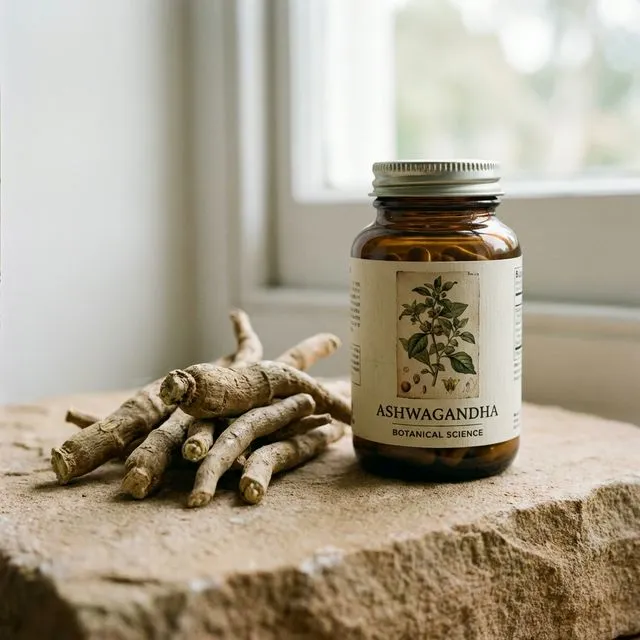

Ashwagandha is an adaptogenic herb that lowers cortisol and quiets the HPA axis, the bodys stress-response system. It is best suited for adults in the "tired but wired" cycle: racing thoughts at night, low fuel by afternoon, and stress driving belly fat or poor recovery. The clinical dose is 300 to 600 mg of a standardized extract (KSM-66 or Sensoril) taken in the evening with food. The main cautions are autoimmune conditions, hyperthyroidism, and pregnancy, where ashwagandha is a strict contraindication.
Living in a high-energy city like Philly often means cortisol levels stay chronically elevated. We view ashwagandha as a primary tool for modulating the fight-or-flight response, so you can function with clarity rather than run on fumes. In our practice, we frequently see patients operating in overdrive: driven people who have handled high-pressure roles for years but now find themselves stuck in the "tired but wired" cycle. We do not view ashwagandha as a sedative. We view it as a metabolic thermostat for chronic stress. It does not force sleep. It lowers the ambient temperature of your nervous system so your body can do the rest.
What ashwagandha is and what it does
Ashwagandha is an adaptogenic herb used in Ayurvedic medicine for centuries. The active compounds are called withanolides, and modern extracts standardize them so you know you are getting a clinical dose. We prioritize ashwagandha for its ability to support the HPA axis (the hypothalamic-pituitary-adrenal stress system). It acts as an adaptogen, helping your body maintain balance even when your environment, like work, your commute, or deadlines, is trying to pull you out of it.
- Cortisol regulation. Data suggests ashwagandha may support a 28 to 30% reduction in serum cortisol with consistent use. We monitor this to help patients regain metabolic control.
- Sleep architecture. It helps target sleep onset latency (the time it takes you to fall asleep), quieting the racing thoughts that often prevent the transition into deep rest.
- Physical resilience. For patients who train regularly, it supports recovery and power output by blunting the catabolic effects of physical over-training.
Who this is for (and who it isn't)
We typically discuss ashwagandha with patients who are experiencing:
- The "tired but wired" cycle. Racing thoughts at night paired with low fuel during the day.
- Elevated cortisol markers. Physical signals like belly fat retention despite careful nutrition, or disrupted 3 a.m. sleep patterns.
- Subclinical thyroid needs. Ashwagandha can help support the conversion of T4 to T3 (the active thyroid hormone), a process often slowed by chronic stress.
It is not the right move, or it needs a careful conversation first, if:
- You have an autoimmune condition. Ashwagandha can stimulate the immune system and potentially flare conditions like lupus, rheumatoid arthritis, or Hashimotos thyroiditis.
- You have hyperthyroidism. It can drive thyroid hormone production too high.
- You are pregnant. This is a strict clinical contraindication.
- You have emotional blunting. If you already feel flat or disconnected, ashwagandha can occasionally deepen that feeling. We want you resilient, not numb.
How we evaluate it: do you need it, is it safe, does the dose work, then cost
Every supplement we recommend runs the same 4 gates, in order, and most things never make it past the first one (the whole process is in how we choose supplements).
- Do you need it? There is no marker for this. It is a defined trial against stress or sleep complaints, capped in time, and it comes off if the thyroid picture changes.
- Is it safe? Ashwagandha is one of the most frequently contaminated supplements on the market. Too many brands contain concerning levels of lead and arsenic due to soil conditions and processing methods. We require independent third-party testing (NSF, USP, or ConsumerLab) before recommending any brand.
- Does the dose work? The extraction method changes the clinical effect. KSM-66 (root-only extract) is better for daytime resilience and alert-calm. Sensoril (root and leaf extract) is more sedating and better suited when severe insomnia is the primary problem. We dose by withanolide content rather than by total herb weight.
- What does it cost? Among pure, well-tested options, we take the best value. Brands we generally trust include Integrative Therapeutics (for Sensoril) and Pure Encapsulations or NOW Foods (for KSM-66).
- What we make on it: nothing. Our only charge is the flat membership fee, and nothing is ever added on top of it. We take nothing on supplements, labs, imaging, or medication, which means every discount we can negotiate reaches you at cost. There is no conflict of interest here to work around, so the 4 gates above are the only things deciding what you hear from us.
How to dose it, and when
We start low. The goal is calm capability, not sedation.
- Baseline dose. 300 mg daily of a standardized root extract.
- Therapeutic dose. 600 mg daily, reserved for insomnia or acute high-stress periods.
- PM dosing. We prefer patients take ashwagandha with dinner or about 2 hours before bed. This helps lower evening cortisol and clears the path for natural melatonin production.
- Absorption matters. Always take ashwagandha with a meal containing some fat. Taking it on an empty stomach often leads to GI upset.
- Cycling. We recommend 3 months on, 1 month off. Cycling helps prevent receptor downregulation and ensures we are not masking underlying issues that need lifestyle work.
What to expect on the timeline: subtle calming and sleep improvements over 2 to 4 weeks, with peak cortisol-lowering effects around 8 to 12 weeks. We always reassess at the 8-week mark, cross-referencing labs with how you feel.
Flaws, side effects, and interactions
No supplement is perfect, and laying out the downsides is part of the job.
Fishtown Medicine
A 90-minute conversation with Dr. Ash. A written plan you can follow.
- GI upset. Taking ashwagandha on an empty stomach is the most common cause of nausea and stomach discomfort. A fatty meal solves it in most cases.
- Daytime drowsiness. The Sensoril form can make you slightly drowsy during the day. KSM-66 taken in the evening rarely causes daytime sedation. If you feel groggy, we drop the dose or move it later, closer to bedtime.
- Drug interactions. Ashwagandha can amplify the effect of sedatives like benzodiazepines, alcohol, and zolpidem. It can change the dose needs for thyroid medication, blood pressure medication, and immunosuppressants. Always review your full medication list with your physician.
- Liver safety. Ashwagandha has rarely been linked to liver injury in case reports, almost always with high doses or contaminated products. The risk is low with reputable third-party-tested brands at standard doses. We avoid ashwagandha in patients with active liver disease and check liver enzymes if you take it for more than 6 months.
- Thyroid changes. Ashwagandha can change T4 to T3 conversion, which is helpful in some patients but can push thyroid hormone too high in hyperthyroidism or in patients already on levothyroxine. We recheck thyroid labs at 8 to 12 weeks.
What we recommend, and what we don't
- We look for: standardized extracts (KSM-66 or Sensoril) with verified withanolide content, third-party-tested for lead and arsenic.
- Worth considering alongside: L-theanine produces calm focus quickly but does not lower long-term cortisol. Magnesium glycinate supports muscle relaxation and GABA tone. Ashwagandha changes the underlying stress thermostat over weeks. We sometimes stack them based on the symptom pattern.
- A different adaptogen for a different pattern: rhodiola is the better match when the complaint is flat motivation and burnout during the day rather than a nervous system that will not settle at night.
- What we leave out: cheap, unstandardized "ashwagandha powder" products with inconsistent withanolide levels or no contamination testing. We also avoid ashwagandha when cortisol is already low, since low morning cortisol can signal HPA axis suppression that needs a fuller workup first.
Guidance from the Clinic
"Ashwagandha is not a magic pill, but it is a powerful ally. We use this to lower the noise so you can hear what your body needs, whether that is better sleep, better fuel, or just stillness. Chronic cortisol elevation acts like a slow-motion wrecking ball for metabolic and cardiovascular health. Our goal is to intervene decades before you ever see the inside of a hospital."
Dr. Ash
Actionable Steps
Managing stress requires a systematic approach. Here is where we start.
- Baseline stress audit. Do you identify with "tired but wired"? If yes, consider high-quality KSM-66 at 300 mg taken with dinner.
- Verify your source. Ensure any ashwagandha you take has verified third-party heavy-metal testing (NSF, USP, or ConsumerLab).
- Match the form to the problem. KSM-66 for daytime resilience and physical recovery; Sensoril when severe insomnia is the primary concern.
- Cycle your use. After 3 months on, take a 30-day break and observe how your body responds. That data is valuable.
- Check labs at 8 weeks. TSH, free T4, free T3, and morning cortisol tell us whether the supplement is working and whether the dose needs adjusting.
Key Takeaways
- Ashwagandha is an adaptogenic herb that lowers cortisol and supports the HPA axis, best suited for the "tired but wired" adult.
- Use standardized extracts only: KSM-66 for daytime resilience and alert-calm, Sensoril when severe insomnia is the primary concern.
- Dose is 300 mg daily at baseline, up to 600 mg for insomnia or high-stress periods, taken with a fatty meal in the evening.
- Strict contraindications include pregnancy, hyperthyroidism, and most autoimmune conditions.
- Cycle 3 months on, 1 month off, and recheck TSH, cortisol, and thyroid labs at 8 to 12 weeks.
A note on cost: any discount we negotiate on professional-grade supplements passes straight through to you, with no markup. Here is how we choose and source supplements.
Scientific References
- Chandrasekhar K, et al. A prospective, randomized double-blind, placebo-controlled study of safety and efficacy of a high-concentration full-spectrum extract of ashwagandha root in reducing stress and anxiety in adults. Indian J Psychol Med. 2012.
- Langade D, et al. Efficacy and Safety of Ashwagandha (Withania somnifera) Root Extract in Insomnia and Anxiety: A Double-blind, Randomized, Placebo-controlled Study. Cureus. 2019.
- Wankhede S, et al. Examining the effect of Withania somnifera supplementation on muscle strength and recovery: a randomized controlled trial. J Int Soc Sports Nutr. 2015.

Frequently Asked Questions
Common Questions
Deep-Dive Questions
Ready when you are
The chat is our AI assistant, answering from our published guides. To talk it through with Dr. Ash himself, start with the intake.