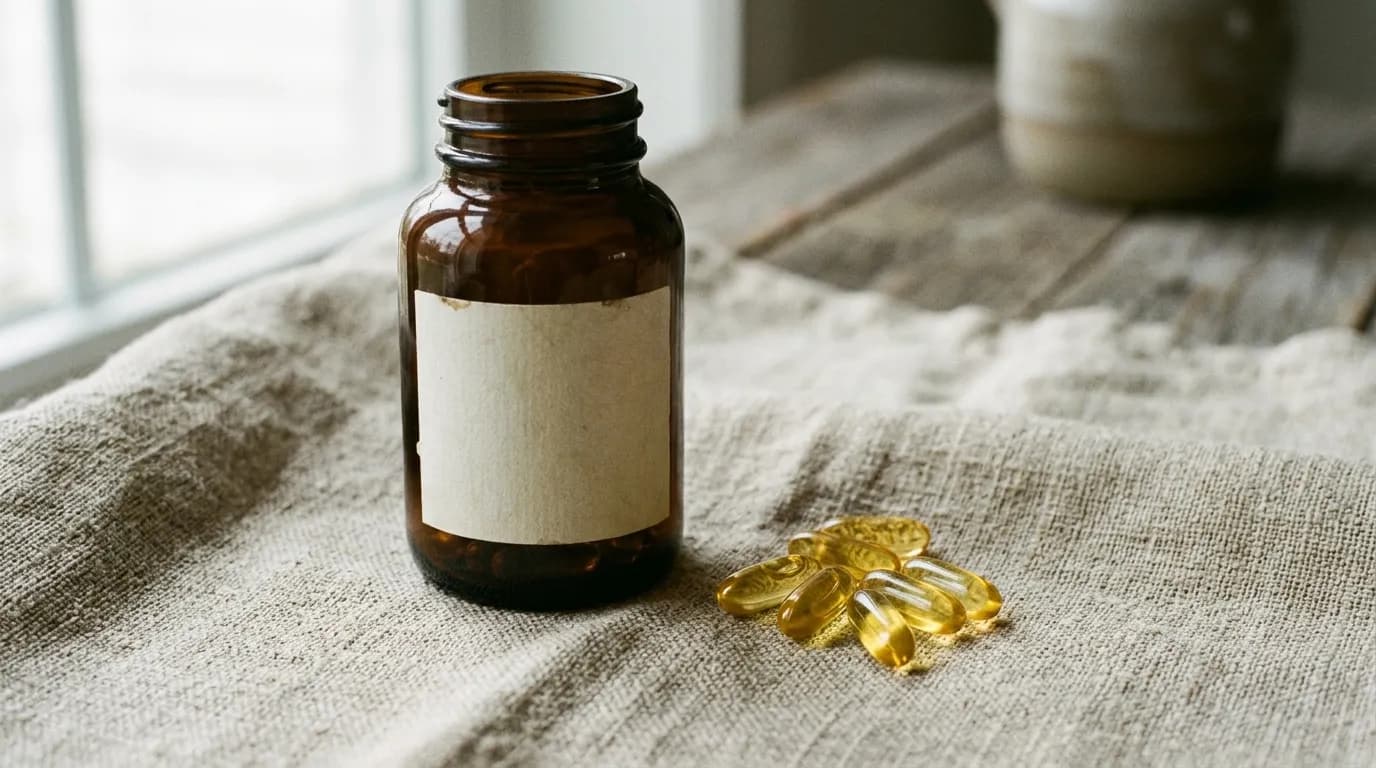

Phosphatidylserine (PS) is a fat-like molecule found in every brain cell membrane. At 100 to 300 mg per day for maintenance or 300 to 800 mg for an acute stress protocol, it can soften an overactive cortisol response and help the nervous system find the off switch at night. It fits best for the "tired but wired" patient, the overtrained athlete, and the adult over 40 with subtle cognitive slowing. The main cautions are a mild blood-thinning effect and soy allergy, which is why we almost always go with sunflower-derived PS.
Many of my patients describe the same paradox. They feel exhausted by 4 PM, but the moment their head hits the pillow, their brain switches on. That is not just stress. It is a flipped cortisol curve, where the bodys main stress hormone is high when it should be low. Phosphatidylserine is one of the few clinically studied tools for that very problem.
What phosphatidylserine is and what it does
Phosphatidylserine is a phospholipid (a type of fat that forms cell membranes). Your brain cells are coated with it. The bodys stress system is called the HPA axis (the Hypothalamic-Pituitary-Adrenal axis, the chain of glands that produces cortisol). When that system gets stuck in the "on" position, cortisol stays high at night, which fragments deep sleep and blocks recovery.
I think of PS as a damper on the stress alarm. The signal it sends is simple: the threat has passed, you can lower the shield. That allows cortisol to drop in the evening, which creates room for melatonin (the sleep hormone) to rise on its own.
PS also supports aging brain cells through a structural role. Young brain cells behave like water balloons: fluid, flexible, and signals pass through easily. Aging brain cells can stiffen, more like golf balls, so neurotransmitters bounce off instead of docking. PS is the primary phospholipid that keeps that fluid texture intact, working alongside phosphatidylcholine on the same membranes. By integrating into the cell membrane, it helps receptors stay open so signals related to memory, focus, and processing speed get through.
Who this is for (and who it isn't)
I do not hand this to everyone with stress. It fits a specific phenotype.
- The "tired but wired" patient. You hit a wall at 4 PM, but your mind races at 11 PM.
- The overtrained athlete. Resting heart rate is elevated, sleep is choppy, and cortisol is not clearing after hard sessions.
- The patient over 40 with subtle word-finding issues. Brain fog or "tip of the tongue" moments that did not exist 5 years ago.
It needs a conversation first, or we hesitate, if:
- Blood thinners. PS has a mild blood-thinning profile. If you are on warfarin, Eliquis, or similar medications, we coordinate the strategy together rather than guessing.
- Soy allergy. Many older PS products are soy-derived. We almost always go with sunflower lecithin to avoid an inflammatory trigger.
How we evaluate it: do you need it, is it safe, does the dose work, then cost
Every supplement we recommend runs the same 4 gates, in order, and most things never make it past the first one (the whole process is in how we choose supplements).
- Do you need it? Cognitive or stress complaints frame this rather than a level, and it gets a defined window to show something.
- Is it safe? Source matters more than almost any other supplement. Bovine cortex (cow brain) extracts were the original research source, but prion safety concerns make that form obsolete. We want sunflower-derived PS, non-GMO and allergen-friendly, from a brand with third-party testing.
- Does the dose work? Look for Sharp-PS or SerinAid on the label. Those are the standardized raw materials used in most quality clinical products, meaning the dose on the label reflects what clinical studies used.
- What does it cost? A high-quality sunflower-derived PS (100 mg per capsule, third-party tested) typically runs $25 to $45 for a one-month supply. If a bottle is unusually cheap, the form is often a low-dose blend or a less well-tolerated soy-based version.
- What we make on it: nothing. Our only charge is the flat membership fee, and nothing is ever added on top of it. We take nothing on supplements, labs, imaging, or medication, which means every discount we can negotiate reaches you at cost. There is no conflict of interest here to work around, so the 4 gates above are the only things deciding what you hear from us.
How to dose it, and when
The right dose depends on the goal. Stress reduction and memory maintenance use different protocols.
- Acute stress protocol (the "cortisol shield"): 300 to 800 mg daily. Split the dose: half at lunch, half with dinner around 5 to 6 PM, so it is already working before the evening cortisol spike. Run this for 4 to 6 weeks during a high-stress chapter, then taper down.
- Long-term memory maintenance protocol: 100 mg daily, with dinner. This is structural repair, so it takes 2 to 3 months of steady dosing to fully turn over cell membranes and notice a clinical change.
- Take it with fat. PS is fat-soluble and absorbs better with a meal that contains fat. For a small evening dose, pair it with nuts or olive oil.
What to expect on the timeline: most patients feel a calmer evening within the first 2 to 3 weeks of consistent use. Cognitive benefits like sharper word recall typically take 8 to 12 weeks. If nothing has shifted by 12 weeks, PS is probably not the missing piece.
Flaws, side effects, and interactions
No supplement is perfect, and naming the downsides is part of the job.
Fishtown Medicine
A 90-minute conversation with Dr. Ash. A written plan you can follow.
- Mild blood thinning. PS has a mild blood-thinning profile. If you are on warfarin, Eliquis, or clopidogrel, we coordinate the strategy before adding PS.
- GI upset at high doses. Very high doses can cause mild nausea or loose stools. The acute stress protocol at 300 to 800 mg is the range where this occasionally appears. Starting lower and titrating up usually resolves it.
- Caffeine pushback. Caffeine raises cortisol; PS softens the cortisol spike. Heavy caffeine use after noon may blunt the effect. We often recommend moving the last coffee earlier in the day before increasing the PS dose.
- SSRIs and anxiety medications. PS does not have a strong direct interaction with SSRIs (selective serotonin reuptake inhibitors), but we still bring your prescribing doctor into the conversation. The combination is usually safe.
What we recommend, and what we don't
- We look for: sunflower-derived PS (non-GMO, allergen-friendly) with Sharp-PS or SerinAid on the label, from a brand that third-party tests for purity and labeled dose accuracy.
- Worth considering alongside: PS pairs well with magnesium glycinate, glycine, and L-theanine because they target different pieces of the stress and sleep system. For cortisol specifically, ashwagandha works differently (a broad adaptogen over weeks) and can be layered, though we usually trial one at a time.
- We pass on: bovine cortex PS (prion concern, no clinical reason to choose it today), cheap blends without standardized raw materials, or stacking 3 or 4 sleep aids on the same night without a plan.
Guidance from the Clinic
"When a patient tells me they cannot turn their head off at night, I think about the cortisol curve before I think about melatonin. Phosphatidylserine is one of the few clinically studied tools for that specific problem. Get the sunflower form, back-load the dose to the afternoon and evening, and give it 4 to 6 weeks before you judge it. If your deep sleep numbers are not moving by then, stress is not the only driver and we need to look further."
Dr. Ash
Actionable Steps
A simple 4-week trial protocol.
- Confirm the pattern. Track your sleep onset and wake-ups for one week. If you are wired at 10 PM and waking at 2 to 3 AM, the cortisol curve is the most likely driver.
- Start low. Begin with 100 mg of sunflower-derived PS at dinner for 5 to 7 days, just to confirm tolerance.
- Layer the protocol. Move to 300 mg total, split between lunch and dinner, for 3 weeks.
- Re-evaluate with data. Use an Oura, Apple Watch, or Whoop to track deep sleep, resting heart rate, and HRV. If those have not moved in 4 weeks, stress is not the only driver and we need to look further.
- Taper after the high-stress chapter. For the 300 to 800 mg cortisol shield, plan to step back down after 4 to 6 weeks. For 100 mg memory maintenance, re-evaluate every 6 to 12 months.
Key Takeaways
- Phosphatidylserine modulates the HPA axis to blunt an elevated cortisol response and supports brain cell membrane fluidity for clearer neurotransmitter signaling.
- The acute cortisol-shield protocol uses 300 to 800 mg daily, split between lunch and dinner, for 4 to 6 weeks. Long-term memory maintenance uses 100 mg daily with dinner.
- Always choose sunflower-derived PS with Sharp-PS or SerinAid on the label. Bovine cortex PS is obsolete due to prion safety concerns.
- The main cautions are a mild blood-thinning effect (coordinate with any anticoagulant) and GI upset at very high doses.
- Most patients notice a calmer evening within 2 to 3 weeks; cognitive changes take 8 to 12 weeks. If nothing changes by 12 weeks, cortisol is probably not the only driver.
If you'd like us to source it for you:
A note on cost: any discount we negotiate on professional-grade supplements passes straight through to you, with no markup. Here is how we choose and source supplements.
Scientific References
- Hellhammer, J., et al. (2004). Effects of soy lecithin phosphatidic acid and phosphatidylserine complex (PAS) on the endocrine and psychological responses to mental stress. Stress, 7(2), 119-126.
- Kato-Kataoka, A., et al. (2010). Soybean-derived phosphatidylserine improves memory function of the elderly Japanese subjects with memory complaints. Journal of Clinical Biochemistry and Nutrition, 47(3), 246-255.
- Starks, M. A., et al. (2008). The effects of phosphatidylserine on endocrine response to moderate intensity exercise. Journal of the International Society of Sports Nutrition, 5(1), 11.
- Glade, M. J., & Smith, K. (2015). Phosphatidylserine and the human brain. Nutrition, 31(6), 781-786.

Frequently Asked Questions
Common Questions
Deep-Dive Questions
Ready when you are
The chat is our AI assistant, answering from our published guides. To talk it through with Dr. Ash himself, start with the intake.