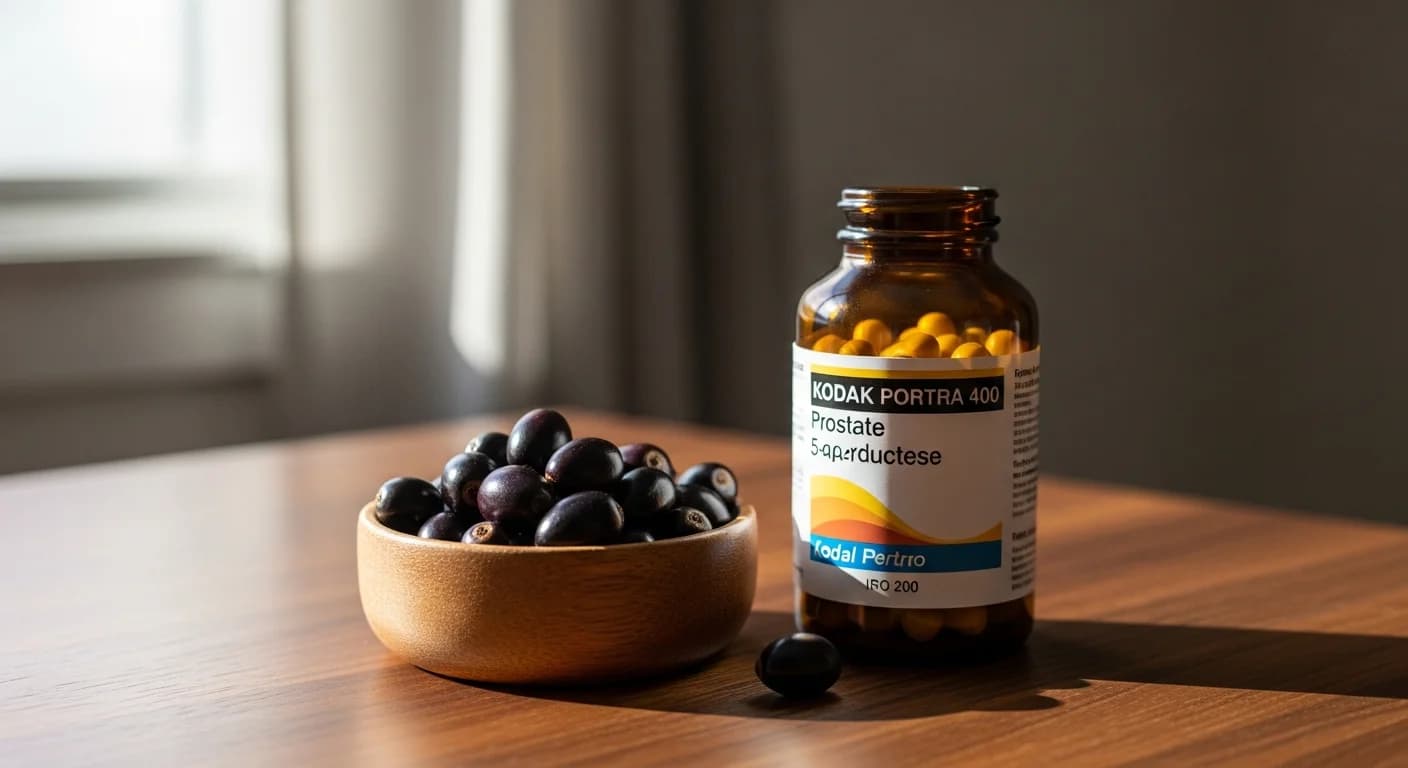

Saw palmetto is an extract from the berries of Serenoa repens, a small palm native to the southeastern United States. It mildly inhibits 5-alpha reductase, the enzyme that converts testosterone into DHT, the hormone that drives prostate growth and some male-pattern hair loss. The standard dose is 320 mg per day of a standardized liposterolic extract (85 to 95% fatty acids and sterols), taken with a fatty meal, with noticeable flow improvement expected at 4 to 6 weeks and structural prostate benefits by 3 months. It is a useful tool, but only after we have ruled out sleep apnea, insulin resistance, and venous insufficiency as the underlying drivers of nighttime urination.
Many men accept getting up twice a night to urinate as an inevitable part of aging. I disagree. The prostate does grow with age, but the symptoms that disrupt sleep and quality of life are often manageable when we step in early and look at the whole picture rather than the organ alone.
What saw palmetto is and what it does
Saw palmetto is the fruit of Serenoa repens, a small palm native to the southeastern United States. The standardized extract is one of the most studied botanicals in mens health, particularly for benign prostatic hyperplasia (BPH, the non-cancerous enlargement of the prostate that affects most men over 50).
It works through 3 mechanisms. First, it inhibits 5-alpha reductase, the enzyme that converts testosterone into DHT (dihydrotestosterone), a potent androgen that drives prostate growth and inflammation. Second, by modulating inflammation in prostate tissue, it can support better urinary flow rate and bladder emptying. Third, the same DHT mechanism that affects the prostate also affects hair follicles, which is why saw palmetto has a side benefit for some men with androgenic alopecia (DHT-driven hair loss), covered in more depth in the hair playbook.
Before starting saw palmetto, we always look for the imposters. Nocturia (waking at night to urinate) is a complex symptom with multiple causes. If your nighttime waking is caused by sleep apnea (which triggers atrial natriuretic peptide release that signals the kidneys to dump fluid), venous insufficiency (fluid from the legs returning to circulation once you lie flat), or insulin resistance (high glucose driving osmotic diuresis), saw palmetto will not solve the problem. We screen for all 3 before prescribing any prostate supplement.
Who this is for (and who it isn't)
Saw palmetto fits specific patient profiles.
It tends to help:
- Men with early lower urinary tract symptoms (LUTS). Mild hesitancy, weaker stream, or dribbling, typically over age 40.
- The "nightwalker." Men waking more than twice per night to urinate, where metabolic, respiratory, and cardiovascular causes have been ruled out.
- Hair preservation candidates. Men seeking a non-prescription adjunct for hair density, or who cannot tolerate prescription 5-AR inhibitors like finasteride.
It is not the right tool, or needs a careful conversation first, for:
- Pre-surgical patients. Stop saw palmetto 2 weeks before any surgery because it has mild anti-platelet effects.
- Pregnant or nursing women. Contraindicated due to hormonal modulation.
- Patients on anticoagulants. Coordinate closely with your cardiologist. The anti-platelet effect matters if you take warfarin, Plavix, or daily aspirin.
How we evaluate it: do you need it, is it safe, does the dose work, then cost
Every supplement we recommend runs the same 4 gates, in order, and most things never make it past the first one (the whole process is in how we choose supplements).
- Do you need it? Urinary symptoms decide this, and we want them scored before and after so the answer is not a guess. A PSA belongs in the picture first, since treating symptoms without checking is how a diagnosis gets delayed.
- Is it safe? The pre-supplement workup is part of safety: sleep study, basic metabolic panel, A1c, and a baseline PSA. Saw palmetto can lower PSA readings, which matters enormously for prostate cancer screening. Every clinician you see needs to know you are taking it.
- Does the dose work? Form is the most common failure point. Many brands sell dried berry powder. To get a therapeutic dose of fatty acids from raw powder, you would need to swallow dozens of capsules. The standard is a standardized liposterolic extract with 85 to 95% fatty acids and sterols, at 320 mg per day. CO2 supercritical extraction produces a cleaner product than hexane chemical solvents.
- What does it cost? Among standardized, well-extracted options, we take the best value. Brands that meet the bar include Thorne, Pure Encapsulations, and Permixon (the European prescription-grade extract).
- What we make on it: nothing. Our only charge is the flat membership fee, and nothing is ever added on top of it. We take nothing on supplements, labs, imaging, or medication, which means every discount we can negotiate reaches you at cost. There is no conflict of interest here to work around, so the 4 gates above are the only things deciding what you hear from us.
How to dose it, and when
The dose is simple; the form matters more.
- Dose. 320 mg per day. This can be a single dose or split as 160 mg twice daily.
- Timing. Saw palmetto is a fat-soluble extract, so it absorbs best with a meal that contains dietary fat. Dinner is the natural pairing, ideally the fattiest meal of the day.
- Expected timeline. Saw palmetto works as a tissue modulator rather than a diuretic, so the change builds gradually: expect noticeable flow improvement at 4 to 6 weeks and structural benefits by 3 months.
- Long-term tracking. Track nighttime wake-ups, urinary stream quality (a 1 to 10 scale works), and morning energy. Reassess at 12 weeks. If 12 weeks of a quality extract has produced no change, the symptoms are probably not driven by the prostate, and we need to revisit the workup.
Flaws, side effects, and interactions
Fishtown Medicine
A 90-minute conversation with Dr. Ash. A written plan you can follow.
No supplement is perfect, and naming the downsides is part of the job.
- GI distress. Fatty acid extracts can be heavy on the stomach. Always take with food to prevent nausea.
- Libido changes. Far less common than with prescription finasteride, but rare reports (under 2% of users) of mild libido or erectile changes exist. If side effects appear, they typically resolve after stopping the supplement.
- Anticoagulant interaction. Mild anti-platelet effect. Use caution with warfarin, Plavix, or daily aspirin; coordinate with your cardiologist. Stop 2 weeks before any surgery.
- PSA interference. Saw palmetto can lower PSA (prostate-specific antigen) test readings, so always tell your urologist you are taking it before any prostate cancer screening. We sometimes pause it for 4 to 6 weeks before a baseline PSA to get a cleaner number.
- Hormonal monitoring. We monitor PSA, hematocrit, and symptoms regularly while a patient is taking saw palmetto, particularly alongside testosterone replacement therapy.
What we recommend, and what we don't
- We look for: 320 mg per day of a CO2-extracted, standardized liposterolic extract (85 to 95% fatty acids and sterols). Third-party testing for purity. Permixon, Thorne, and Pure Encapsulations meet the bar.
- Worth considering alongside: Pumpkin seed oil (rich in beta-sitosterol and zinc, supporting prostate inflammation from a different angle) stacks well and is one of the most common combinations in our mens health plans. Beta-sitosterol has the strongest standalone evidence for BPH symptom relief. Stinging nettle root is often combined with saw palmetto in European formulations. These work alongside saw palmetto rather than replacing it.
- We avoid: dried berry powder without standardization (you cannot achieve a therapeutic dose), megadoses beyond what clinical trials used, or saw palmetto as a substitute for a proper workup when symptoms are worsening.
Guidance from the Clinic
"Many men attribute every urinary symptom to their prostate, but that is rarely the full story. If you are waking up twice a night, we have to look at the system rather than the organ alone. Is it the prostate? Or is it insulin resistance driving urinary frequency? Is it unrecognized sleep apnea stressing the heart? We use saw palmetto as a targeted tool, but only after we have looked at the whole picture."
Dr. Ash
Actionable Steps
A 90-day saw palmetto trial framework.
- Run the workup first. Sleep study, basic metabolic panel, A1c, and a baseline PSA before starting the supplement. Tell every clinician you take saw palmetto.
- Choose the right form. 320 mg per day of a CO2-extracted, standardized liposterolic extract (85 to 95% fatty acids and sterols).
- Take it with dinner. Pair it with the fattiest meal of the day for best absorption.
- Track the right metrics. Number of nighttime wake-ups, urinary stream quality (a 1 to 10 scale works), and morning energy. Reassess at 12 weeks.
Key Takeaways
- Saw palmetto mildly inhibits 5-alpha reductase to reduce tissue-level DHT, easing early BPH symptoms and slowing androgenic hair loss.
- The effective dose is 320 mg per day of a standardized liposterolic extract (85 to 95% fatty acids and sterols), taken with a fatty meal.
- Always run a workup first (sleep study, A1c, PSA) and rule out sleep apnea, insulin resistance, and venous insufficiency before attributing symptoms to the prostate.
- Saw palmetto can lower PSA readings; always disclose use to your urologist before prostate cancer screening.
- Expect 4 to 6 weeks for urinary symptom improvement and 12 weeks for structural prostate benefit; stop 2 weeks before surgery.
A note on cost: any discount we negotiate on professional-grade supplements passes straight through to you, with no markup. Here is how we choose and source supplements.
Scientific References
- Kwon, Y. (2019). Use of saw palmetto (Serenoa repens) extract for benign prostatic hyperplasia. Food Science and Biotechnology, 28(6), 1599-1606.
- Novara, G., et al. (2016). Efficacy and safety of hexanic lipidosterolic extract of Serenoa repens (Permixon) in the treatment of lower urinary tract symptoms due to benign prostatic hyperplasia: systematic review and meta-analysis of randomized controlled trials. European Urology Focus, 2(5), 553-561.
- Suzuki, M., et al. (2009). Pharmacological effects of saw palmetto extract in the lower urinary tract. Acta Pharmacologica Sinica, 30(3), 271-281.
- Trivedi, R., et al. (2017). Management of benign prostatic hyperplasia: a review of the rigorous evidence. American Journal of Mens Health, 11(4), 855-869.

Frequently Asked Questions
Common Questions
Deep-Dive Questions
Ready when you are
The chat is our AI assistant, answering from our published guides. To talk it through with Dr. Ash himself, start with the intake.