
FishtownFish wrapped around the rod of AsclepiusMedicine
Philadelphia Primary Care
How It Works
What People Say
Patient reviews across 6 platforms
Articles
Symptoms
What your body is telling you
Treatments
Protocols, prescriptions, therapies
Longevity
Medicine 3.0 strategies
Heart Health & Risk
Protect your heart & vessels
Metabolism
Insulin, blood sugar, weight
Hormones
TRT, thyroid, menopause, andropause
Performance
VO2 max, muscle, sleep, gut
Playbooks
Step-by-step frameworks
About
Meet Dr. Ash
Your Physician
GERO·SPAN
Our Clinical Framework
FAQ
Common Questions
Book a Free Call
The Prenatal Supplement Trap: Why 'Popular' Vitamins Often Fail
Fishtown Medicine•6 min read
4.96 (124)

The Prenatal Supplement Trap: Why 'Popular' Vitamins Often Fail

Ashvin Vijayakumar MD

Medically Reviewed

Ashvin Vijayakumar MD•Updated May 23, 2026
On This Page
  • Why is my "premium" prenatal still leaving me deficient?
  • What goes wrong inside an "all-in-one" prenatal?
  • Why aren't multivitamins or "green drinks" enough during pregnancy?
  • How does Fishtown Medicine approach pre-conception nutrition?
  • Actionable Steps in Philly
  • Key Takeaways
  • Common Questions
  • Is it dangerous to take high doses of vitamins during pregnancy?
  • Should I stop taking my current prenatal vitamin?
  • Do I need a prescription for targeted prenatal supplements?
  • When should I start taking a prenatal vitamin?
  • What is the difference between folic acid and methylfolate?
  • How much iron do I need in pregnancy?
  • Do I really need choline in my prenatal?
  • Can I get all my prenatal nutrients from food?
  • Deep Questions
  • What if I have an MTHFR variant?
  • Are gummy prenatals okay?
  • Can I take prenatal vitamins if I am not yet pregnant but trying?
  • Are men's prenatal or "fertility" supplements worth it?
  • What supplements should I avoid in pregnancy?
  • Is fish oil safe during pregnancy?
  • Can I take Vitamin D during pregnancy?
  • How do prenatal vitamins interact with thyroid medication?
  • Can I keep taking my prenatal while breastfeeding?
  • What if I cannot tolerate iron in my prenatal?
  • Are there local Philly resources for pre-conception care?
  • How do I know which prenatal brand to trust?
  • What if I am vegetarian or vegan?
  • Scientific References

Get a preventive doctor that knows you.

Consult Dr. Ash
TL;DR · 30-second take

Many popular prenatal vitamins use forms that absorb poorly and doses that are too small to fix common deficiencies. We routinely see patients with low iron, Vitamin D, or folate after months on a 'reputable' brand. The fix is targeted, lab-driven supplementation, not a fancier all-in-one.

The Prenatal Supplement Trap: Why "Popular" Vitamins Can Leave You Deficient

TL;DR: Many "reputable" prenatal vitamins put shelf life and marketing ahead of real dosing and absorption. We often see patients who are clearly deficient on labs after months of an expensive, Instagram-famous prenatal. At Fishtown Medicine, we trade the generic all-in-one for targeted, lab-guided supplementation.
A lot of patients are surprised to learn that their prenatal vitamin may not be doing what they think it is doing. The intent is right, prepare the body for a healthy pregnancy, but generic formulas often leave gaps because they are not matched to your physiology. It is easy to assume that a bottle marked "Prenatal" from a known brand has every base covered. Unfortunately, the body does not work that way. Let's figure this out together.

Dr. Ash
Guidance from the Clinic:
"We see this pattern often: a patient has been steady on a premium, well-branded prenatal for months, and her labs still show she is deeply low in the very nutrients she thinks she is taking. It is not a lack of effort. It is almost always a dosing issue." Dr. Ash, Fishtown Medicine

Why is my "premium" prenatal still leaving me deficient?

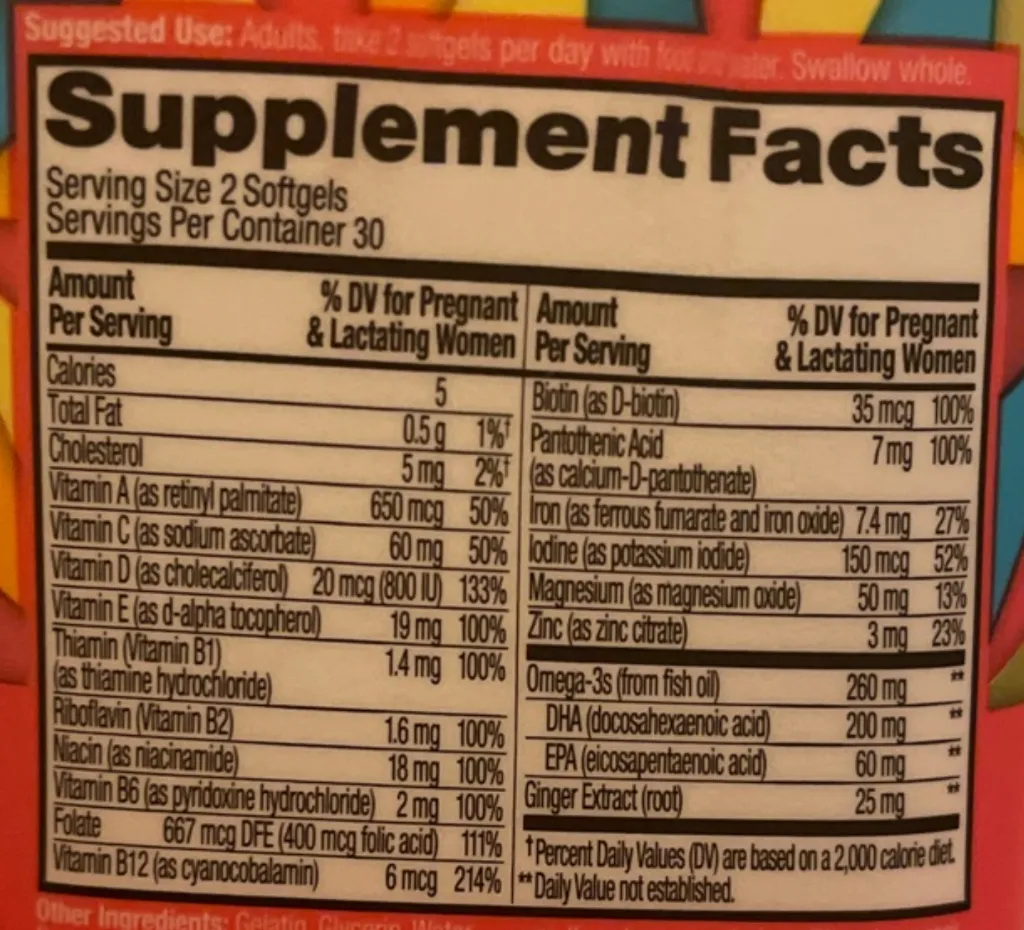
A premium prenatal can still leave you deficient because effective marketing does not equal effective dosing. We recently saw a patient who had been taking a popular, highly-marketed prenatal vitamin for four months. She was doing everything right, eating well, exercising, and never missing a dose of her subscription supplement. When we ran her Pre-Conception Diagnostic, her labs told a different story. After four months, she was still clearly low in several key markers. The supplement, even at the "recommended dose," was not delivering enough to move the needle for her unique biology. This is not a one-off. We see it often when we look at the full picture instead of the label. Supplement facts label from a popular prenatal vitamin showing sub-therapeutic doses of Iron and Vitamin D
What goes wrong inside an "all-in-one" prenatal?

What goes wrong inside an "all-in-one" prenatal is usually one of three problems:
  1. Poor absorption form. Many brands use cheaper forms of nutrients the body has trouble using. A common example is plain folic acid instead of methylfolate (5-MTHF, the active form). About 30 to 40 percent of people carry an MTHFR gene change that makes converting folic acid into the active form much harder.
  2. Sub-therapeutic dosing. All-in-one capsules have limited space. To fit 20+ ingredients into two pills, brands often add only "dusting" amounts of each, doses too small to change your labs.
  3. Antagonistic ingredients. Some nutrients block each other when taken at the same time, like iron and calcium. All-in-ones force these to share a capsule, which can lower how much of each actually absorbs.

Why aren't multivitamins or "green drinks" enough during pregnancy?

Multivitamins and green drinks are not enough during pregnancy because they are built for general convenience, not for the higher demand of growing a baby. In our practice, we have found that broad approaches rarely give the targeted dose needed for high-stakes goals like fertility and pregnancy. If your Vitamin D is low, an all-in-one with 1,000 IU may not be enough when your body actually needs 5,000 IU to reach an optimal range. We focus on function and metabolic health, not on checking a box on a label.

Fishtown Medicine

A 90-minute conversation with Dr. Ash. A written plan you can actually follow.

Book a Free 20-Min Call

How does Fishtown Medicine approach pre-conception nutrition?

Fishtown Medicine approaches pre-conception nutrition by leading with data, not guesswork. We move past the all-in-one trap and toward targeted supplementation. Our framework is rooted in GER·O·SPAN: three Fundamentals you control (Sleep, Physical Activity, Nutrition) and three Modulators that shape you (Genetics, Environment, Relationships). Here is how that plays out for prenatal health:
  1. Baseline testing. We run a deep panel including Ferritin (iron storage), Vitamin D, Vitamin B12, Folate, and a full thyroid panel.
  2. A real "gap" analysis. We look at exactly what your body is missing. If your Ferritin is 20 ng/mL, you likely need a therapeutic dose of iron, which is much higher than the maintenance amount in a multivitamin.
  3. Better forms of each nutrient. We use professional-grade supplements with methylated B vitamins and high-absorption minerals.
  4. Strategic timing. We coach you on how to time supplements, like taking fat-soluble vitamins with a meal, so absorption actually happens.
Dr. Ash
My Perspective:
"A generic prenatal can feel like a 'one-size-fits-none' suit. You may be covered, but the fit is off. We build the strategy around your labs, not a label." Dr. Ash

Actionable Steps in Philly

Pre-conception nutrition checklist for the next 90 days.
  1. Get a full pre-conception lab panel. Ferritin, Vitamin D, B12, Folate, TSH, Free T4, and a comprehensive metabolic panel are a solid starting point.
  2. Check your folate form. Look at your prenatal label. If it says "folic acid," consider switching to a prenatal with "L-methylfolate" or "5-MTHF" after talking with your OB or primary care doctor.
  3. Confirm your iron. If your Ferritin is below 50 ng/mL, you likely need targeted iron beyond what is in your prenatal. Pair iron with Vitamin C and away from coffee or calcium.
  4. Ask about choline. Many popular prenatals miss choline, which matters for fetal brain development. The current target is around 450 to 550 mg per day from food and supplement.
  5. Retest in 90 days. Numbers tell us whether the strategy is working. We adjust the dose until your levels actually land in the optimal range.

Key Takeaways

  • Branding is not dose. A "reputable" or social-media-loved prenatal does not guarantee the right dose for you.
  • Labs beat labels. The only way to know if your supplement is working is to test your levels after 2 to 3 months of use.
  • Forms matter. We look for "methylfolate" (5-MTHF), not "folic acid," so absorption is reliable.
  • Targeted beats generic. A few well-dosed nutrients usually outperform a 25-ingredient all-in-one.

Scientific References

  1. Hovdenak, N., & Haram, K. (2012). Influence of mineral and vitamin supplements on pregnancy outcome. European Journal of Obstetrics & Gynecology and Reproductive Biology, 164(2), 127-132.
  2. Greenberg, J. A., et al. (2011). Folic Acid Supplementation and Pregnancy: More Than Just Neural Tube Defect Prevention. Reviews in Obstetrics & Gynecology, 4(2), 52-59.
  3. Hollis, B. W., & Wagner, C. L. (2004). Vitamin D requirements during pregnancy and lactation. American Journal of Clinical Nutrition, 79(5), 717-726.

Medical Disclaimer: This resource provides Clinical context for educational purposes. In the world of Precision Medicine, there is no "one size fits all", the right supplement protocol must be matched to your unique lab work, physiology, and performance goals. Consult Dr. Ash to determine if this approach is right for you, especially if you have chronic health conditions or are taking prescription medications.

Frequently Asked Questions

Common Questions

It can be dangerous to take high doses of vitamins during pregnancy without testing first. Some nutrients (like Vitamin A as retinol) have an upper limit. Others (like Vitamin D and iron) may need higher doses if you are clearly deficient. We test first so we can land in the safe range, not too little and not too much.
Do not stop any supplement on your own. If you have been on the same prenatal for months and still feel tired or "off," it is time to run a full diagnostic panel to see whether the regimen is doing its job. We can adjust from there.
You do not need a prescription for targeted prenatal supplements, but quality really matters. Many over-the-counter brands are not third-party tested for purity or potency. We give our patients access to vetted, professional-grade dispensaries so what is on the label is actually in the bottle.
You should start taking a prenatal vitamin at least 3 months before trying to conceive. Folate stores, iron stores, and Vitamin D levels take weeks to build. Starting early gives the body time to fill the tank before the demand of pregnancy starts.
The difference between folic acid and methylfolate is the form. Folic acid is the synthetic, inactive form. Methylfolate (5-MTHF) is the active form your body actually uses. People with an MTHFR gene change convert folic acid poorly, so methylfolate is often the better, safer choice.
Most pregnant patients need at least 27 mg of elemental iron per day, and many need more if their Ferritin starts low. We treat to a target Ferritin (often above 50 ng/mL) rather than a fixed dose. Iron is paired with Vitamin C and taken apart from calcium and coffee.
Yes, choline is important in pregnancy and is missing from many popular prenatals. The current target is about 450 to 550 mg per day, between food (eggs, beef, fish, soy) and supplement. Choline supports fetal brain and spinal cord development.
Most patients cannot get all their prenatal nutrients from food alone. Folate, iron, Vitamin D, choline, omega-3 DHA, and iodine are common gaps in a typical American diet. A targeted prenatal plan plus a steady diet of whole foods is usually the safest combination.

Deep-Dive Questions

If you have an MTHFR variant, your body has a harder time turning standard folic acid into the active form. We switch you to a methylated B-Complex with 5-MTHF and methylcobalamin (the active form of B12) and watch your Homocysteine on labs. This is one of the most common reasons a "premium" prenatal still leaves a patient deficient.
Gummy prenatals are usually not the strongest option. They tend to skip iron entirely (because iron tastes bad) and use lower doses of other nutrients to fit a chewable format. They also often contain added sugar. If a gummy is your only path to consistency, we work around the gaps with single-ingredient add-ons.
Yes, you can and should take a prenatal vitamin while trying to conceive. Starting 3 months before conception lets folate, iron, and Vitamin D build up in your body. Both partners benefit from a quality multi at this stage, since male nutrient status also affects sperm quality and fertility.
Men's fertility supplements can be worth it for some patients, but quality varies a lot. Zinc, selenium, CoQ10, omega-3s, and Vitamin D have the strongest data for sperm quality. We tailor the recommendation to lab work, not to a generic "TTC" (trying to conceive) box on the shelf.
Avoid high-dose vitamin A as retinol, ashwagandha, vitex, Saint John's Wort, and most herbal weight-loss or "detox" blends in pregnancy. Many bodybuilding and pre-workout blends also contain ingredients not safe for pregnancy. Always confirm each bottle with your OB.
Fish oil from a clean, third-party tested source is generally considered safe in pregnancy and is often recommended for the DHA component, which supports fetal brain development. Look for an IFOS or USP seal and a low oxidation score. We aim for at least 200 to 300 mg of DHA per day from food and supplement combined.
Yes, Vitamin D is recommended during pregnancy, especially in Philadelphia, where winter sun exposure is limited. Many patients need 2,000 to 5,000 IU per day to reach an optimal blood level (often a 25-OH Vitamin D over 40 ng/mL). We dose by lab value, not by a one-size pill.
Prenatal vitamins can interact with thyroid medication because the iron and calcium in many prenatals block absorption of levothyroxine. We separate the two by at least 4 hours and monitor TSH and Free T4 closely throughout pregnancy.
Yes, most patients should keep taking a prenatal vitamin while breastfeeding. Nutrient demand stays high during lactation. We often continue iron, Vitamin D3, omega-3 DHA, and a methylated B-Complex through at least the first 6 months of breastfeeding, adjusted by labs.
If iron upsets your stomach, switch to a gentler form like iron bisglycinate, or take iron every other day. Pair it with Vitamin C, take it apart from calcium and coffee, and aim for a target Ferritin on follow-up labs. Some patients do better with a separate iron supplement and a low-iron prenatal.
Yes, there are strong pre-conception care options in Philadelphia. Penn Medicine, Jefferson Health, and several private OB groups in Center City and Northern Liberties offer pre-conception counseling. At Fishtown Medicine, we coordinate the lab work, supplement plan, and lifestyle pieces alongside your OB.
To know which prenatal brand to trust, look for an NSF or USP seal, a published Certificate of Analysis (CoA, the lab report on a specific batch), methylated forms of folate and B12, a real dose of iron, and added choline. Brands like Thorne, FullWell, Needed, and Pure Encapsulations often check these boxes, though we always tailor the choice to your labs.
If you are vegetarian or vegan, your prenatal plan needs extra attention to Vitamin B12, iron, omega-3 DHA from algae, choline, and zinc. These nutrients are harder to get from a plant-only diet during pregnancy. We track them closely on labs and adjust doses as you progress.

---
- Fertility Optimization and Pre-Conception Health - Supplement Strategy: A Clinical Guide - MTHFR and Methylation: Why It Matters

---

*Dr. Ash is a board-certified internal medicine physician specializing in preventive medicine and healthspan optimization at Fishtown Medicine in Philadelphia. He takes a systems-thinking approach to help patients extend their healthspan, not just treat symptoms.*

{{TRUST_BLOCK}}

Still have a question?

He answers personally. Usually within a few hours.

Related Intelligence

Longevity Strategies | Fishtown Medicine

Longevity Strategies | Fishtown Medicine

Strategies to extend your healthspan and optimize lifespan in Philadelphia.

Read Deep Dive
Metabolic Health

Metabolic Health

Why you feel tired at 3 PM, and how to fix it.

Read Deep Dive
Fertility Optimization & Pre-Conception Health | Philadelphia

Fertility Optimization & Pre-Conception Health | Philadelphia

Don't wait for "infertility" to start thinking about fertility. Dr. Ash optimizes metabolic health, thyroid, and nutrient status to prepare your body for pregnancy.

Read Deep Dive

Talk it through with Dr. Ash.

If anything you read here raised a question, this is a free 20-minute Warm Invitation Call. Pick a time and we’ll work through it together.

HSA/FSA eligible
No initiation or cancellation fees
No copays

Loading scheduler...

Having trouble with the scheduler? Book directly on Dr. Ash’s calendar

FishtownFish wrapped around the rod of AsclepiusMedicine
Philadelphia Primary Care
2418 E York St, Philadelphia, PA 19125Home visits in Greater Philadelphia

Serving Fishtown · Art Museum · Bella Vista · Callowhill · Center City · Center City West · Chestnut Hill · East Kensington · Fairmount · Fitler Square · Graduate Hospital · Logan Square · Manayunk · Northern Liberties · Old City · Olde Richmond · Poplar · Port Richmond · Queen Village · Rittenhouse · Roxborough · Society Hill · Southwark

Explore by topic

Women’s Health
  • Perimenopause
  • Menopause 3.0
  • PCOS
  • Fertility
Men’s Health
  • TRT Therapy
  • TRT Safety
  • TRT vs Enclomiphene
  • Low Libido
Metabolic
  • Medical Weight Loss
  • Ozempic vs Metformin
  • Fasting Protocols
  • Visceral Fat
Cardiovascular
  • apoB & Heart Health
  • apoB vs LDL
  • Lp(a) Cholesterol
  • ED & Heart Risk
Longevity + Performance
  • Healthspan vs Lifespan
  • Biological Age
  • VO2 Max
  • Zone 2 Training
Supplements
  • Magnesium
  • Creatine
  • Omega-3
  • Foundational Stack

Content is for educational purposes only and does not constitute medical advice.

TermsPrivacyScope of PracticeClinical Independence