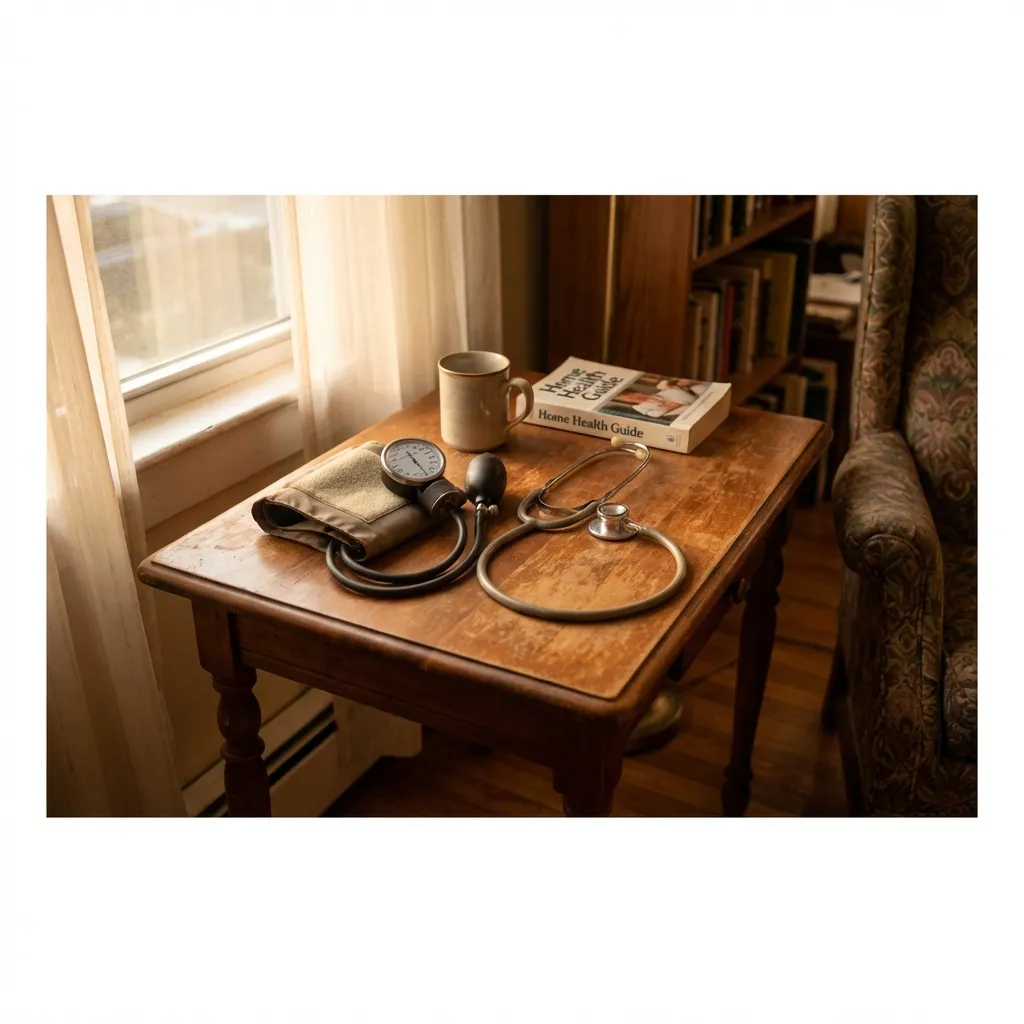
At-home health monitoring uses clinical-grade devices like a validated blood pressure cuff, smart scale, pulse oximeter, and continuous glucose monitor (CGM) to give your doctor 30 days of data instead of one snapshot. Better data leads to faster diagnoses and clearer treatment plans.
TL;DR: Good healthcare keeps going after you leave the clinic. By using a few key at-home health monitoring tools, you can give Dr. Ash high-resolution data that leads to more precise diagnoses and more effective treatment plans.
A standard physical is one snapshot in time. At-home monitoring turns that snapshot into a movie of your daily life, with stress, sleep, food, and activity all baked in. The result is fewer guesses and faster, smarter clinical decisions.
Table of Contents
- Why At-Home Data Matters
- Essential At-Home Monitoring Tools
- How to Share Your Data
- Guidelines from the Clinic
- Common Questions
- Deep Questions
Why does at-home health data matter?
At-home health data matters because a single doctor's visit is one snapshot in time, and that snapshot can be distorted by the "white coat effect," a stress-driven blood pressure spike that happens in clinics. At-home health monitoring lets us see the movie of your health: how your body reacts to your everyday diet, stress, and sleep patterns in Philadelphia.
When you track metrics like blood pressure or glucose at home, we get more data points, more accuracy, and the ability to spot trends months before they would show up on an annual lab draw.
What are the essential at-home monitoring tools?
The essential at-home monitoring tools are a validated blood pressure monitor, a digital pulse oximeter, a smart body composition scale, and (when appropriate) a continuous glucose monitor. We recommend clinical-grade tools that prioritize accuracy over marketing hype.
1. Blood Pressure Monitor
A reliable cuff is the most important tool for cardiovascular health, and one good one covers the whole household. Get an upper-arm monitor, since wrist cuffs are less accurate, and confirm your model is validated at ValidateBP.org.
- Recommended: any validated upper-arm cuff. Omron and Withings are dependable, and Wirecutter's roundup of the best home blood pressure monitors is a good place to compare and buy (their current pick stores readings for 2 people, handy for a couple or a family).
- Tip: Take readings at the same time each day (for example, first thing in the morning), seated for 5 minutes first with your back supported, feet flat, arm at heart level, and no talking during the reading. Most "high" home readings are really technique errors.
- Worth a spot check: if you feel dizzy, lightheaded, unusually weak, shaky the way a low blood sugar feels, or a headache that will not ease, take a reading. A number in the moment (high, low, or normal) helps us sort out what is going on faster. For severe chest pain, trouble breathing, or stroke signs (face droop, arm weakness, slurred speech), call 911 first rather than stopping to measure.
2. Digital Pulse Oximeter
A pulse oximeter is a fingertip device that measures the percentage of oxygen in your blood. It is useful for monitoring respiratory health, particularly during the Philly winter or if you have conditions like asthma or sleep apnea.
- Recommended: A simple, FDA-cleared fingertip device.
3. Smart Scale (Body Composition)
Weight alone is a poor metric for health. We focus on body composition, which is the ratio of muscle, fat, and water in your body.
- Recommended: Withings Body Scan or similar scales that track muscle mass and body fat percentage.
4. Continuous Glucose Monitor (CGM)
A continuous glucose monitor (CGM), like Dexcom or Libre, is a small sensor that tracks your blood sugar every few minutes for 10 to 14 days. For patients focused on metabolic health, a CGM gives real-time feedback on how specific foods affect your blood sugar. CGMs require a prescription, so let's discuss if this is right for you.
How do I share my health data with Dr. Ash?
You share your health data with Dr. Ash through direct app integration, secure photo upload, or PDF exports. Collecting data is only half the work. Sharing it is what makes it useful, and our step-by-step guide to connecting your wearable and glucose data covers the setup for each device.
- Direct App Integration: Many of our recommended devices (like Withings) link directly to our patient portal.
- Secure Photo Upload: Use our secure portal to send a photo of your blood pressure reading or a screenshot of your Oura trends.
- PDF Exports: Most health apps allow you to export a 30-day clinician report. Send these to us for review before your next consultation.
Guidelines from the Clinic

How Fishtown Medicine Approaches Data
We are data-driven but context-aware. We do not want you to become obsessed with the numbers. We want you to be informed by them. Our GER·O·SPAN framework uses this data to refine your recovery, nutrition, and physical capacity strategies.
Actionable Steps in Philly
Turn your home into a health-tracking powerhouse.
- Check Your Current Devices: If you have an old BP cuff, verify its accuracy. If it is more than 5 years old, it likely needs calibrating or replacing.
- Establish a Baseline: Choose one metric (like resting heart rate or morning blood pressure) and track it for 7 days in a row.
- Sync Your Apps: Connect your primary health apps (Apple Health, Withings, Oura) to your secure patient portal.
- Pick One Routine: Tie a daily reading to an existing habit, like measuring blood pressure right after your morning coffee. Consistency beats intensity.
Key Takeaways
- At-home health monitoring gives a more accurate view of your health than a single clinic visit.
- We recommend clinical-grade, validated devices like Withings or Omron.
- Sharing data through secure messaging makes it part of your clinical record.
- Focus on the trends, not single data points, to guide your health strategy.
Scientific References
- Stergiou GS, et al. "Home blood pressure monitoring: methodology, clinical relevance and practical application: a 2021 position paper by the Working Group on Blood Pressure Monitoring and Cardiovascular Variability of the European Society of Hypertension." Journal of Hypertension. 2021.
- Battelino T, et al. "Clinical Targets for Continuous Glucose Monitoring Data Interpretation: Recommendations From the International Consensus on Time in Range." Diabetes Care. 2019.
- Perez MV, et al. "Large-Scale Assessment of a Smartwatch to Identify Atrial Fibrillation." New England Journal of Medicine. 2019.
- Bent B, et al. "Investigating sources of inaccuracy in wearable optical heart rate sensors." npj Digital Medicine. 2020.
Dr. Ash is a board-certified internal medicine physician specializing in preventive medicine and healthspan optimization at Fishtown Medicine in Philadelphia.

Frequently Asked Questions
Common Questions
Deep-Dive Questions
Ready when you are
The chat is our AI assistant, answering from our published guides. To talk it through with Dr. Ash himself, start with the intake.