FishtownFish wrapped around the rod of AsclepiusMedicine
Philadelphia Primary Care
How It Works
What People Say
Patient reviews across 6 platforms
Articles
Symptoms
What your body is telling you
Treatments
Protocols, prescriptions, therapies
Longevity
Medicine 3.0 strategies
Heart Health & Risk
Protect your heart & vessels
Metabolism
Insulin, blood sugar, weight
Hormones
TRT, thyroid, menopause, andropause
Performance
VO2 max, muscle, sleep, gut
Playbooks
Step-by-step frameworks
About
Meet Dr. Ash
Your Physician
GERO·SPAN
Our Clinical Framework
FAQ
Common Questions
Book a Free Call
The CGM Guide: High-Resolution Metabolism
Fishtown Medicine•5 min read

The CGM Guide: High-Resolution Metabolism

Continuous data for continuous health. How we use CGMs to find the subtle shifts standard labs miss.

On This Page
  • Table of Contents
  • What is a CGM?
  • Why do non-diabetics use a CGM?
  • What does a CGM show that standard labs do not?
  • Guidelines from the Clinic
  • How We Use the Data
  • Actionable Steps for Metabolic Clarity
  • Key Takeaways
  • Common Questions
  • What is a CGM?
  • Do I need a prescription for a CGM?
  • How long do you wear a CGM?
  • Does a CGM hurt?
  • Can I shower with a CGM?
  • How accurate are CGMs?
  • What is a normal blood sugar range?
  • Will a CGM help me lose weight?
  • Deep Questions
  • What is glycemic variability and why does it matter?
  • How does a CGM detect early insulin resistance?
  • Why does my blood sugar spike when I am stressed?
  • How does sleep affect blood sugar?
  • What is the dawn phenomenon?
  • How does exercise change CGM patterns?
  • Can a CGM diagnose diabetes?
  • What is the difference between fasting glucose and CGM readings?
  • How does alcohol affect CGM data?
  • Are CGMs worth the cost for healthy adults?
  • How does Fishtown Medicine choose between Dexcom, Libre, and Stelo?
  • What happens after my 14-day CGM audit?
  • Scientific References

Get a preventive doctor that knows you.

Consult Dr. Ash
TL;DR · 30-second take

A CGM (Continuous Glucose Monitor) is a small skin sensor that tracks your blood sugar every few minutes for 10 to 14 days. Non-diabetics use it to see how meals, sleep, and stress shape energy and long-term metabolic health, often years before standard labs would show a problem.

The CGM Guide: High-Resolution Metabolism

TL;DR: A CGM (Continuous Glucose Monitor) is a small wearable sensor that tracks your blood sugar every few minutes, 24 hours a day. At Fishtown Medicine, we use CGMs preventively to find the subtle metabolic shifts that standard labs miss. You do not need diabetes to benefit from knowing how your body responds to food, stress, and sleep. For high-performing adults in Philly, a CGM often answers a simple question: why am I tired at 3 p.m. even though I ate "healthy" food? The data usually tells a clear story, and the fix is much more specific than another generic diet plan.

Table of Contents

  • What is a CGM?
  • Why Non-Diabetics Use Them
  • What It Shows That Labs Don't
  • Guidelines from the Clinic
  • Common Questions
  • Deep Questions

What is a CGM?

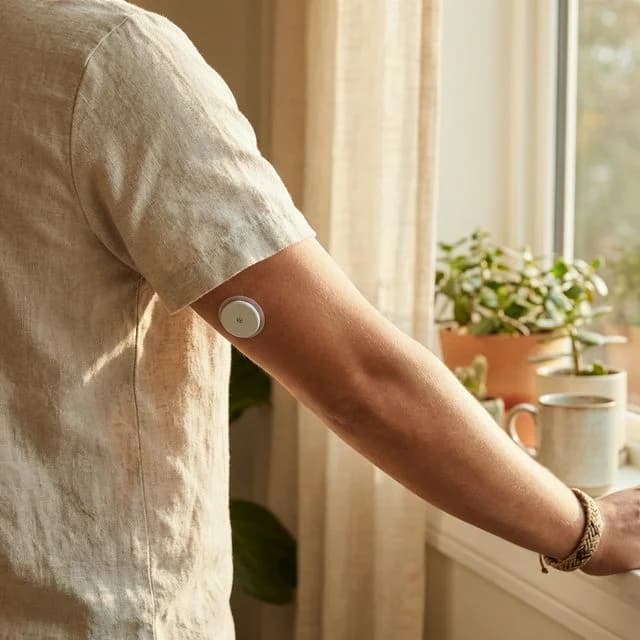
A CGM (Continuous Glucose Monitor) is a discreet sensor that sits on the back of your arm. It measures your interstitial glucose, which is the sugar in the fluid between your cells, and sends that data directly to your phone. It is waterproof, nearly painless, and lasts for 10 to 14 days.

Why do non-diabetics use a CGM?

Non-diabetics use a CGM to fine-tune energy, sleep, and long-term metabolic health, not just to manage disease. We use CGMs for patients who want to improve their longevity and performance.
  • Energy Optimization: Find the crashes that cause afternoon brain fog.
  • Sleep Architecture: See if overnight glucose dips are waking you at 3 a.m.
  • Glycemic Variability: Track how chaotic or stable your blood sugar is across the day.
  • PCOS & Insulin Resistance: Catch early shifts in metabolism years before they show up on an A1C test (the 90-day average blood sugar).

What does a CGM show that standard labs do not?

A CGM shows the moment-to-moment behavior of your blood sugar, while standard labs only show an average. Your A1C may look "perfect" at 5.2 percent. A CGM may still reveal that you spike to 180 mg/dL after a "healthy" oatmeal breakfast, then crash to 65 mg/dL two hours later. These spikes and crashes drive inflammation and hunger, and they are invisible to standard one-time blood tests.

Guidelines from the Clinic

Dr. Ash
"A CGM is a flight recorder for your metabolism. It removes the guesswork from nutrition. Instead of following a generic diet, you can see exactly how your biochemistry reacts to a bowl of rice versus a piece of sourdough. Data builds momentum. When you see a spike line up with your fatigue, you do not need willpower to make a change. You just need the data."

How We Use the Data

  1. Macro-Balancing: We help you adjust your protein and fiber intake to blunt the glucose response of your favorite meals. A macronutrient is a major energy source: protein, fat, or carbohydrate.
  2. Exercise Timing: We show how a 10-minute walk after a meal can sharply lower a glucose spike.
  3. Stress Awareness: We identify how a stressful meeting at work drives your glucose up even when you have not eaten.

Actionable Steps for Metabolic Clarity

Master your daily energy.
  1. Perform a 14-Day Audit: Wear a sensor for two weeks to set your metabolic baseline.
  2. Test Your Staples: Eat your usual breakfast and watch the app. If you spike above 140 mg/dL, we adjust the macros.
  3. Check Your 3 a.m. Wakes: If your glucose drops sharply before you wake up, we may need to adjust your evening meal or Sleep Strategy.
  4. Walk After Meals: Test the same meal with and without a 10-minute walk after eating. The CGM will show you the size of the difference.

Key Takeaways

  • CGMs provide real-time data, not just snapshots.
  • They are used for energy, sleep, and prevention, not only diabetes.
  • They help identify glycemic variability (the spikiness of your blood sugar).
  • We use the data to build your precision nutrition plan.

Scientific References

  1. Battelino T, et al. "Clinical Targets for Continuous Glucose Monitoring Data Interpretation." Diabetes Care. 2019.
  2. Hall H, et al. "Glucotypes reveal new patterns of glucose dysregulation." PLOS Biology. 2018.
  3. Reynolds AC, et al. "Impact of five nights of sleep restriction on glucose metabolism, leptin and testosterone in young adult men." PLOS One. 2012.
  4. Buffey AJ, et al. "The Acute Effects of Interrupting Prolonged Sitting Time in Adults with Standing and Light-Intensity Walking on Biomarkers of Cardiometabolic Health." Sports Medicine. 2022.

Dr. Ash is a board-certified internal medicine physician specializing in preventive medicine and healthspan optimization at Fishtown Medicine in Philadelphia.

Ashvin Vijayakumar MD (Dr. Ash)

Fishtown Medicine | About

2418 E York St, Philadelphia, PA 19125·(267) 360-7927·hello@fishtownmedicine.com·HSA/FSA Eligible

Inquire Now
Medical Disclaimer: This resource provides clinical context for educational purposes. In the world of Precision Medicine, there is no "one size fits all"; the right plan must be matched to your unique lab work, physiology, and goals. Consult Dr. Ash to determine if this approach is right for you, especially if you have chronic health conditions or are taking prescription medications.

Frequently Asked Questions

Common Questions

A CGM (Continuous Glucose Monitor) is a small skin sensor that measures glucose every few minutes for 10 to 14 days. The sensor sits on the back of your arm and sends data wirelessly to your phone, so you can see how your blood sugar reacts in real life.
You usually need a prescription for medical-grade CGMs like Dexcom or Libre, although some over-the-counter sensors (Stelo, Lingo) are now available. Even with an over-the-counter sensor, we recommend physician guidance to interpret the data.
You wear each sensor for 10 to 14 days, depending on the brand. For a baseline metabolic audit at Fishtown Medicine, we usually use one or two sensors back-to-back, for a total of 14 to 28 days of data.
A CGM does not hurt for most people. The sensor uses a tiny filament under the skin that you cannot feel during normal activity. The application takes a few seconds and feels like a quick pinch.
Yes, you can shower with a CGM. Modern sensors are waterproof and stay in place during showering, swimming, and exercise. Some patients use a sticker overlay for extra security during heavy training.
CGMs are accurate for the trends and patterns we use clinically. They are slightly behind a finger-stick blood test in real time because they measure interstitial fluid, not blood. The trend is what matters most for metabolic decisions.
A normal fasting blood sugar is roughly 70 to 99 mg/dL, and most healthy people stay below 140 mg/dL after meals. On a CGM, we look for steady, gentle curves and limited time above 140 mg/dL or below 70 mg/dL.
A CGM can help with weight management by showing which foods cause your biggest spikes and crashes, and by linking those crashes to hunger and snacking. Pair the data with a structured nutrition plan, and many patients eat less by accident because their hunger drops.

Deep-Dive Questions

Glycemic variability is the size of the swings between your highest and lowest blood sugar during the day. High variability is linked to inflammation, fatigue, and worse cardiovascular outcomes, even when the average (A1C) looks normal.
A CGM can detect early insulin resistance by showing prolonged spikes after meals and slow returns to baseline. Insulin resistance is when cells stop responding well to insulin, the hormone that moves sugar into cells. The CGM reveals this years before A1C rises into the prediabetic range.
Your blood sugar spikes when you are stressed because cortisol and adrenaline tell the liver to release stored glucose. This is helpful for short-term threats, but during chronic work stress it produces unnecessary glucose loads, which can show up clearly on a CGM.
Sleep affects blood sugar because even one bad night can lower insulin sensitivity by 20 to 30 percent the next day. CGMs often show flatter, healthier curves after a good night and more chaotic spikes after a poor one, which makes sleep changes feel concrete.
The dawn phenomenon is a small, natural rise in blood sugar between roughly 4 a.m. and 8 a.m., driven by morning cortisol and growth hormone. A modest rise is normal. Large rises can suggest early insulin resistance and deserve further evaluation.
Exercise changes CGM patterns by lowering glucose during and after activity. A 10-minute walk after a meal can drop a typical spike by 30 to 50 mg/dL. Strength training and zone 2 cardio (steady moderate-effort cardio) improve overall insulin sensitivity over weeks.
A CGM can suggest a diabetes pattern, but it does not replace formal diagnostic testing. Diabetes is diagnosed with fasting glucose, A1C, or an oral glucose tolerance test. A CGM is most useful for finding earlier metabolic shifts before those tests are abnormal.
Fasting glucose is one number from one moment, usually drawn first thing in the morning. CGM readings are continuous, so you see the full daily pattern. The two are complementary, not interchangeable.
Alcohol affects CGM data by lowering blood sugar overnight, sometimes into the 50s and 60s mg/dL. This drop can disturb sleep, drive cravings, and worsen the next day's glucose response. Many patients see this clearly only after one weekend on the sensor.
CGMs can be worth the cost for healthy adults who want a focused 14 to 28 day audit, especially if they have brain fog, weight stalls, or sleep issues. Long-term use is usually not necessary; the goal is to learn your patterns, then apply the lessons.
Fishtown Medicine chooses between Dexcom, Libre, and Stelo based on your goals, budget, and whether you need real-time alerts. Dexcom and Libre have the strongest clinical track record. Stelo is over-the-counter and useful for basic education in healthy adults.
After your 14-day CGM audit, we review the data together and translate the patterns into a personalized plan. That plan usually includes meal adjustments, exercise timing, sleep tweaks, and (when appropriate) targeted lab work or medication.

Still have a question?

He answers personally. Usually within a few hours.

Related Intelligence

The Informed Patient: A Guide to At-Home Health Monitoring

The Informed Patient: A Guide to At-Home Health Monitoring

Equip your home with the right tools. Learn which clinical devices Dr. Ash recommends for at-home monitoring and how to share your data for better care.

Read Deep Dive
Precision Prevention: The Role of Genetic Testing

Precision Prevention: The Role of Genetic Testing

Understand your blueprint. Learn how Fishtown Medicine uses advanced genetic testing to identify personal health risks and optimize your longevity strategy.

Read Deep Dive
Building Your Health History: How to Share Previous Records

Building Your Health History: How to Share Previous Records

Ensure continuity of care. Learn how to securely share your previous medical records, labs, and imaging results with Dr. Ash for a more complete health assessment.

Read Deep Dive

Talk it through with Dr. Ash.

If anything you read here raised a question, this is a free 20-minute Warm Invitation Call. Pick a time and we’ll work through it together.

HSA/FSA eligible
No initiation or cancellation fees
No copays

Loading scheduler...

Having trouble with the scheduler? Book directly on Dr. Ash’s calendar

FishtownFish wrapped around the rod of AsclepiusMedicine
Philadelphia Primary Care
2418 E York St, Philadelphia, PA 19125Home visits in Greater Philadelphia

Serving Fishtown · Art Museum · Bella Vista · Callowhill · Center City · Center City West · Chestnut Hill · East Kensington · Fairmount · Fitler Square · Graduate Hospital · Logan Square · Manayunk · Northern Liberties · Old City · Olde Richmond · Poplar · Port Richmond · Queen Village · Rittenhouse · Roxborough · Society Hill · Southwark

Explore by topic

Women’s Health
  • Perimenopause
  • Menopause 3.0
  • PCOS
  • Fertility
Men’s Health
  • TRT Therapy
  • TRT Safety
  • TRT vs Enclomiphene
  • Low Libido
Metabolic
  • Medical Weight Loss
  • Ozempic vs Metformin
  • Fasting Protocols
  • Visceral Fat
Cardiovascular
  • apoB & Heart Health
  • apoB vs LDL
  • Lp(a) Cholesterol
  • ED & Heart Risk
Longevity + Performance
  • Healthspan vs Lifespan
  • Biological Age
  • VO2 Max
  • Zone 2 Training
Supplements
  • Magnesium
  • Creatine
  • Omega-3
  • Foundational Stack

Content is for educational purposes only and does not constitute medical advice.

TermsPrivacyScope of PracticeClinical Independence