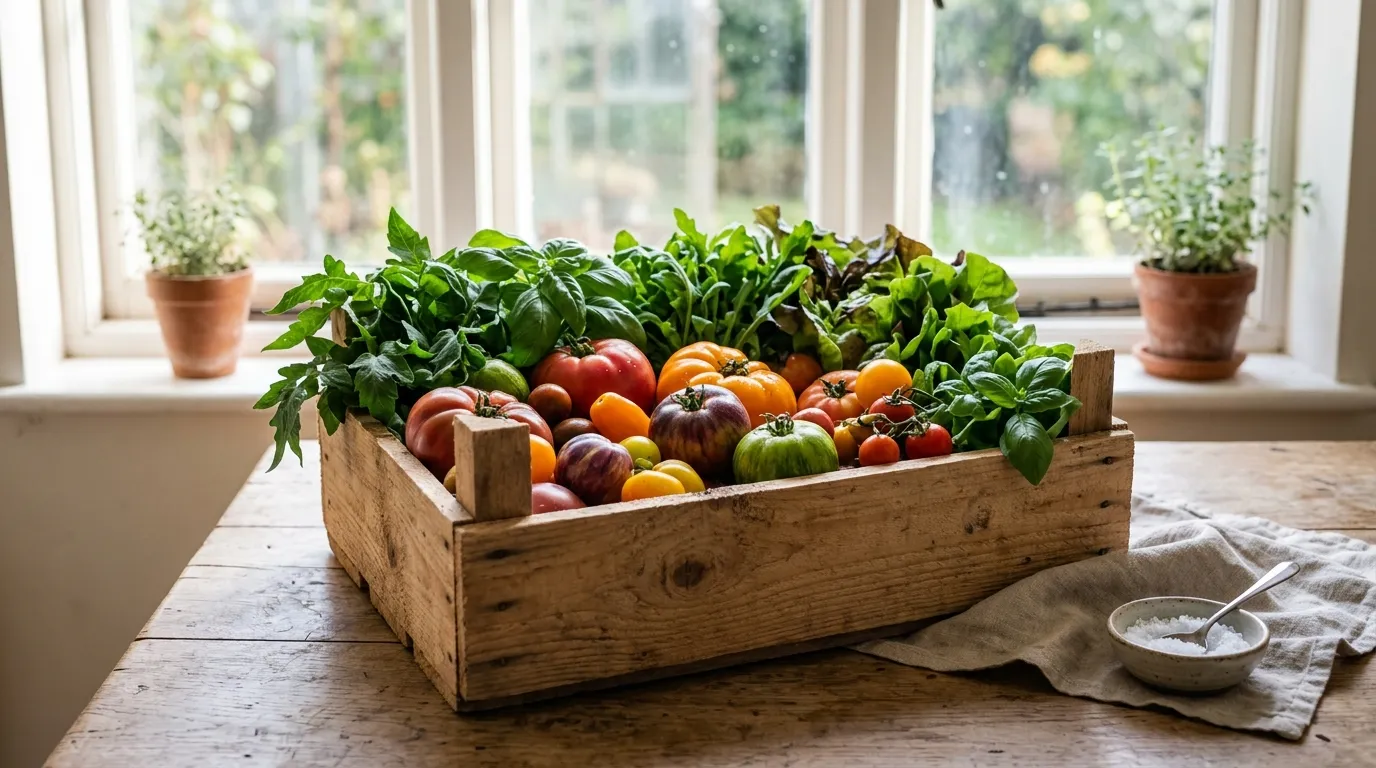

Philadelphia lies at the meeting point of Lancaster County farmland and the Jersey shore, which makes local sourcing easy. The most useful clinical tools are CSAs like Lancaster Farm Fresh, online aggregators like Philly Foodworks, neighborhood grocers like Riverwards Produce, and seafood from Fishtown Seafood. Use them to lower friction and raise nutrient density.
Why I prescribe logistics
In my Fishtown practice, the line between "healthcare" and "grocery shopping" is almost gone. When I look at a patient's metabolic panel and see the early warning signs of insulin resistance or chronic inflammation, my first thought is about more than medication. It is about what they are eating every day.
But telling a patient to "eat better" is unhelpful, because it ignores how busy life is.
Most Americans live in a country where the easiest option is processed, inflammatory convenience food. To change your biology, you have to change your logistics. You need a system that delivers nutrient-dense, chemical-free food with the same reliability as your Amazon orders.
Philadelphia is surrounded by a goldmine. We are at the meeting point of the Atlantic Coastal Plain and the Piedmont. To our west, Lancaster County has some of the densest organic farming in the country. To our east, the sandy soils of New Jersey produce excellent tomatoes and peppers. We have access to a pharmacy of plant compounds, dressed up as a farmers market.
This guide is your operations manual. I have laid out how to source regenerative produce, pasture-raised proteins, and wild seafood in Philly, because for many patients, changing where food comes from is one of the most useful changes we can make.
The biochemistry of local: why it matters
The case for "local" comes down to biochemistry, and the benefits show up in your bloodwork.
The nutrient decay curve
Think of a head of spinach like a battery. As soon as it is picked, the charge starts to drain.
Standard industrial produce travels an average of 1,500 miles to reach a Philadelphia supermarket. During that trip, often a week or more, heat, light, and oxidation break down the therapeutic value of the food.
- Folate and Vitamin C: Leafy greens can lose half their folate (a B vitamin essential for healthy red blood cells and DNA repair) within days of harvest if they are not chilled fast.
- Phytonutrients: Plant compounds that help your liver clear toxins, like glucosinolates in kale, also break down quickly.
When you buy from a local network like Lancaster Farm Fresh or Philly Foodworks, the supply chain shrinks to 24 to 48 hours, and you get the dose of nutrients the food was meant to provide.
Soil health equals mineral density
You cannot get minerals out of a plant if they were never in the soil. Decades of industrial farming have stripped topsoil of magnesium, zinc, and selenium.
That is why I point patients toward regenerative farms like FarmerJawn or Rancocas Creek. These farms focus on soil biology. When the soil microbiome is strong, plant roots pull up more micronutrients. A carrot grown in that soil carries the minerals that support your thyroid and immune system.
Reducing the chemical burden
A core goal in Medicine 3.0 is reducing the total load on your body. We want to lower the work your liver has to do.
Direct sourcing makes that easier. USDA Organic is helpful, but knowing your source is even better. Places like Riverwards Produce name the specific farm for every item. When you buy from Heavy Metal Sausage Co., you get whole-animal protein without the synthetic nitrates and fillers in industrial deli meats. That protects your gut microbiome.
Where do I source vegetables and fruit in Philly?
Eating more plants is the baseline. Here is how to make that automatic.
The CSA: your adherence engine
Community Supported Agriculture (CSA) is more than a box of vegetables. It is a contract. When you pre-pay for a season, you commit to engaging with whole foods. The box arrives, and you have to cook. That breaks the takeout cycle.
Lancaster Farm Fresh Cooperative (LFFC)
This is the logistical backbone of organic food in our region. It is a non-profit co-op of more than 100 small family farms.
- Why I like it: Reliability. If one farm gets hit by hail, another fills the gap. You still get your box.
- Logistics: They have pickup sites on nearly every corner of the city. That lowers the barrier to entry.
- Clinical note: They are Certified Organic, which is the baseline I recommend for patients with autoimmune issues or high toxic load.
FarmerJawn
This is where soil health meets social justice. Christa Barfield runs the largest Black-woman-owned regenerative organic farm in America.
- The vibe: "Agriculture is the culture."
- The offering: 26-week shares that include lifestyle products like herbal teas.
- The trade-off: They do not offer refunds or makeup days, so you need to plan ahead and be ready to commit to the full season.
The aggregator: Philly Foodworks
For the busy professional who cannot deal with the surprise of a CSA box, Philly Foodworks is the answer.
- The model: It is an online farmers market. Order what you want, when you want.
- The win: Home delivery. They cover the whole city and the close suburbs.
- Clinical use case: Great for patients with specific dietary needs, like low-FODMAP, who need to control their list. Also great for anyone who cannot lift a heavy CSA box.
This is what my family uses. Between running a practice and the chaos of family life in Fishtown, I do not always make it to a Saturday market. My wife and I tried the CSA route for a season. We loved the produce, but we still ended up staring at a celeriac at 6 PM on a Tuesday. Philly Foodworks solved that. We log in Sunday night, pick what we know we will cook that week, and it shows up at our door. Nothing goes to waste, and we know where each vegetable came from. My son is more likely to eat something when it came from a farm he can look up and we can visit. That transparency matters at home and in the clinic.
The neighborhood grocer: Riverwards Produce
Located right here in Fishtown and in Old City, Riverwards is the bridge. They source from the same farms that serve the best restaurants in town.
- Transparency: The signs name the farm that grew the peppers.
- No excuses: Open 7 days a week. You do not have to wait for a Saturday market.
Farmers markets: the point of care
For sensory experience, and for SNAP benefits, nothing beats the physical market.
The Food Trust Market Network
These markets are critical local infrastructure.
- Clark Park (West Philly): Saturdays. A massive hub.
- Headhouse (Society Hill): Sundays. The "cathedral" of local food.
- Fitler Square: Saturdays. Good for year-round greens through hydroponic growers.
Protein: less volume, higher quality
In preventive medicine, we focus on protein quality. If you eat meat, the goal is "less but better." We want to avoid the high-omega-6 fat profile of grain-fed feedlot animals.
The biochemistry of pasture-raised
Fishtown Medicine
A 90-minute conversation with Dr. Ash. A written plan you can follow.
The animal's diet shapes your cell membranes.
- Omega-6 vs omega-3: Animals raised on pasture (eating grass and clover) have a more favorable, anti-inflammatory ratio of fatty acids.
- Vitamins: Grass-finished beef is higher in vitamin E and CLA (a fatty acid linked to better metabolic markers).
- Antibiotics: Pasture-raised animals are usually healthier and need fewer antibiotics.
The butcher as partner
Heavy Metal Sausage Co. (South Philly)
Pat Alfiero does artisanal charcuterie the right way. Delivers city-wide.
- The difference: They butcher whole local animals.
- Harm reduction: If you love deli meats but hate the nitrates and fillers, this is your upgrade.
KP's Fine Meats (Port Richmond)
Kevin Penney runs a shop that feels old-school but uses modern sourcing ethics.
- The buy: 100% grass-fed and grass-finished beef.
- Useful tip: Ask for the "canoe cut" marrow bones. Roast them for collagen and glycine, two amino acids that support gut lining repair.
- Access: They deliver.
Giunta's Prime Shop (Reading Terminal)
High volume, high energy.
- Navigation: They sell everything, so be specific. Ask for the antibiotic-free, pasture-raised lines.
- Utility: They ship. If you cannot get to Reading Terminal Market, they can get the meat to you.
Seafood: the omega-3 strategy
Fish is brain food. Patients are often worried about mercury and fraud. In Philly, we have a clear path.
Fishtown Seafood
This is my top pick. Bryan Szeliga is obsessive about supply chain transparency.
- The tech: He uses "super frozen" technology at minus 76 degrees Fahrenheit. That locks in quality and prevents histamine buildup, which is a major trigger for some sensitive patients.
- The sourcing: Everything is traceable. No mystery fish.
Fishadelphia
A Community Supported Fishery (CSF) that connects Philadelphia directly to the Jersey Shore.
- The catch: They focus on under-loved species like porgy and dogfish.
- Why I like it: These smaller fish are lower on the food chain, which usually means less mercury build-up than tuna.
Pantry upgrades: ferments and grains
Health happens in the small details.
- Food and Ferments: Traditional sauerkraut and kimchi, raw and unpasteurized, which means the Lactobacillus bacteria are alive. I often recommend their beet kvass for dietary nitrates that support healthy blood pressure.
- Castle Valley Mill: If you eat grains, eat these. They stone-grind grains and keep the germ and oils intact. Your blood sugar response is very different than with bleached white flour.
- Broth Thyme: Bone broth is rich in amino acids like proline and glycine. Buying it frozen by the quart is a smart hack for post-surgery recovery or gut healing.
Equity: good food is a right
The benefits of better nutrition should not depend on your zip code.
- Philly Food Bucks Rx: I use this clinical tool to "prescribe" produce. Patients receive vouchers for fresh fruits and vegetables.
- The SNAP multiplier: If you use SNAP or EBT at Food Trust markets, you receive a $2 bonus for every $5 you spend. That stretches your food budget by 40%.
- MANNA: For patients who are too sick to cook, MANNA delivers medically tailored meals, which can be a lifeline.
Guidance from the Clinic
"In my practice, I have found that the biggest barrier to healthy eating is not willpower. It is friction. By setting up a CSA share or finding a butcher who delivers, you remove the daily decision fatigue and automate your health.
I care about more than your lipid panel. I want to know where you buy your eggs. We have to build a system that makes the healthy choice the default choice."
Dr. Ash
How we approach this at Fishtown Medicine
At Fishtown Medicine, we do more than hand you a pamphlet. We figure out the logistics together.
I screen for food insecurity during intake because I need to know what constraints you are working with. If you qualify, we connect you with Philly Food Bucks. If you are a busy professional, we set you up with home delivery.
- The busy professional: Philly Foodworks (frictionless).
- The habit builder: LFFC CSA (cost-effective and forces cooking).
- The budget-conscious: Clark Park (SNAP benefits and fresh air).
- The carnivore: KP's Fine Meats (nutrient density).
We are the Chief Medical Officer of your life. That includes the supply chain in your kitchen.
Actionable Steps in Philly
Build your local food system in 3 weeks.
- Week 1: Sign up for one weekly source, either a Philly Foodworks order, a Lancaster Farm Fresh CSA share, or a recurring Riverwards Produce trip.
- Week 2: Pick one protein source, like a delivery from KP's Fine Meats or a Fishtown Seafood pickup. Stock the freezer.
- Week 3: Add one ferment, like Food and Ferments sauerkraut, to two meals per week. Track how your gut feels.
Scientific References
- Barrett DM. Maximizing the nutritional value of fruits and vegetables. Food Technology. 2007;61(4):40-44. Discussion of nutrient loss after harvest.
- Daley CA, et al. A review of fatty acid profiles and antioxidant content in grass-fed and grain-fed beef. Nutrition Journal. 2010;9:10. Evidence for favorable omega ratios in pasture-raised meat.
- Montgomery DR, et al. Soil health and nutrient density: preliminary comparison of regenerative and conventional farming. PeerJ. 2022;10:e12848. Link between soil biology and mineral content.
- O'Neil CE, et al. Food sources of energy and nutrients among adults in the US: NHANES 2003-2006. Nutrients. 2012;4(12):2097-2120. Data on standard American nutrient intake.
Related at Fishtown Medicine
- Metabolic Health - the insulin and metabolic frame for food choices
- Fasting Protocols - time-restricted eating and what the evidence says
- Medical Weight Loss - evidence-based weight management
- Healthy dining in Philadelphia - how to order out on the nights you are not the one cooking
- Michelin in Philadelphia - the Guide's Philly winners read through a metabolic lens

Frequently Asked Questions
Common Questions
Deep-Dive Questions
Ready when you are
The chat is our AI assistant, answering from our published guides. To talk it through with Dr. Ash himself, start with the intake.