
FishtownFish wrapped around the rod of AsclepiusMedicine
Philadelphia Primary Care
How It Works
What People Say
Patient reviews across 6 platforms
Articles
Symptoms
What your body is telling you
Treatments
Protocols, prescriptions, therapies
Longevity
Medicine 3.0 strategies
Heart Health & Risk
Protect your heart & vessels
Metabolism
Insulin, blood sugar, weight
Hormones
TRT, thyroid, menopause, andropause
Performance
VO2 max, muscle, sleep, gut
Playbooks
Step-by-step frameworks
About
Meet Dr. Ash
Your Physician
GERO·SPAN
Our Clinical Framework
FAQ
Common Questions
Book a Free Call
The New York Times is Right (and Wrong) About Supplements
Fishtown Medicine•6 min read
4.96 (124)

The New York Times is Right (and Wrong) About Supplements

Ashvin Vijayakumar MD

Medically Reviewed

Ashvin Vijayakumar MD•Updated May 23, 2026
On This Page
  • Why "Supplements vs. Real Food" Is a False Choice
  • A Tale of Two Patients
  • The "Unlimited" CEO
  • The "Healthy" Realtor
  • Why "Just Eat Real Food" Is Often Lazy Advice
  • How Does Fishtown Medicine Approach Supplements?
  • Guidance from the Clinic
  • Actionable Steps in Philly
  • Key Takeaways
  • Common Questions
  • Do I really need supplements if I eat a healthy diet?
  • Are multivitamins worth taking?
  • What is the difference between RBC magnesium and serum magnesium?
  • Is too much vitamin D dangerous?
  • Should I take a B-complex or just B12?
  • Can supplements interact with prescription medications?
  • How can I tell if a supplement brand is trustworthy?
  • Are gummies a reasonable form of supplements?
  • Deep Questions
  • Why does ferritin matter more than serum iron for iron status?
  • What is methylation and why does it matter for B vitamins?
  • How does the gut microbiome affect nutrient absorption?
  • Are omega-3 supplements worth it?
  • Should I be taking creatine even if I do not lift?
  • What is the role of magnesium in sleep and stress?
  • How do I think about adaptogens like ashwagandha?
  • Can supplements actually cause harm?
  • What about NAD+ precursors like NR and NMN?
  • How do GLP-1 medications change supplement needs?
  • Is there a role for IV vitamins?
  • How long should I take a supplement before checking if it works?
  • Can supplements replace lifestyle?
  • How often should I retest my micronutrient panel?
  • Scientific References

Get a preventive doctor that knows you.

Consult Dr. Ash
TL;DR · 30-second take

The answer is not 'eat more spinach' or 'take more pills.' Both miss the point. We measure red blood cell magnesium, ferritin, vitamin D, B12, and a few other markers, then build a small, targeted supplement plan around your real labs. Most patients end up taking fewer supplements, not more, and feel better.

The New York Times Is Right (and Wrong) About Supplements

TL;DR: The New York Times recently argued most supplements are unnecessary if you eat "real food." That is half right. Blind supplementation is a waste of money. Blind advice to "just eat better" ignores modern life and individual biology. The fix is not a debate. The fix is data.

Why "Supplements vs. Real Food" Is a False Choice

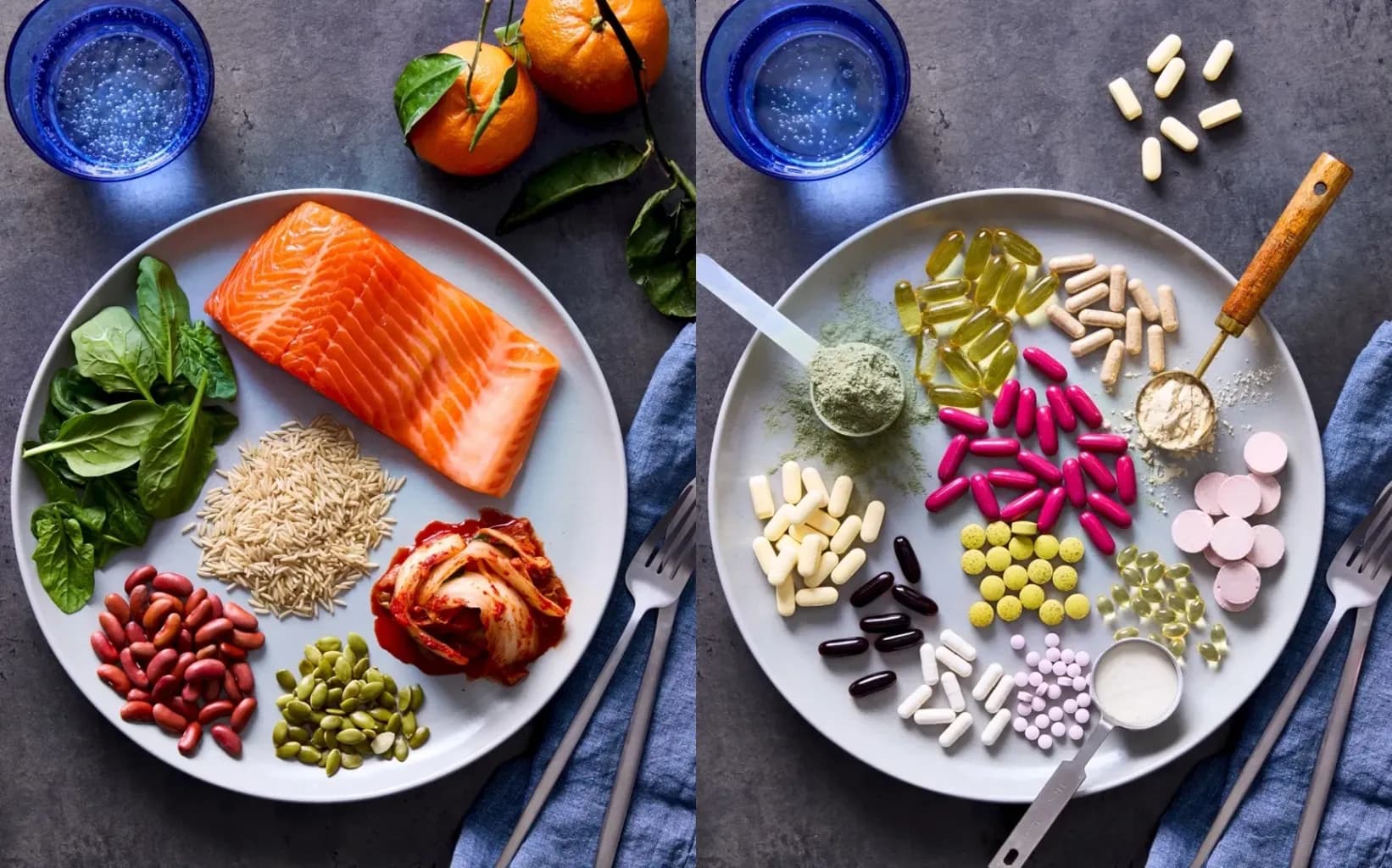
The New York Times recently published a piece titled "Do You Need These Popular Supplements?" questioning the value of everything from magnesium to multivitamins. The core argument was familiar. Just eat a balanced diet, and you do not need pills. Real food plate with salmon, spinach, and beans Photographs by Ghazalle Badiozamani for The New York Times Meanwhile your favorite health influencer is selling a 20-pill stack for longevity. Supplements plate Photographs by Ghazalle Badiozamani for The New York Times The media loves this fight. It frames health as a binary choice between "naturalist" and "biohacker." One side says nature provides everything. The other side says science can optimize everything. Both sides miss the point. In my practice of Medicine 3.0, we do not work from philosophy. We work from data. The right question is not "do people need supplements?" It is "do you need supplements, and which ones at what dose?"

A Tale of Two Patients

This morning I was reviewing charts for two very different patients. Their stories show why generic advice fails.

The "Unlimited" CEO

The first was a CEO of a heavy industries company. He has every resource imaginable, including a personal trainer, a private chef, and unlimited access to supplements. He was taking everything. He had a stack for energy, a stack for recovery, and a stack for sleep. His labs told a different story. His liver enzymes were elevated from processing so many compounds. His B6 levels were actually toxic, a common side effect of blind supplementation. He was over-supplemented and under-nourished at the same time.

The "Healthy" Realtor

The second patient was a self-employed realtor. She did not have a trainer, but she had symptoms. Fatigue, brain fog, brittle nails. She read online that she needed "adrenal support" and "thyroid boosters," so she built a significant regimen around her symptoms. Her labs were a different picture. She was severely iron-deficient and had a vitamin D level of 12 ng/mL (optimal is 50 to 80). No amount of "adrenal support" was going to fix an iron deficiency.
The fix. Once we looked at the bloodwork, we simplified both regimens to three key, targeted interventions each. For the CEO, we cut 90 percent of the noise and focused on absorption. For the realtor, we treated her specific deficiencies. Both patients felt better within weeks. Not because we added more, but because we got precise.

Why "Just Eat Real Food" Is Often Lazy Advice

The "just eat real food" message has truth in it. In an ideal world, your plate would carry everything you need. We do not live in that world.
  1. Soil depletion. Regenerative agriculture researchers have shown the nutrient density of topsoil has dropped significantly over the last 50 years. An orange today likely has less vitamin C than an orange in 1950.
  2. Malabsorption. As we age, stomach acid weakens. You may be eating B12 in your steak without absorbing much of it.
  3. Medications. Common drugs like proton pump inhibitors (PPIs for acid reflux) and metformin (for diabetes) actively deplete nutrients like magnesium and B12.
Telling someone on a diuretic to "just eat spinach" for magnesium, while their kidneys are flushing it out, is not helpful. It is clinically incomplete.

Fishtown Medicine

A 90-minute conversation with Dr. Ash. A written plan you can actually follow.

Book a Free 20-Min Call

How Does Fishtown Medicine Approach Supplements?

The Fishtown Medicine approach to supplements rejects guessing in either direction. We measure first, then choose a small, targeted plan based on your labs. We use advanced micronutrient testing. Instead of asking "do I need magnesium?", we measure your red blood cell (RBC) magnesium, which reflects intracellular stores. We look at ferritin, the protein that stores iron, not just serum iron. We measure 25-hydroxy vitamin D. We check B12, folate, and the B-vitamin pathway markers like methylmalonic acid (MMA) when needed. Only then do we recommend a supplement.
"I do not care what the average person needs. You are not the average person. You are N=1. Let's look at your dashboard." Dr. Ash

Guidance from the Clinic

In my experience, most patients on 15 to 20 supplements are spending hundreds of dollars a month and getting marginal benefit. The same patients, on 3 to 5 well-chosen supplements at clinical doses, almost always feel better within a few weeks. Less, but better, wins. I have also seen the other extreme. Patients who refuse all supplementation on principle, even when their vitamin D is 18 or their ferritin is 12. Principle does not raise iron stores. Numbers do.

Actionable Steps in Philly

Test, then choose. Pair good food with a small, targeted plan.
  1. Get the right baseline labs. Ask for ferritin, RBC magnesium, vitamin D (25-OH), B12, folate, omega-3 index, and a basic metabolic panel.
  2. Audit your current stack. Bring every bottle to your visit, including powders. We can usually cut the list by half without losing benefit.
  3. Pick whole-food sources first where possible. Then fill the gaps with high-quality, third-party-tested supplements at clinical doses.
Book Your Warm Invitation Call Here

Key Takeaways

  • Test, do not guess. Before you buy another bottle from an influencer or throw all your vitamins out because of a news article, get the right labs.
  • Symptoms lie. Fatigue can be low iron, low B12, low thyroid, or low testosterone. You cannot feel the difference. You have to measure it.
  • Quality over quantity. Most people taking 20 supplements actually need 3 to 5 specific ones at the right dose.
  • Food first, but not food only. Eat the highest quality food you can afford and use data to fill the gaps modern life creates.

Scientific References

  1. Holick MF. "The vitamin D deficiency pandemic." Reviews in Endocrine and Metabolic Disorders. 2017.
  2. DiNicolantonio JJ, et al. "Subclinical magnesium deficiency: a principal driver of cardiovascular disease." Open Heart. 2018.
  3. Pasiakos SM, et al. "Effects of protein supplements on muscle damage, soreness and recovery of muscle function and physical performance: A systematic review." Sports Med. 2014.
  4. Brown RB. "Vitamin B6 toxicity revisited." Mayo Clin Proc. 2020.
  5. Dwyer JT, et al. "Multivitamin/mineral supplements: rationale and safety." Nutrition. 2018.

Medical Disclaimer: This resource provides clinical context for educational purposes. In the world of Precision Medicine, there is no "one size fits all". The right protocol must be matched to your unique lab work, physiology, and goals. Consult Dr. Ash to determine if this approach is right for you, especially if you have chronic health conditions or are taking prescription medications.
Ashvin Vijayakumar MD (Dr. Ash)

Fishtown Medicine | Articles

2418 E York St, Philadelphia, PA 19125·(267) 360-7927·hello@fishtownmedicine.com·HSA/FSA Eligible

Book Your Diagnostic

Frequently Asked Questions

Common Questions

You may not need many supplements if you eat a high-quality diet, but most adults still have one or two true gaps. Vitamin D is low in most people who live north of Atlanta because of weak winter sunlight. Magnesium and omega-3s are commonly low even in good eaters. We test before we recommend.
Most generic multivitamins are not worth taking because the doses are too low for the actual deficiencies and too high for nutrients you do not need. We prefer targeted single-nutrient supplements at clinical doses, chosen from your lab data. Some patients with restricted diets do benefit from a quality multivitamin.
Serum magnesium is what is floating in your blood at that moment, and your body works hard to keep it stable even when stores are low. RBC magnesium reflects what is inside your red blood cells, a much better mirror of long-term tissue stores. We use RBC magnesium because serum looks falsely normal in most patients.
Yes, very high vitamin D over time can be harmful, particularly when paired with high calcium. We aim for a 25-hydroxy vitamin D level of 50 to 80 ng/mL. Doses of 2,000 to 5,000 IU per day are typical. We retest every 3 to 6 months until levels stabilize.
That depends on what your labs show. If only B12 is low, we treat B12. If you are on metformin, restrictive diets, or have a methylation issue, a B-complex with methylated B12 and folate is often a better fit. We try not to use shotgun B-complex doses without a reason.
Yes, supplements can absolutely interact with prescription medications. Common examples include St. John's Wort with antidepressants, vitamin K with warfarin, and high-dose niacin with statins. We always review the full medication list before adding supplements, and we want to know about every bottle in your cabinet.
Look for third-party testing through groups like USP, NSF, or ConsumerLab. Avoid proprietary blends, which hide the actual doses behind a marketing term. The ingredient list should be short, the doses clear, and the company should be transparent about sourcing.
Gummies are usually the worst form for most nutrients. They tend to be low-dose, mixed with sugar, and not the right vehicle for fat-soluble vitamins like D or K. We use them sparingly and only when patients cannot tolerate other forms.

Deep-Dive Questions

Ferritin is the protein that stores iron in your body. Serum iron fluctuates with the meal you just ate, but ferritin reflects long-term stores. We aim for a ferritin between 50 and 150 ng/mL for most patients. Many women with chronic fatigue have a ferritin under 30, which is "normal" by lab cutoffs but functionally low.
Methylation is a biochemical process where your body adds a methyl group (a small chemical tag) to molecules to switch them on or off. It is essential for detox, neurotransmitter production, and DNA repair. People with MTHFR gene variants may need methylated B12 and folate instead of the standard cyanocobalamin and folic acid forms.
The gut microbiome (the trillions of bacteria in your intestines) helps produce vitamin K, some B vitamins, and short-chain fatty acids. A disrupted microbiome from antibiotics, alcohol, or chronic inflammation can lower absorption of many nutrients. We support it with fiber, fermented foods, and selective probiotics, not with expensive boutique stool tests for every patient.
For most adults, yes. The American diet is heavy in omega-6 fats and light on omega-3s, which drives inflammation. We measure the omega-3 index (the percentage of EPA and DHA in your red blood cell membranes). A target of 8 to 12 percent is associated with the lowest cardiovascular risk in observational studies.
Creatine has strong evidence for muscle, recovery, and even cognitive function in some studies. Three to five grams a day of creatine monohydrate is safe, cheap, and useful for most active adults. The kidney concerns in healthy people are largely overblown.
Magnesium activates the parasympathetic nervous system (the rest-and-digest side) and supports GABA receptors. Most adults are functionally low. Forms vary by goal. Glycinate is gentle and good for sleep, threonate crosses into the brain, and citrate is fine but can be laxative at higher doses.
Adaptogens are herbs traditionally used to help the body manage stress. Ashwagandha has the best evidence, with several small studies showing modest cortisol reductions. We use it as a tool, not a cure. We avoid it in patients with hyperthyroidism or who are on immunosuppressants.
Yes, supplements can absolutely cause harm. High-dose vitamin B6 can cause neuropathy. High-dose iron can damage the gut. Hepatotoxic herbs like green tea extract and turmeric have been linked to liver injury in some patients. Quality, dose, and need all matter.
NAD+ precursors like nicotinamide riboside (NR) and nicotinamide mononucleotide (NMN) are popular for longevity. The animal data are interesting, but human outcome data are still early. We discuss them with patients who want to invest in emerging tools, while keeping expectations honest.
GLP-1 medications like semaglutide and tirzepatide reduce appetite and food volume, which can lead to lower protein and micronutrient intake. We monitor B12, iron, and protein intake closely in patients on GLP-1s. We also push protein supplementation if total intake drops below target.
IV vitamins have a place in select cases, like proven malabsorption or specific deficiencies. For most healthy patients, oral or sublingual forms are cheaper, safer, and equally effective. We do not run a "drip bar." We use IV when the lab data justify it.
Most micronutrient supplements need 8 to 12 weeks to shift labs and symptoms. Iron and vitamin D often need 12 to 16 weeks. Adaptogens and probiotics should be reassessed at 6 to 8 weeks. We retest, look at the trend, then keep, adjust, or stop.
No, supplements cannot replace sleep, training, protein, and stress management. They can fill specific gaps that nutrition and lifestyle alone cannot fix. The best results come when supplements support an already-strong foundation, not when they try to compensate for a missing one.
For most patients, we run an advanced micronutrient panel at baseline and then every 6 to 12 months. If we are actively correcting a deficiency, we recheck at 3 months. Once stable, we shift to annual labs.

Still have a question?

He answers personally. Usually within a few hours.

Related Intelligence

Longevity Strategies | Fishtown Medicine

Longevity Strategies | Fishtown Medicine

Strategies to extend your healthspan and optimize lifespan in Philadelphia.

Read Deep Dive
Metabolic Health

Metabolic Health

Why you feel tired at 3 PM, and how to fix it.

Read Deep Dive
Function Health in Philadelphia: You Have the Data. Now What?

Function Health in Philadelphia: You Have the Data. Now What?

A clinical guide for Philadelphians using Function Health. How to turn 100+ lab biomarkers into an actual medical plan with a local physician.

Read Deep Dive

Talk it through with Dr. Ash.

If anything you read here raised a question, this is a free 20-minute Warm Invitation Call. Pick a time and we’ll work through it together.

HSA/FSA eligible
No initiation or cancellation fees
No copays

Loading scheduler...

Having trouble with the scheduler? Book directly on Dr. Ash’s calendar

FishtownFish wrapped around the rod of AsclepiusMedicine
Philadelphia Primary Care
2418 E York St, Philadelphia, PA 19125Home visits in Greater Philadelphia

Serving Fishtown · Art Museum · Bella Vista · Callowhill · Center City · Center City West · Chestnut Hill · East Kensington · Fairmount · Fitler Square · Graduate Hospital · Logan Square · Manayunk · Northern Liberties · Old City · Olde Richmond · Poplar · Port Richmond · Queen Village · Rittenhouse · Roxborough · Society Hill · Southwark

Explore by topic

Women’s Health
  • Perimenopause
  • Menopause 3.0
  • PCOS
  • Fertility
Men’s Health
  • TRT Therapy
  • TRT Safety
  • TRT vs Enclomiphene
  • Low Libido
Metabolic
  • Medical Weight Loss
  • Ozempic vs Metformin
  • Fasting Protocols
  • Visceral Fat
Cardiovascular
  • apoB & Heart Health
  • apoB vs LDL
  • Lp(a) Cholesterol
  • ED & Heart Risk
Longevity + Performance
  • Healthspan vs Lifespan
  • Biological Age
  • VO2 Max
  • Zone 2 Training
Supplements
  • Magnesium
  • Creatine
  • Omega-3
  • Foundational Stack

Content is for educational purposes only and does not constitute medical advice.

TermsPrivacyScope of PracticeClinical Independence