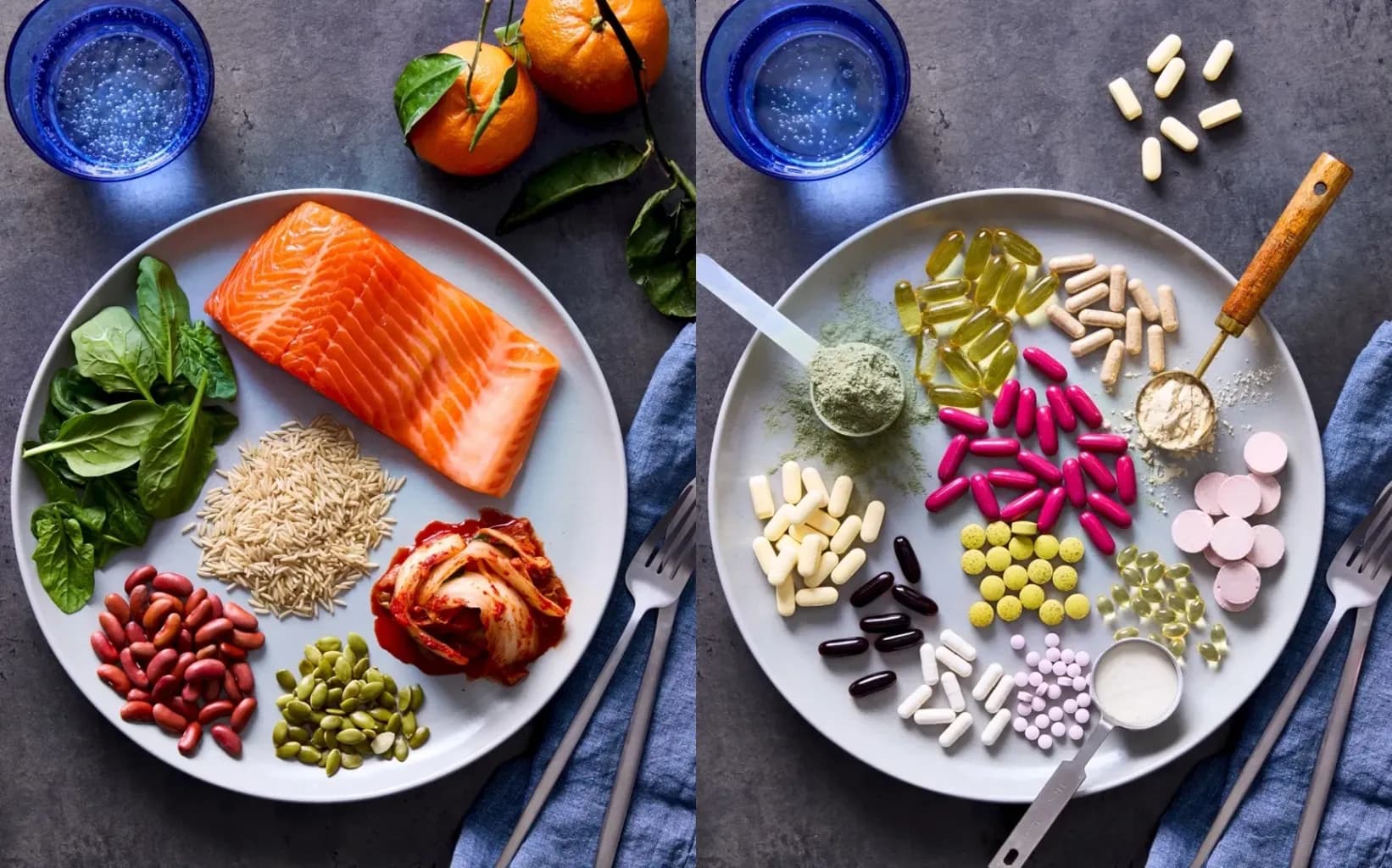

A precision approach to supplements means using single-ingredient products at clinical doses, rather than 'kitchen sink' blends with 15 hidden ingredients. Single ingredients let us match the right dose to your labs, track what is working, and avoid hidden interactions with your medications.
Why does Fishtown Medicine avoid multi-ingredient blends?
I try to practice medicine with precision. When I review a patient's regimen at Fishtown Medicine, I apply a strict standard about complexity: I generally avoid "proprietary blends" and complex multi-ingredient mixes.
If a supplement contains a long list of active ingredients, I usually advise pausing it until we can verify the formulation. This is not skepticism for its own sake. It is about safety, dosing accuracy, and being able to attribute results to a specific intervention.
Guidance from the Clinic
"In our partnership, we treat your biology like an experiment where we want to isolate variables. If you take a blend with 15 ingredients and feel better, we do not know which one helped. If you feel worse, we do not know what to blame. Precision medicine requires knowing what is entering your system, and at what dose." Dr. Ash
What is wrong with "kitchen sink" supplement formulations?
The supplement industry often relies on marketing over mechanism. You will see capsules labeled "sleep support," "adrenal rescue," or "brain boost" that pack 15 ingredients into one pill so the label looks complete.
Here is how I view those mixes through a clinical lens.
Problem 1: Sub-clinical dosing (also known as "fairy dusting")
There is a physical limit to how much powder fits inside a capsule. To squeeze 15 ingredients into one pill, manufacturers often use very small amounts of each. You might see "ashwagandha" listed on the label, which sounds promising, but the dose may be 10 mg rather than the clinically studied 600 mg. You end up paying for an impressive label rather than a physiological effect.
Problem 2: Unpredictable biological interactions
When you swallow a mix of 10 or more herbs, you introduce hundreds of bioactive compounds to your liver at once. Your liver processes all of them through the same machinery: the cytochrome P450 system, the enzyme family that handles drug and herb metabolism.
In our practice, I have seen "liver detox" blends ironically raise liver enzymes because the ingredients interacted poorly. Concentrated green tea extract layered with other herbs, for example, can stress the liver in susceptible patients. The more ingredients in the bottle, the harder it becomes to predict how they will interact with your unique biochemistry or your prescription medications.
Problem 3: Supply chain opacity
Mixes also create quality control challenges. Sourcing one high-quality ingredient is hard; sourcing twenty distinct ingredients in one batch creates twenty separate places where contamination can sneak in. That increases the risk of heavy metals like lead or arsenic, and the risk of adulteration.
We also see frequent issues with "metabolic support" or "male enhancement" blends that contain undeclared pharmaceuticals. Because the supply chain is so opaque, maintaining pharmaceutical-grade purity is very difficult.
What is the "proprietary blend" loophole on supplement labels?
One of the most common things I advise patients to look out for is the term "proprietary blend."
Fishtown Medicine
A 90-minute conversation with Dr. Ash. A written plan you can follow.
Under current regulations, a company can list the total weight of a blend without disclosing the dose of each individual ingredient. From a clinical perspective, that is a black box. A company could fill 99% of the blend with the cheapest ingredient and use a trace of the expensive one, just so it can be listed on the label.
The takeaway is simple: we cannot manage what we cannot measure. If a label does not tell us how many milligrams of each substance you are taking, we cannot safely fold it into your care plan. Measuring first is the whole argument in our read on why testing beats guessing with supplements, and the panels we draw on are listed under specialized diagnostic testing.
What is the Fishtown standard for supplement choice?
We define our approach by chemistry rather than marketing. In our practice, we prefer single ingredients (or well-validated synergistic pairs, like vitamin D3 plus K2) for three specific reasons.
- Potency: We can confirm you are getting the clinical dose needed to have an effect. For example, 500 mg of berberine rather than a mystery amount.
- Attribution: If you have a reaction (positive or negative), we know which ingredient caused it.
- Purity: It is far easier to verify the purity of a single compound than a mix of twenty. Our criteria for evaluating products are outlined in how we choose supplements.
Your plan should be intentional. If we cannot explain why you are taking each ingredient in the bottle, and verify the dose, we usually recommend simplifying it.
Actionable Steps in Philly
Audit your supplement cabinet this week.
- Lay every bottle on the counter. Read the supplement facts panel rather than the marketing claims on the front.
- Flag any blend with more than 3 active ingredients. These are your top candidates for simplification.
- Look for the words "proprietary blend." If the label does not list the dose of each ingredient, treat it as a black box.
- Bring your top 3 questions to your next visit. We can review which products belong in a precision strategy and which are paying for marketing.
Key Takeaways
- Multi-ingredient "kitchen sink" blends almost always under-dose each ingredient (fairy dusting), making it impossible to achieve a clinical effect.
- The "proprietary blend" label loophole lets manufacturers hide individual ingredient amounts, removing any ability to verify dose or safely cross-check against your medications.
- Each ingredient added to a blend creates another variable: more supply-chain contamination risk, more cytochrome P450 interactions, and less ability to attribute benefit or harm.
- Single-ingredient products at verified clinical doses allow precise attribution: if something works or causes a problem, you know what to credit or remove.
- A precision supplement plan starts with labs, uses single ingredients matched to specific deficits, and is re-evaluated when objective markers are retested.
A note on cost: any discount we negotiate on professional-grade supplements passes straight through to you, with no markup. Here is how we choose and source supplements.
Scientific References
- Navarro, V. J., et al. (2017). Liver injury from herbal and dietary supplements. Hepatology, 65(1), 363-373.
- Cohen, P. A. (2014). Hazards of hindsight: monitoring the safety of nutritional supplements. New England Journal of Medicine, 370(14), 1277-1280.
- Geller, A. I., et al. (2015). Emergency department visits for adverse events related to dietary supplements. New England Journal of Medicine, 373(16), 1531-1540.
- Tucker, J., et al. (2018). Unapproved pharmaceutical ingredients included in dietary supplements associated with US Food and Drug Administration warnings. JAMA Network Open, 1(6), e183337.

Frequently Asked Questions
Common Questions
Deep-Dive Questions
Ready when you are
The chat is our AI assistant, answering from our published guides. To talk it through with Dr. Ash himself, start with the intake.