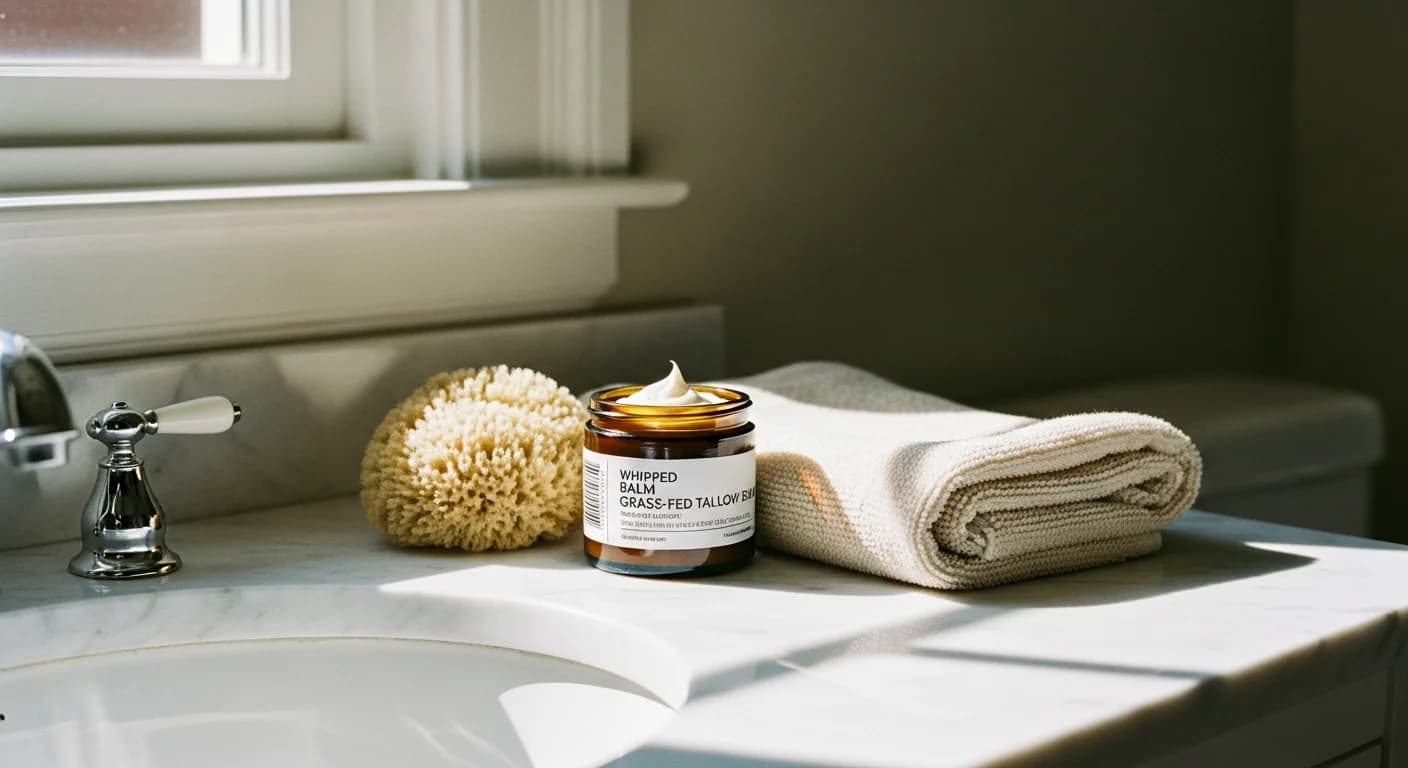

Beef tallow is rendered beef fat. It is roughly 56% saturated fat, 40 to 45% monounsaturated fat (mostly oleic acid, the same fat in olive oil), and small amounts of polyunsaturated fat. The validated points: it is a stable, high-smoke-point cooking fat with traditional culinary value, and grass-fed tallow contains some vitamin K2 (MK-4) and slightly more oleic acid than grain-fed. The unvalidated points: tallow as an eczema cure, the demonization of seed oils that often accompanies tallow marketing, and the framing of tallow as a heart-protective food. Used in moderation, tallow is fine. Used to replace a balanced fat pattern, the cardiovascular math gets worse.
A patient asked me last month whether she should switch all her cooking oils to tallow because a TikTok creator said seed oils were "killing her family." Those are fair questions, and they deserve careful answers. This article walks through what tallow is, the points that hold up, the claims that are overstated, and how to think about it in your own kitchen and skincare routine.
What tallow is and what it does
Tallow is rendered beef fat. The fat is heated, the impurities and water are separated out, and what remains is a stable fat, firm at room temperature, with a long shelf life. Per one tablespoon (about 13 grams), tallow provides roughly 115 calories and 12.8 g of total fat, with essentially zero protein or carbohydrate. The fatty acid breakdown is the part that matters:
- Oleic acid (monounsaturated): 40 to 45% of total fat. The same fat that dominates olive oil.
- Palmitic acid (saturated): 29 to 31%. A 16-carbon saturated fatty acid that does raise LDL cholesterol.
- Stearic acid (saturated): 12 to 25%. An 18-carbon saturated fatty acid that, unlike most saturated fats, does not appear to raise LDL cholesterol in most studies. The body converts a portion of stearic acid to oleic acid.
- Polyunsaturated fats: about 4 to 8%. Small amounts of linoleic acid and trace omega-3s.
Saturated fat overall makes up roughly 56% of tallow by weight. The fact that one of the dominant saturated fats (stearic acid) appears metabolically neutral on cholesterol is the reason tallow has a more nuanced cardiovascular story than, for example, coconut oil (which is dominated by lauric acid, which does raise LDL).
The validated points about tallow, from strongest evidence to weakest: it is a stable cooking fat with a smoke point of roughly 400 to 420°F, higher than extra-virgin olive oil (about 375°F) and well above butter (about 300°F). Grass-fed tallow has about 22% more oleic acid and contains some menaquinone-4 (MK-4), though the amounts (roughly 0.14 µg per gram) are too small to consider tallow a meaningful K2 source on its own. Tallow's fatty acid composition is also closer to human sebum than most plant-derived moisturizers, which is the theoretical basis for its use as a skin moisturizer.
Who this is for (and who it isn't)
Tallow is safe for most adults in moderate use as a cooking fat or moisturizer. It is a reasonable fit for:
- High-heat cooking. Searing, frying, roasting. The saturated fat content makes it resistant to oxidation under heat.
- Dry skin moisturizing. As a basic occlusive on intact, healthy adult skin.
- Patients replacing butter, lard, or coconut oil. Swapping those for tallow is roughly neutral or slightly favorable on lipids.
It requires a conversation first, or caution, for:
- Patients with elevated LDL or ApoB. Adding meaningful saturated fat to a diet that already has high atherogenic lipoprotein particles is the wrong direction.
- Patients with established cardiovascular disease. Same logic, with higher stakes. Discuss with your cardiologist before significantly changing fat sources.
- Patients with active atopic dermatitis on prescribed therapy. Do not substitute tallow for what is working.
- Patients with a beef allergy or sensitivity to animal proteins.
- People following religious or ethical dietary patterns that exclude beef products.
- Patients on weight management protocols. Tallow is calorie-dense (115 calories per tablespoon) and easy to over-consume in a "this is healthy" mindset.
How we evaluate it: do you need it, is it safe, does the dose work, then cost
Every supplement we recommend runs the same 4 gates, in order, and most things never make it past the first one (the whole process is in how we choose supplements).
- Do you need it? This is topical, so the question is your skin rather than a lab value. It gets a defined trial on a specific problem area.
- Is it safe? For cooking fat, sourcing matters. Grass-fed, hormone-free, antibiotic-free tallow reduces contaminant exposure. For skincare use on compromised skin, look for products with a certificate of analysis (COA) for heavy metals. Patch test on the inner forearm for 48 hours before broader skin use.
- Does the dose work? The claim has to match the evidence. Tallow is effective as a stable high-heat cooking fat and a reasonable occlusive moisturizer. It is not effective as an eczema treatment, a cholesterol-lowering agent, or an antidote to seed oils. The "seed oils are toxic" narrative accompanying most tallow marketing contradicts large prospective cohort data: higher linoleic acid intake links to lower (not higher) cardiovascular risk per a 2025 Johns Hopkins Bloomberg School of Public Health review and a 2026 Critical Reviews in Food Science and Nutrition scoping review.
- What does it cost? Grass-fed tallow costs more than grain-fed and more than commodity seed oils. The marginal nutritional benefit of grass-fed over grain-fed is measurable but modest. Buy quality when it matters (skincare, high-frequency cooking), and don't let cost pressure you toward overclaiming what the fat can do.
- What we make on it: nothing. Our only charge is the flat membership fee, and nothing is ever added on top of it. We take nothing on supplements, labs, imaging, or medication, which means every discount we can negotiate reaches you at cost. There is no conflict of interest here to work around, so the 4 gates above are the only things deciding what you hear from us.
How to dose it, and when
Tallow is a cooking fat and an optional topical, so it does not come with a pill dose. The practical framework:
- Cooking. Use tallow for occasional high-heat work: searing steaks, roasting vegetables, high-heat frying. Match the tool to the job.
- Daily fats. Olive oil stays the daily workhorse. Tallow or ghee for occasional high-heat cooking, butter for baking and pan finishing. This is a reasonable fat pattern for most patients.
- Skincare. Apply a small amount to dry skin areas as a moisturizer. It can clog pores in acne-prone facial skin (pure tallow is moderately comedogenic), so use it on dry body areas if pore-clogging is a concern. It smells: even high-quality tallow has a mild animal scent.
- Timeline. If a patient overhauls their cooking fats, we recheck the lipid panel at 3 months to see what moved, and we let that data guide the next step.
Flaws, side effects, and interactions
Fishtown Medicine
A 90-minute conversation with Dr. Ash. A written plan you can follow.
No fat is perfect, and naming the downsides is part of the job.
- LDL and ApoB signal. Replacing olive oil with tallow as a daily fat generally raises LDL and ApoB. The direction depends on what tallow is replacing.
- Not an eczema treatment. There are essentially no randomized trials of tallow for atopic dermatitis. The Childrens Hospital of Philadelphia explicitly cautions against using tallow as a substitute for evidence-based eczema treatments. A 2025 review of social media tallow skincare claims found that most posts promoting it for skin conditions were not based on factual evidence.
- Pore clogging. Pure tallow is moderately comedogenic and can cause breakouts on acne-prone facial skin.
- Calorie density. 115 calories per tablespoon. Easy to over-consume.
- Not a meaningful vitamin source. At realistic cooking amounts, tallow contributes only trace fat-soluble vitamins. The K2 content (roughly 0.14 µg per gram in grass-fed) is too small to count on, so if K2 is what you are after, read our vitamin K2 guide and get it from natto, aged cheese, or a supplement.
What we recommend, and what we don't
- We look for: grass-fed, single-source tallow with a COA, rendered at low temperatures for a cleaner product. For skincare, a pure, unfragranced product without added essential oils that can themselves irritate sensitive skin.
- Worth considering: ghee as an alternative for high-heat cooking (smoke point around 400 to 485°F, similar culinary performance). For cardiovascular-protective daily fat, olive oil and avocado oil sit above this whole group.
- We steer away from: tallow as a primary daily fat displacing olive oil, tallow as an eczema treatment in place of prescribed therapy, megadose claims about vitamin content, or any product marketing tallow as an "antidote" to seed oils. The "seed oils are toxic" framing is not supported by clinical data, and treating it as true leads patients away from evidence-based fat patterns.
Guidance from the Clinic
"Cardiovascular risk is determined by your ApoB, your blood pressure, your sleep, your training, your visceral fat, and your family history. It is not determined by which oil you use to cook eggs. If a patient wants to render their own tallow for their cast iron skillet, I am the last person who is going to argue with them. But I am not going to let them think they are protecting their heart by doing it."
Dr. Ash
Actionable Steps
A practical framework for cooking fats and tallow.
- Use olive oil for daily cooking and dressings. Replace nothing about this for the sake of a trend.
- Use tallow or ghee for occasional high-heat cooking (searing steaks, roasting vegetables, frying). Match the tool to the job.
- Skip the seed-oil panic. Canola, sunflower, soybean, and safflower oils in moderation are not the problem the internet says they are.
- Check ApoB and Lp(a), along with LDL. These are the atherogenic particle measures that tell you whether your fat pattern is working.
- For skincare, try tallow as a moisturizer on dry intact skin if you want, but do not replace prescribed eczema therapy with it. Patch test first.
Key Takeaways
- Tallow is roughly 56% saturated fat, 40 to 45% oleic acid, with stearic acid (LDL-neutral) and palmitic acid (LDL-raising) as the dominant saturated fats.
- It is a fine occasional cooking fat with a 400 to 420°F smoke point and good oxidative stability.
- It is not an evidence-based eczema treatment; most dermatology guidelines do not endorse it as a primary therapy.
- The "seed oils are toxic" framing is not supported by clinical data; large cohort studies link linoleic acid intake to lower cardiovascular risk.
- Check ApoB and Lp(a) before and after any major fat-pattern change; data tells you what worked.
A note on cost: any discount we negotiate on professional-grade supplements passes straight through to you, with no markup. Here is how we choose and source supplements.
Scientific References and Sources
- Bonanome A, Grundy SM. (1988 / republished context). "Role of beef and beef tallow, an enriched source of stearic acid, in a cholesterol-lowering diet." American Journal of Clinical Nutrition.
- Naveed M, et al. (2024). "Tallow, Rendered Animal Fat, and Its Biocompatibility With Skin: A Scoping Review." Published in Cureus / PMC.
- Maki KC, Eren F, Cassens ME, et al. (2024). "Beneficial effects of linoleic acid on cardiometabolic health: an update." Lipids in Health and Disease.
- Johns Hopkins Bloomberg School of Public Health. (2025). "The Evidence Behind Seed Oils' Health Effects."
- Children's Hospital of Philadelphia. "Is beef tallow a good treatment for eczema?" Pediatric Health Chat, accessed 2026.
- Mayo Clinic Press. "What is beef tallow? Is it good for me?" Accessed 2026.
- The Weston A. Price Foundation. "Fatty Acid Analysis of Grass-fed and Grain-fed Beef Tallow."

Frequently Asked Questions
Common Questions
Deep-Dive Questions
Ready when you are
The chat is our AI assistant, answering from our published guides. To talk it through with Dr. Ash himself, start with the intake.