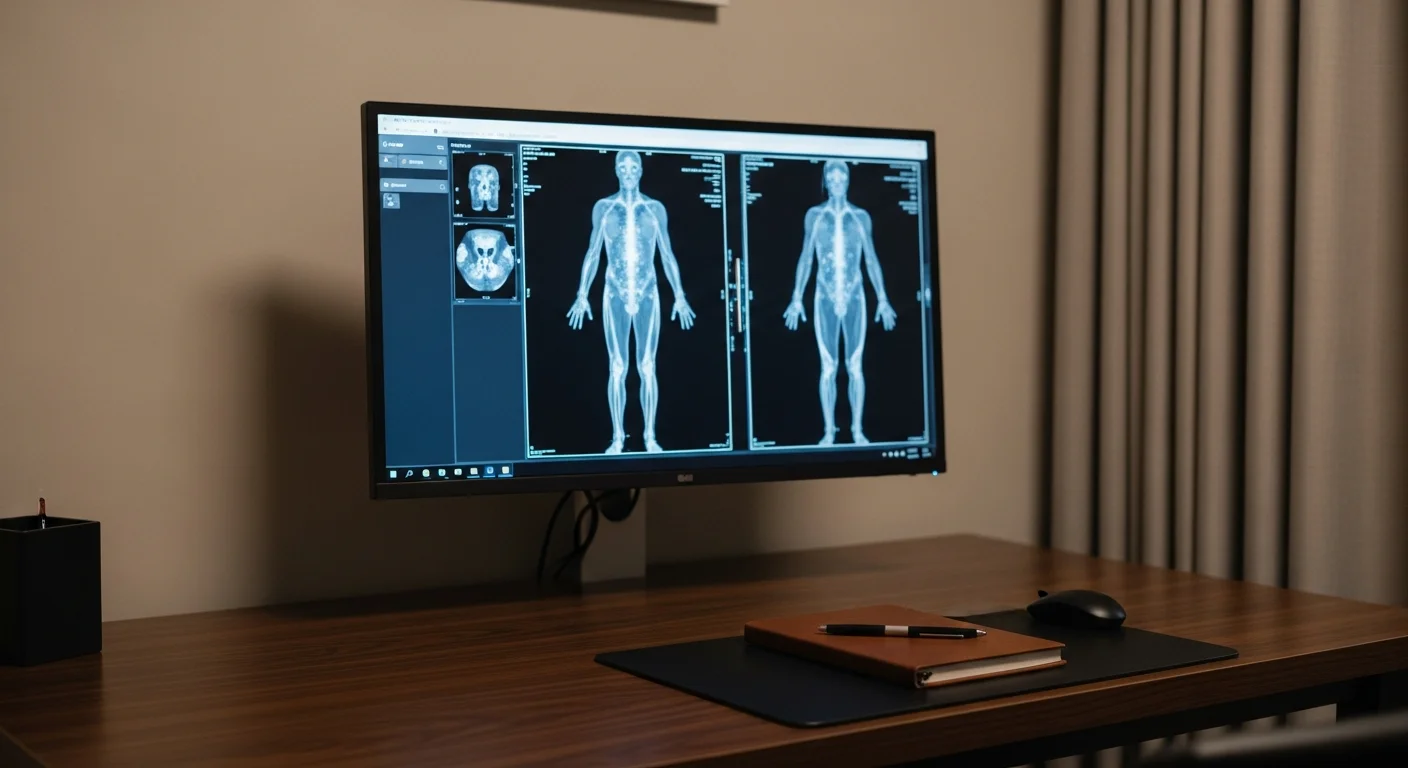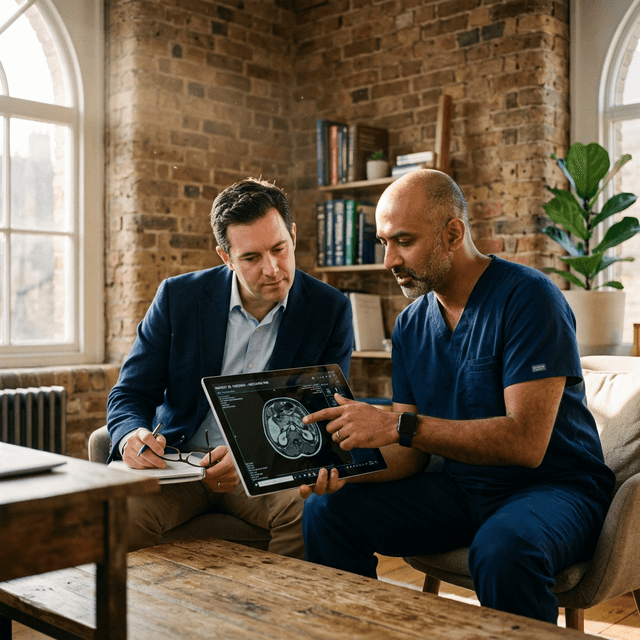

Abdominal and pelvic imaging covers ultrasound, CT, and MRI, each chosen for specific organs and questions. Ultrasound checks the liver, gallbladder, and pelvis without radiation. CT is fast and best for emergencies like appendicitis. MRI gives the highest soft-tissue detail when CT is unclear.
When abdominal or pelvic pain lasts more than a few days, choosing the right scan is the first step toward a clear answer. At Fishtown Medicine, we use a step-wise approach to imaging: prioritizing safety, minimizing radiation, and pulling in the highest resolution data only when it changes the plan.
The wrong scan is expensive, slow, and sometimes misleading. The right scan, ordered for the right question, often closes the case in a single visit.
When is an abdominal scan necessary?
An abdominal scan is necessary when belly or pelvic pain is persistent, localized, or paired with other warning signs. Most short-lived belly pain is from a viral illness, a food irritation, or constipation, and it resolves on its own. We consider imaging when:
- Pain is localized and persistent, for example lower right or upper left quadrant.
- It is paired with changes in bowel habits, fevers, or unexplained weight loss.
- There is a history of cysts, gallstones, kidney stones, or inflammatory bowel disease.
- A clinical exam suggests a structural issue we cannot rule out with labs alone.
Two patterns are worth naming before anyone books a scan, because imaging tends to come back unremarkable in both. Burning or reflux in the upper belly is usually GERD or gastritis and responds to a treatment trial faster than to a picture. Pelvic pain in women that is mild in the morning and heavy by evening, with the ache worse after standing all day, fits pelvic venous disease rather than anything a routine pelvic ultrasound is looking for.
What are my abdominal imaging options compared?
Your abdominal imaging options compared head-to-head:
| Study | Primary Use | Why it Matters | Notes |
|---|---|---|---|
| Abdominal Ultrasound | Liver, gallbladder, kidneys. | Best first look for stones or fatty liver. | No radiation; painless. |
| CT Abdomen/Pelvis | Appendicitis, diverticulitis, blockages. | Fast and detailed for emergencies. | Uses radiation; often needs IV contrast. |
| Pelvic Ultrasound | Ovaries, uterus, bladder pain. | Clarifies cysts vs. fibroids. | No radiation; transvaginal may be needed. |
| MRI Abdomen | Complex liver issues or inflammatory bowel. | Highest soft-tissue detail. | No radiation; 45-plus minute scan. |
| MR Enterography | Crohn's, small bowel disease. | Maps inflammation and strictures. | No radiation; oral and IV contrast. |
How do contrast and radiation work in abdominal imaging?
Contrast and radiation in abdominal imaging serve very different purposes. Contrast highlights structures that would otherwise blur together. Radiation, in CT, is the cost we pay for speed and clarity in emergencies.
- Oral contrast: A drink that highlights your digestive tract.
- IV contrast: Iodine in CT or gadolinium in MRI, used to highlight blood flow and organs.
- Radiation: A standard CT abdomen/pelvis is about 8 to 10 mSv, similar to about 3 years of background radiation.
We are highly selective about CT due to cumulative radiation exposure. Whenever it is safe, we lead with ultrasound or MRI to get the data we need without exposure.
Guidance from the clinic
Fishtown Medicine
A 90-minute conversation with Dr. Ash. A written plan you can follow.

Red Flags: Seek Emergency Care
Do not wait for an elective scan. Go to the ER if you experience:
- Sudden, severe pain: Pain so intense you cannot find a comfortable position.
- Rigidity: A stomach that feels hard or "board-like" to the touch.
- High fever plus pain: Suggests an acute infection like appendicitis.
- Vomiting blood: Or stools that look like black tar, both signs of internal bleeding.
- Pregnancy with pelvic pain: Particularly with bleeding or shoulder pain, which can suggest ectopic pregnancy.
Key Takeaways
- Ultrasound is the first line for most belly and pelvic issues.
- CT is for acute emergencies like appendicitis or kidney stones.
- Contrast helps us see the high-resolution detail of your organs.
- Red flags require an immediate emergency room evaluation.
A note on cost: any discount we negotiate on labs and imaging passes straight through to you, with no markup. Our affordable labs and imaging guide covers how the billing works.
Scientific References
- American College of Radiology. "ACR Appropriateness Criteria: Right Lower Quadrant Pain." 2023.
- Smith-Bindman R, et al. "Use of Diagnostic Imaging Studies and Associated Radiation Exposure for Patients Enrolled in Large Integrated Health Care Systems." JAMA. 2019.
- Bruining DH, et al. "Consensus recommendations for evaluation, interpretation, and utilization of computed tomography and magnetic resonance enterography in patients with small bowel Crohn's disease." Gastroenterology. 2018.
- Levine D, et al. "Management of Asymptomatic Ovarian and Other Adnexal Cysts Imaged at US: Society of Radiologists in Ultrasound Consensus Conference Statement." Radiology. 2010.
Dr. Ash is a board-certified internal medicine physician specializing in preventive medicine and healthspan optimization at Fishtown Medicine in Philadelphia.

Frequently Asked Questions
Common Questions
Deep-Dive Questions
Ready when you are
The chat is our AI assistant, answering from our published guides. To talk it through with Dr. Ash himself, start with the intake.