
FishtownFish wrapped around the rod of AsclepiusMedicine
Philadelphia Primary Care
How It Works
What People Say
Patient reviews across 6 platforms
Articles
Symptoms
What your body is telling you
Treatments
Protocols, prescriptions, therapies
Longevity
Medicine 3.0 strategies
Heart Health & Risk
Protect your heart & vessels
Metabolism
Insulin, blood sugar, weight
Hormones
TRT, thyroid, menopause, andropause
Performance
VO2 max, muscle, sleep, gut
Playbooks
Step-by-step frameworks
About
Meet Dr. Ash
Your Physician
GERO·SPAN
Our Clinical Framework
FAQ
Common Questions
Book a Free Call
Understanding Brain & Head Imaging
Fishtown Medicine•5 min read

Understanding Brain & Head Imaging

On This Page
  • CT vs. MRI: Should I get one or the other?
  • What are the common head imaging studies compared?
  • How does contrast dye work in brain imaging?
  • Guidance from the clinic
  • What is the clinical sequence we follow?
  • Red Flags: Seek Emergency Care
  • Key Takeaways
  • Common Questions
  • What is the difference between CT and MRI of the brain?
  • How long does an MRI of the brain take?
  • Will an MRI find a brain tumor?
  • Do I need contrast for a brain MRI?
  • How safe is gadolinium contrast?
  • Can I have an MRI with metal in my body?
  • What is a "thunderclap headache" and why is it an emergency?
  • Will my insurance cover a brain MRI?
  • Deep Questions
  • What is a microbleed and what does it mean on MRI?
  • How do we distinguish multiple sclerosis lesions on MRI?
  • What is functional MRI (fMRI) and is it clinically useful?
  • Why do we use CT instead of MRI for acute stroke?
  • What is a CT angiogram (CTA) of the brain?
  • How does an MRI detect early Alzheimer's disease?
  • What are white matter hyperintensities and when should I worry?
  • What is the difference between MRA and CTA?
  • How do we evaluate chronic headache patients with imaging?
  • What is the role of an EEG vs. brain imaging in seizures?
  • How does Fishtown Medicine handle incidental brain findings?
  • What is amyloid PET and when is it useful?
  • Scientific References

Get a preventive doctor that knows you.

Consult Dr. Ash
TL;DR · 30-second take

Brain imaging includes CT for emergencies like stroke or trauma, MRI for soft tissue and chronic neurological issues, and MRA or MRV for blood vessel evaluation. CT is fast and uses radiation. MRI is detailed and uses magnets. We choose the test based on the speed of the question and the tissue we need to see.

Understanding Brain and Head Imaging in Philadelphia

When you experience persistent headaches, dizziness, or neurological changes, choosing the right scan is critical. At Fishtown Medicine, we balance high-resolution data with the goal of minimizing radiation, cost, and unnecessary anxiety from incidental findings. The brain is the highest-stakes organ to image. A bad first scan can send patients down expensive, scary rabbit holes. A good first scan answers the question and stops there.

CT vs. MRI: Should I get one or the other?

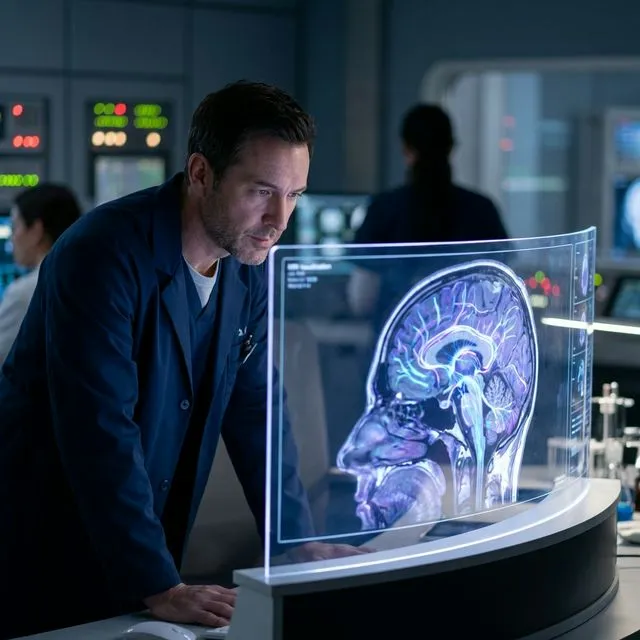
The choice between a CT (computed tomography) and an MRI (magnetic resonance imaging) usually comes down to what we are trying to see and how fast.
  • CT scans use X-ray technology to take fast slices. They are the gold standard for emergencies because blood and bone show up instantly. If we suspect a stroke or a skull fracture, we order a CT.
  • MRI scans use powerful magnets to visualize soft tissue. They are the gold standard for chronic issues like multiple sclerosis, tumors, or long-term headaches because they distinguish between brain tissues with extreme precision.

What are the common head imaging studies compared?

Common head imaging studies compared:
StudyPrimary UseKey BenefitNotes
CT Head (No Contrast)Trauma, acute stroke, "worst-ever" headache.Speed. Finds blood and bone issues.Fast, uses radiation.
MRI BrainSeizures, memory loss, chronic pain.Extreme detail. Best for soft tissue.No radiation, slow (30 to 45 minutes).
MRA / MRVAneurysms, clots, or vessel tears.Vessel mapping.Checks blood flow without radiation.
CT SinusChronic congestion or polyps.Airway detail.Quick, localized radiation.
Carotid UltrasoundStroke risk assessment.Blood flow.No radiation, checks neck arteries.

How does contrast dye work in brain imaging?

Contrast dye in brain imaging acts as a clinical highlighter that makes specific tissues stand out.
  • In CT scans, iodine-based contrast makes blood vessels bright white to spot blockages or bleeds.
  • In MRI, gadolinium-based contrast highlights areas of inflammation, high blood flow, or breakdown of the blood-brain barrier.
At Fishtown Medicine, we always check kidney function (eGFR) before any contrast study to make sure your body can safely filter the dye. We also screen for prior contrast reactions and pregnancy.

Guidance from the clinic

Dr. Ash
"I start by ruling out the big stuff. If you are having new, unexplained neurological symptoms, we often start with the fastest and safest study. We only move to complex scans if the initial results are unclear or if we need to see the fine print of your brain's anatomy. My goal is the right answer with the least medical friction."

What is the clinical sequence we follow?

The clinical sequence we follow for non-emergency brain symptoms looks like this:
  1. Rule out acute issues: A non-contrast CT or a careful clinical exam confirms there is no active bleeding or large stroke.
  2. Investigate the why: If the CT is normal but symptoms like dizziness, vision changes, or memory loss continue, we move to an MRI.
  3. Check the plumbing: If we suspect a blood-flow issue, we add an MRA to map the arteries or an MRV to map the veins.
  4. Trace the pattern: We pair imaging with neurology consultation, blood work, and sometimes an EEG or vestibular testing.

Red Flags: Seek Emergency Care

Do not wait for an elective scan. Go to the ER if you experience:
  1. Thunderclap headache: Sudden, excruciating pain that reaches maximum intensity within seconds.
  2. The "suddens": Sudden weakness, numbness, slurred speech, or loss of vision.
  3. New seizure: Any seizure activity in a person without a history of epilepsy.
  4. Trauma plus vomiting: A head injury followed by repeated vomiting or loss of consciousness.
  5. Worst-ever headache: A headache that feels different from any prior headache, especially with neck stiffness or fever.

Key Takeaways

  • CT is for speed and ruling out emergencies like bleeding or fractures.
  • MRI is for detail and chronic neurological evaluation.
  • Contrast highlights vessels or inflammation.
  • Red flags require an immediate emergency room evaluation, not a scheduled visit.

Scientific References

  1. Powers WJ, et al. "Guidelines for the Early Management of Patients with Acute Ischemic Stroke." Stroke. 2019.
  2. Thompson AJ, et al. "Diagnosis of multiple sclerosis: 2017 revisions of the McDonald criteria." The Lancet Neurology. 2018.
  3. American College of Radiology. "ACR Appropriateness Criteria: Headache." 2022.
  4. Wardlaw JM, et al. "Neuroimaging standards for research into small vessel disease." The Lancet Neurology. 2013.

Dr. Ash is a board-certified internal medicine physician specializing in preventive medicine and healthspan optimization at Fishtown Medicine in Philadelphia.

Ashvin Vijayakumar MD (Dr. Ash)

Fishtown Medicine | Diagnostics

2418 E York St, Philadelphia, PA 19125·(267) 360-7927·hello@fishtownmedicine.com·HSA/FSA Eligible

Schedule a Consult
Medical Disclaimer: This resource provides clinical context for educational purposes. In the world of Precision Medicine, there is no "one size fits all", the right plan must be matched to your unique lab work, physiology, and goals. Consult Dr. Ash to determine if this approach is right for you, especially if you have chronic health conditions or are taking prescription medications.

Frequently Asked Questions

Common Questions

The difference between CT and MRI of the brain is speed and detail. CT uses X-rays and produces images in seconds, ideal for emergencies. MRI uses magnets and takes 30 to 60 minutes, but it shows soft tissue with much higher resolution and no radiation.
An MRI of the brain takes 30 to 60 minutes, depending on the sequences ordered and whether contrast is used. Patients with claustrophobia can ask for an open or wide-bore MRI, and some imaging centers offer mild sedation for very anxious patients.
An MRI will find almost all brain tumors larger than a few millimeters, especially with contrast. It is the gold standard for tumor evaluation and is far more sensitive than CT. Contrast highlights areas where the tumor disrupts the blood-brain barrier.
You may or may not need contrast for a brain MRI depending on the question. Migraines, routine memory evaluation, and sinus disease usually do not need contrast. Suspected tumors, infections, MS, or post-surgical changes usually do.
Gadolinium contrast is safe for most patients, but it can build up in tissues over many scans, especially in patients with kidney disease. Severe allergic reactions are rare but possible. We use the smallest effective dose and choose newer macrocyclic agents whenever possible.
You may not be able to have an MRI with certain metal implants, including some pacemakers, cochlear implants, neurostimulators, and older aneurysm clips. Always tell the imaging team about every implant, tattoo, or shrapnel before the scan, and bring an MRI safety card if you have one.
A thunderclap headache is a sudden, severe headache that peaks within seconds, often described as "the worst headache of my life." It is an emergency because it can signal a subarachnoid hemorrhage from a ruptured aneurysm. A non-contrast CT and possibly a lumbar puncture are needed urgently.
Insurance usually covers a brain MRI when there is a clear clinical indication like persistent neurological symptoms, abnormal exam, or suspected tumor. MRI typically requires prior authorization, which our team handles. Cash-pay rates at independent imaging centers can be $400 to $800.

Deep-Dive Questions

A microbleed is a tiny area of old bleeding in the brain, visible only on specific MRI sequences. A few microbleeds in healthy older adults are common and usually benign. Many microbleeds, especially in specific patterns, can suggest hypertension or amyloid angiopathy, which raises stroke risk.
We distinguish multiple sclerosis lesions on MRI by their location, shape, and behavior over time. MS lesions tend to be ovoid, located in white matter near the ventricles, and disseminated in space and time. Contrast enhancement suggests active inflammation. The MRI alone does not diagnose MS, but it is the most powerful supporting tool.
Functional MRI (fMRI) maps brain activity by measuring blood flow changes during tasks. It is mostly a research and pre-surgical tool, used to map language and motor areas before brain surgery. It is rarely used in routine clinical care.
We use CT instead of MRI for acute stroke because CT is faster, more available 24/7, and excellent at detecting hemorrhage. The "time is brain" principle means we cannot wait 45 minutes for an MRI when clot-busting drugs work best within 4.5 hours. Some centers now use rapid MRI protocols, but CT remains the standard.
A CT angiogram (CTA) of the brain is a CT scan with timed iodine contrast injection that maps the brain's arteries. It is the fastest way to find a large-vessel occlusion in stroke or to detect an aneurysm. It uses more radiation and contrast than a standard CT.
MRI detects early Alzheimer's disease by showing atrophy patterns in the hippocampus and medial temporal lobes. Volumetric MRI can quantify shrinkage with software. MRI is not the diagnostic test, but it supports the diagnosis when paired with cognitive testing, blood biomarkers, and sometimes amyloid PET.
White matter hyperintensities are bright spots seen on T2 MRI sequences that represent small-vessel changes in the brain. A few are common in middle-aged and older adults. Many, especially in younger people, can suggest small-vessel disease, migraine, or sometimes inflammatory disease, and may need follow-up.
The difference between MRA and CTA is the technology and trade-offs. MRA uses magnets and often does not require contrast, making it safer for repeated use. CTA uses X-rays and iodine contrast, but it produces sharper vessel images and is the standard in stroke emergencies.
We evaluate chronic headache patients with imaging only when red flags are present, such as new headache after age 50, change in headache pattern, neurological symptoms, or thunderclap onset. Routine MRI for typical migraine without red flags is low-yield and often discovers harmless incidental findings.
The role of an EEG versus brain imaging in seizures is complementary. An EEG records electrical activity and helps classify the seizure type. MRI shows structural causes like tumors, scars, or vascular malformations. Both are usually ordered after a first seizure.
Fishtown Medicine handles incidental brain findings by separating signal from noise. A 3 mm pituitary cyst or a small arachnoid cyst rarely needs anything beyond reassurance. A 7 mm aneurysm or unexplained mass earns a neurosurgery or neurology consult. We make the call with you, not at you.
Amyloid PET is a specialized imaging test that detects amyloid plaques in the brain, the hallmark of Alzheimer's disease. It is useful when the diagnosis is uncertain and the result will change management, especially as new amyloid-clearing drugs like lecanemab become available.

Still have a question?

He answers personally. Usually within a few hours.

Related Intelligence

Longevity Strategies | Fishtown Medicine

Longevity Strategies | Fishtown Medicine

Strategies to extend your healthspan and optimize lifespan in Philadelphia.

Read Deep Dive
Metabolic Health

Metabolic Health

Why you feel tired at 3 PM, and how to fix it.

Read Deep Dive
Abdominal and Pelvic Imaging Guide

Abdominal and Pelvic Imaging Guide

Persistent belly or pelvic pain? Learn about Ultrasound, CT, and MRI scans for abdominal health, and how Fishtown Medicine chooses the right test for you.

Read Deep Dive

Talk it through with Dr. Ash.

If anything you read here raised a question, this is a free 20-minute Warm Invitation Call. Pick a time and we’ll work through it together.

HSA/FSA eligible
No initiation or cancellation fees
No copays

Loading scheduler...

Having trouble with the scheduler? Book directly on Dr. Ash’s calendar

FishtownFish wrapped around the rod of AsclepiusMedicine
Philadelphia Primary Care
2418 E York St, Philadelphia, PA 19125Home visits in Greater Philadelphia

Serving Fishtown · Art Museum · Bella Vista · Callowhill · Center City · Center City West · Chestnut Hill · East Kensington · Fairmount · Fitler Square · Graduate Hospital · Logan Square · Manayunk · Northern Liberties · Old City · Olde Richmond · Poplar · Port Richmond · Queen Village · Rittenhouse · Roxborough · Society Hill · Southwark

Explore by topic

Women’s Health
  • Perimenopause
  • Menopause 3.0
  • PCOS
  • Fertility
Men’s Health
  • TRT Therapy
  • TRT Safety
  • TRT vs Enclomiphene
  • Low Libido
Metabolic
  • Medical Weight Loss
  • Ozempic vs Metformin
  • Fasting Protocols
  • Visceral Fat
Cardiovascular
  • apoB & Heart Health
  • apoB vs LDL
  • Lp(a) Cholesterol
  • ED & Heart Risk
Longevity + Performance
  • Healthspan vs Lifespan
  • Biological Age
  • VO2 Max
  • Zone 2 Training
Supplements
  • Magnesium
  • Creatine
  • Omega-3
  • Foundational Stack

Content is for educational purposes only and does not constitute medical advice.

TermsPrivacyScope of PracticeClinical Independence