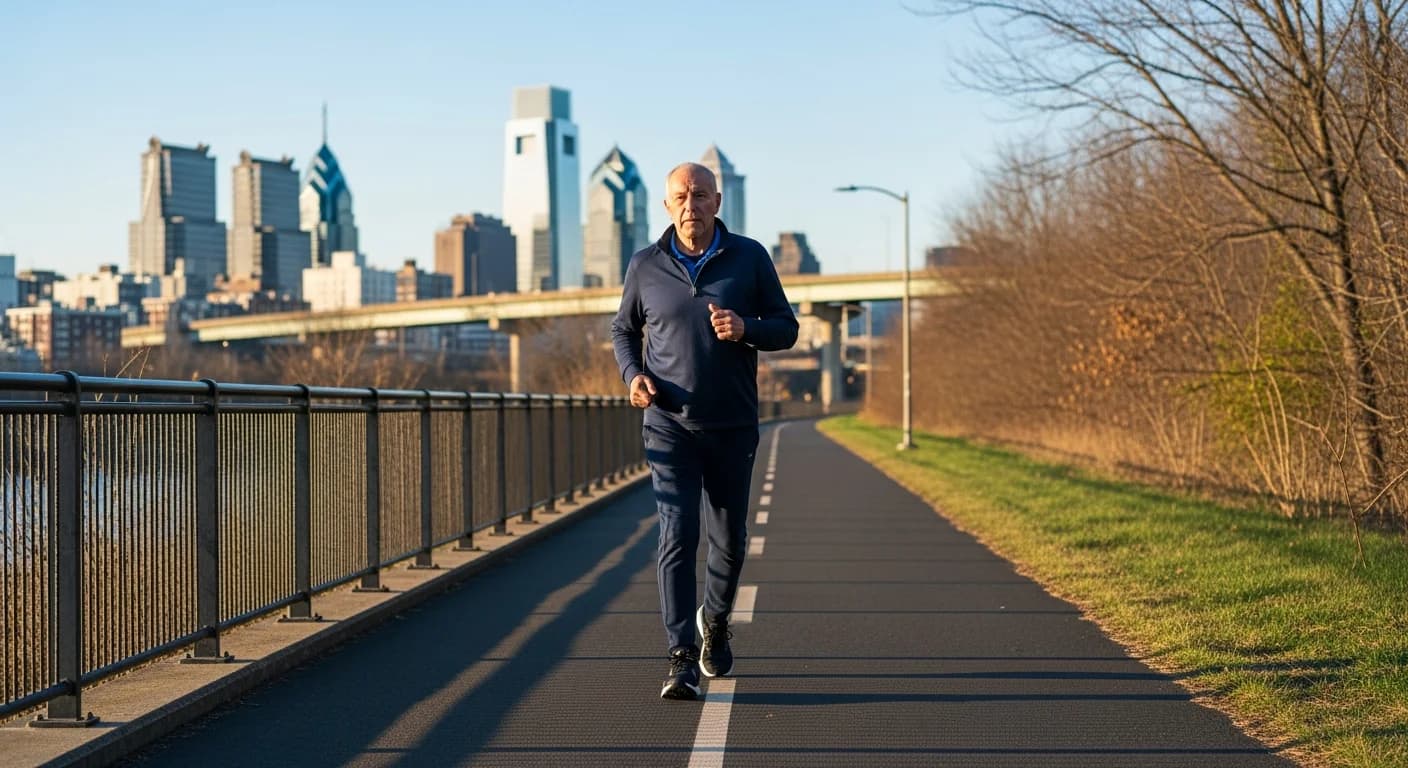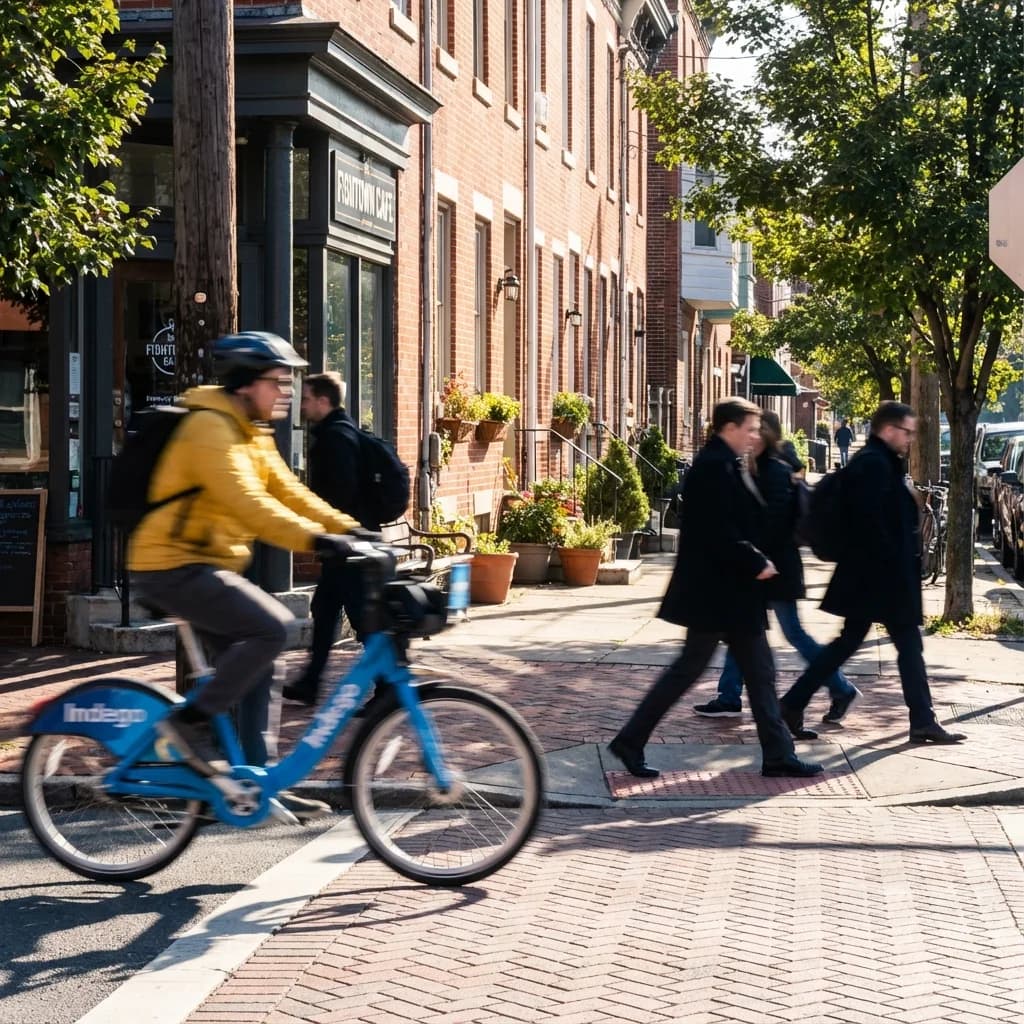

Philadelphias walkability is a metabolic health advantage. Walking, biking on Indego, and SEPTA combined produce 3 times more daily activity than driving. The result is better insulin sensitivity, lower resting heart rate, lower dementia risk, and meaningful longevity gains.
Lets address the elephant in the room: parking in Philadelphia is a blood sport.
You have circled the block 16 times. Someone snagged the spot you have been eyeing for 3 days. You have parallel-parked into a space so tight you had to exhale to get out of the car. And the Parking Authority is always watching.
Here is the upside: Philadelphia is one of the most walkable cities in America. Walk Score gives us a 75 (Very Walkable). We beat Boston. We beat DC. We are number two in Pennsylvania (Lancaster wins by a hair, but they do not have cheesesteaks). USA Today named us the most walkable city to visit in 2024 for the second year in a row.
If you lean into it, embracing the bike lanes, the Indego stations, and the SEPTA trains (when they show up), you tap into one of the most powerful health levers available: active transportation. The payoff goes well beyond a smaller carbon footprint. Daily movement like this is what protects your metabolic health, your cardiovascular fitness, and your longevity. Car-dependent suburbanites spend most of the day seated, while Philadelphians are up and moving, and over the years that difference adds up.
Why does walkability matter for health?
Walkability matters for health because daily walking, also called non-exercise activity thermogenesis (NEAT), is one of the strongest predictors of metabolic health and longevity. People in walkable cities are 3 times more physically active than people in car-dependent suburbs.
The data on walkability and health
- Walkable city residents are 3 times more physically active than car-dependent suburbanites (CDC Foundation).
- Public transit users walk 3 times more per day than drivers, since getting to and from stops alone adds 20 to 30 minutes of daily walking.
- Walkable neighborhoods correlate with significantly improved insulin sensitivity and lower systemic inflammation.
- Lower rates of metabolic disease, hypertension, and sedentary-driven dysfunction.
Why walking works for metabolic health
NEAT is the secret sauce of metabolic health. It is not flashy. You are not posting it on Instagram. Over months and years, NEAT determines whether you maintain metabolic flexibility, prevent insulin resistance, and keep lean mass as you age.
Philadelphia forces NEAT.
- Grocery store is 3 blocks away? You walk.
- Meeting a friend in Rittenhouse? You walk.
- Need coffee? You walk past 2 shops to get to the good one.
- Forgot your wallet? You walk home, pick it up, walk back.
In the suburbs, you drive for all of this. That is the difference.
Mental health benefits of walkable living
Walking also reduces:
- Depression (exercise-induced endorphins, sunlight exposure)
- Anxiety (rhythmic movement calms the autonomic nervous system)
- Cognitive decline (cardiovascular exercise supports brain health)
Walking also builds social capital. You run into neighbors on the sidewalk and chat with the bodega owner instead of driving alone in a car, and that kind of everyday connection supports longevity about as much as exercise does.
How does Indego bike share help your health?
Indego bike share helps your health by adding 20 to 30 minutes of low-impact cardio to your daily routine, often replacing short car trips. Unlike some failed bike share programs, Indego is thriving.
Indego by the numbers
- 1.3 million rides in 2024 (record high)
- Over 2,500 bikes (classic and e-bikes) at 250+ stations
- Average ride is 10 minutes and 1.16 miles
- E-bikes are 10 times more popular than classic bikes (hills no longer matter)
- 804 million calories burned since launch in 2015
- 2 million car trips replaced (less traffic, better air quality)
What does Indego do for the body?
Drexel University studied Indego users and found that new members cycled an average of 20 minutes per day. The benefit reached previously sedentary adults across all socioeconomic groups, including better cardiovascular fitness, insulin sensitivity, and mental clarity.
Biking is low-impact and high-output. It is easier on joints than running, but it burns similar calories. A 30-minute bike commute burns 200 to 300 calories. 5 times a week, that is 1,000 to 1,500 extra weekly calories without "working out."
How to use Indego strategically
- Get an Indego365 pass: $20 a month or $180 a year for unlimited 60-minute trips. Cheaper than a gym membership and more practical.
- Use e-bikes for hills: Manayunk Wall? Spring Garden climb? E-bikes flatten Phillys topography. You arrive without being drenched.
- Replace short car trips: Anything under 5 miles is faster on a bike, since you skip the parking search and the traffic.
- Combine with SEPTA: Bike to Broad Street Line, take the train, bike from the station. Multi-modal wins.
- Safety first: Wear a helmet. Use protected bike lanes when available (Kelly Drive, Spruce/Pine, MLK Drive).
Is SEPTA good for your health?
SEPTA is good for your health, despite its reliability issues. Transit users get more than 3 times the daily physical activity of car commuters because of walking to and from stops, standing on trains, and climbing stairs at stations.
SEPTA by the numbers
- 700,000+ daily riders across all modes
- 36% of Philadelphians commute via public transit (vs. 5% nationally)
- 15% higher Metro ridership in 2024 vs. 2023
- Regional Rail ridership up 10% year over year
How transit improves health
Transit users get more than 3 times the daily physical activity of car commuters, and that extra movement is built right into the trip:
- Walking to and from stops: 10 to 15 minutes each way, 20 to 30 minutes daily.
- Standing and balancing on trains: Engages core, improves balance.
- Stair climbing: Most SEPTA stations have stairs. That is functional fitness.
A study on transit users found:
- Lower rates of metabolic disease, diabetes, and hypertension
- Better cardiovascular fitness (measured via VO2 max)
- Lower all-cause mortality
How to use SEPTA strategically
- Download the SEPTA app: Live tracking saves you from standing in the cold.
- Broad Street Line is the workhorse: Fast, frequent, runs north-south.
- Regional Rail for suburban commutes: If you live in Chestnut Hill, Manayunk, or West Philly and work in Center City, Regional Rail beats I-76.
- Buses fill the gaps: Route 23, Route 47, and crosstown routes work, but check the tracker first.
- SEPTA Key card: Auto-reload removes the friction of fumbling for fare.
Where can I live car-light in Philly?
Longevity Medicine
A personalized longevity strategy starts with knowing your real baselines.
You can live car-light in Philly in any neighborhood with a Walk Score above 85. Highly walkable neighborhoods include Avenue of the Arts South, Northern Liberties, Rittenhouse, Chestnut Hill, and Fishtown.
Highest walk scores (car optional)
| Neighborhood | Walk Score | Why It Works |
|---|---|---|
| Avenue of the Arts South | 99 | Everything is walkable. Groceries, restaurants, arts, SEPTA. |
| Northern Liberties | 96 | Dense, mixed-use, Indego stations everywhere. |
| Rittenhouse Square | 95 | Peak urban living. Farmers markets, cafes, parks, groceries. |
| Chestnut Hill | 92 | Walkable main street and Regional Rail access. |
| Fishtown | 91 | High density of local businesses and Market-Frankford Line access. |
Moderate walk scores (car helpful but not essential)
- Manayunk: Walk Score 75 (walkable main street, parks, Indego, hills)
- University City: Walk Score 88 (college life sets the pace)
- Fairmount: Walk Score 82 (near the Art Museum, lots of green space)
Lower walk scores (car recommended)
- Northeast Philly: Walk Score 50 to 60 (slowly improving)
- Roxborough: Walk Score 65 (hilly and spread out)
If you want to live car-light, prioritize neighborhoods with Walk Scores above 85.
What is the active transportation health stack?
The active transportation health stack combines walking for errands, biking for short commutes, and SEPTA for longer trips to maximize daily movement without scheduled exercise.
Daily strategy
- Walk for errands (groceries, coffee, pharmacy). Target: 7,000 to 10,000 steps a day.
- Bike for commutes under 3 miles (Indego or personal bike). Target: 20 to 30 minutes a day.
- Use SEPTA for longer trips, which adds walking time to and from stops. Target: 20+ minutes transit commuting.
Weekly strategy
- Weekend bike rides: Schuylkill Trail, Kelly Drive, Forbidden Drive. 60 to 90 minutes is a full cardio session.
- Urban hikes: Wissahickon, Fairmount Park, Pennypack Park. Nature plus exercise.
Metabolic benefits you will see
- Improved insulin sensitivity (walking after meals lowers post-meal glucose)
- Lower resting heart rate (cardiovascular adaptation)
- Maintained lean mass (NEAT preserves muscle as you age)
- Better sleep (exercise plus sunlight aligns circadian rhythm)
- Reduced inflammation (active transportation beats sedentary commuting)
What about when you need a car?
You will sometimes need a car. The fix is to use a car when it makes sense and live car-light the rest of the time.
When a car wins
- Costco runs (bulk groceries are not Indego-friendly)
- Airport trips (SEPTA to the airport works, but with luggage, a car wins)
- Visiting family in the suburbs (no trains)
- Bad weather days
Strategies to reduce car dependency
- Zipcar or rideshare: $10 to $15 an hour when you need it, and you skip the insurance and parking headaches.
- Bike for 80%, drive for 20%: Most trips are under 2 miles. Bike those. Drive the rest.
The financial math
- Owning a car in Philly: $500 to $800 a month (payment, insurance, gas, parking, maintenance)
- Indego365 plus SEPTA Key plus occasional Zipcar: $150 to $200 a month
That is $3,600 to $7,200 a year saved. Invest the difference in a health optimization strategy. Also see our Philadelphia Environmental Defense Guide for how to minimize toxin exposure while you walk and bike.
The Philly paradox: grit makes you healthier
Here is the irony: Philadelphias challenges, narrow streets, parking scarcity, and impatient drivers, force you to be healthier.
You walk because parking is hard. You bike because it is faster than idling in traffic. You take SEPTA because Center City is a nightmare to drive in.
None of that street design was inevitable, either. Jaywalking was invented, and the campaign that invented it decided who the road belonged to for the next century. In doing so, you accidentally optimize your metabolism, cardiovascular system, and longevity. Suburbanites get convenience, but Philadelphians get NEAT built into ordinary days, and the citys walkable design is a health advantage worth using every time you leave the house.
Actionable Steps in Philly
Lean into walkable living.
- Set a step floor: Aim for 8,000 daily steps. Walk to the corner store instead of driving. Track on Apple Watch or Oura.
- Try Indego for one month: $20 buys you the Indego365 pass for one month. Use it for commute days under 3 miles.
- Replace one car commute a week with SEPTA: Even one or two days a week adds meaningful daily movement and clears parking stress.
Scientific References
- Lee IM, et al. "Association of Step Volume and Intensity With All-Cause Mortality in Older Women." JAMA Internal Medicine. 2019.
- Sallis JF, et al. "Physical activity in relation to urban environments in 14 cities worldwide: a cross-sectional study." The Lancet. 2016.
- Drexel University Urban Health Collaborative. "Indego Bike Share Health Impact Study." 2023.
- Edwards RD. "Public transit, obesity, and medical costs." Preventive Medicine. 2008.
- Ekelund U, et al. "Dose-response associations between accelerometry measured physical activity and sedentary time and all-cause mortality." BMJ. 2019.

Frequently Asked Questions
Common Questions
Deep-Dive Questions
Ready when you are
The chat is our AI assistant, answering from our published guides. To talk it through with Dr. Ash himself, start with the intake.