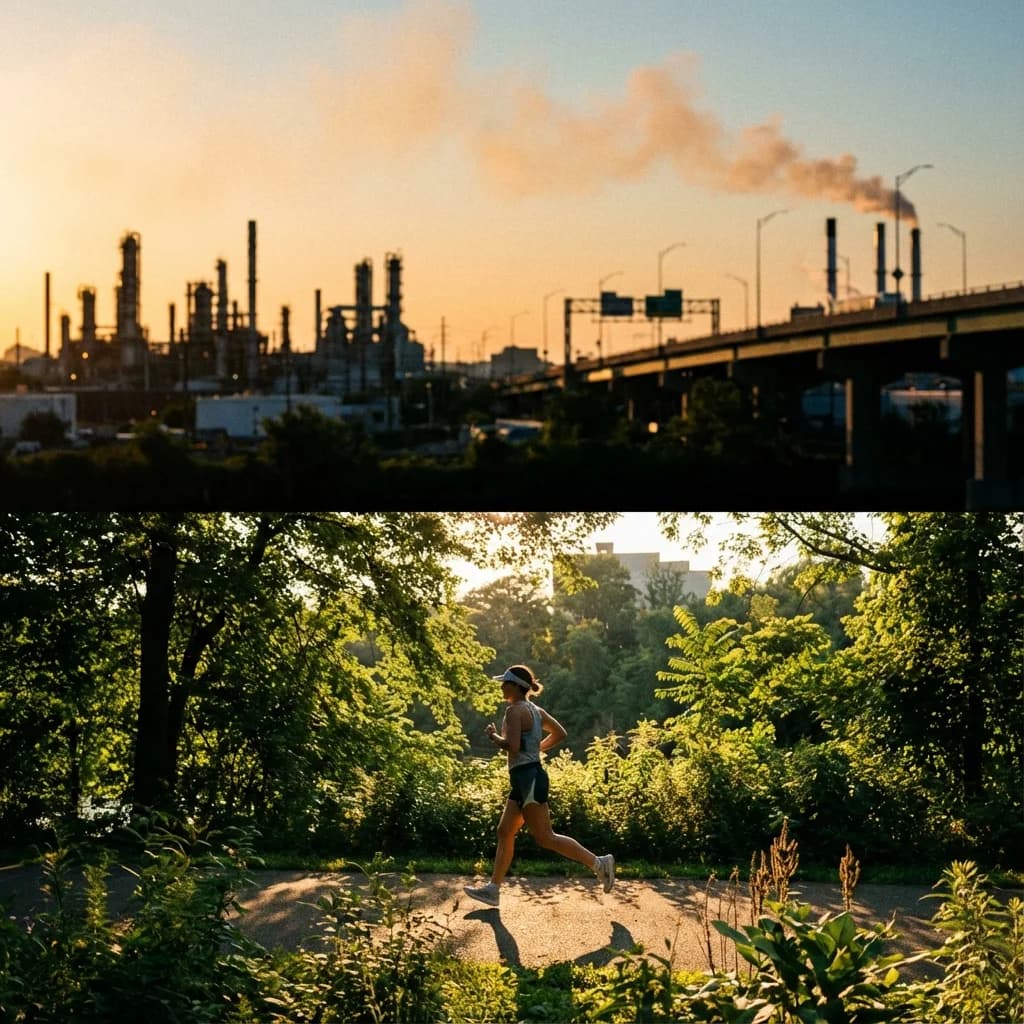

Philadelphia has environmental health trade-offs: PM2.5 air pollution near I-95, PFAS and lead in tap water, traffic noise, and light pollution. You can mitigate most of it with a HEPA bedroom air filter, a certified water filter, blackout curtains, white noise, and timing outdoor exercise away from rush hour.
Philadelphia is both gritty and beautiful. It is murals on every other corner, the smell of water ice on a July afternoon, the crunch of autumn leaves along Kelly Drive. It is neighbors who have been here for generations and neighbors who just arrived. It is a city that does not apologize for being what it is, a working-class, industrial, vibrant, deeply American place with character you cannot find anywhere else.
And like any major city, it comes with environmental trade-offs.
If you live here, if you walk your dog past the construction sites, if you hear the I-95 hum from your bedroom window, if you have wondered whether that metallic taste in the tap water is normal, this guide is for you. My aim is to give you practical, evidence-based ways to live well here, because this is home.
How bad is air quality in Philadelphia?
Philadelphias air quality is moderate for a major American city. The American Lung Association gave Philly a C grade for daily PM2.5 (fine particulate matter) pollution in 2024, which puts it in the middle tier of American cities. Air quality has improved over the past two decades, though I-95 traffic and seasonal smoke create localized risk.
The problem areas:
- I-95 corridor: If you live near I-95 (Port Richmond, Kensington, South Philly along Columbus), you are in a high-exposure zone. Diesel trucks, constant traffic, and industrial activity drive up local PM2.5 levels.
- Traffic hotspots: Broad Street, the Schuylkill Expressway during rush hour, and areas near the airport.
- Summer ozone: Ground-level ozone (smog) forms when heat meets vehicle emissions. July and August can hit Code Orange days, when sensitive groups (kids, asthmatics, elderly) should limit outdoor exertion.
Why does PM2.5 matter for health?
PM2.5 particles are 2.5 micrometers or smaller, about 1/30th the width of a human hair. They bypass your noses filtration and lodge deep in your lungs, then cross into your bloodstream.
Short-term exposure (Code Orange days):
- Asthma flares
- Headaches and eye irritation
- Reduced lung function
Long-term exposure (years near I-95):
- Higher heart attack and stroke risk
- Lung cancer
- Cognitive decline (emerging evidence links air pollution to Alzheimer's risk)
- Preterm birth and low birth weight
What can I do about Philly air quality?
You cannot move I-95, though we are capping parts of it at Penn's Landing and Chinatown. You can mitigate exposure.
- Check Philly air quality before outdoor exercise: Use AirNow.gov or the IQAir app. On Code Orange days, exercise indoors or early morning before traffic peaks.
- HEPA air purifiers: If you live near I-95 or a major roadway, run a HEPA filter in your bedroom. This reduces indoor PM2.5 by 50 to 80%. Wirecutters top pick is the Coway Airmega AP-1512HH. Levoit Core 300 and Blueair Blue Pure 211+ are also strong.
- Nasal rinsing: Daily saline nasal rinses (NeilMed Sinus Rinse) clear particulate matter from your nasal passages, and they are an easy habit to keep up.
- Antioxidant defense: Consider daily sulforaphane (broccoli sprouts) or NAC at 600 to 1,200 mg. Both upregulate Phase II detox enzymes that help neutralize airborne irritants.
- Windows closed during rush hour: If you live on a busy street, close windows from 7 to 9 AM and 5 to 7 PM. Open them overnight when traffic is minimal.
Is Philadelphia tap water safe to drink?
Philadelphia tap water is generally safe leaving the treatment plant, but PFAS chemicals and lead service lines create risks at the tap. Philly water comes from the Schuylkill and Delaware rivers and is processed through three treatment plants. The problem is what happens between the plant and your faucet.
The PFAS problem in Philly water
PFAS (per- and polyfluoroalkyl substances, the so-called forever chemicals) are synthetic compounds used in firefighting foam, non-stick cookware, and industrial processes. They do not break down, and they accumulate in your body.
Latest testing (October 2024):
- PFOS: 4.5 parts per trillion (ppt)
- PFOA: 7.1 ppt
These levels exceed the EPAs new Maximum Contaminant Levels (MCLs) of 4.0 ppt, but those limits are not enforceable until 2029. The Philadelphia Water Department is aware and planning treatment upgrades, but the gap remains today.
Health concerns:
- Thyroid disruption
- Immune suppression
- Higher cholesterol
- Pregnancy complications
- Higher risk for kidney and testicular cancer
The lead pipe problem in Philly
Philadelphia has an estimated 20,000 to 25,000 lead service lines still in use. If your house was built before 1950, there is a good chance you have one.
Lead does not come from the river. It leaches from old pipes. The Water Department uses corrosion control treatments (phosphates that coat pipe interiors), but the protection is not perfect.
Health concerns:
- Children: Neurodevelopmental delays, IQ reduction, behavioral problems
- Adults: Hypertension, kidney damage, cognitive decline
What can I do about Philly water?
- Check your address: Use the PWD Lead Service Line Map. Type in your address. If it says "lead" or "unknown," act on it.
- Get your water tested for free: Request a free lead test kit from Philadelphia Water Department: call 215-685-6300 or email water@phila.gov.
- Use a certified filter:
- For PFAS: Reverse osmosis (RO) systems or activated carbon filters certified for PFAS removal (NSF P473 or NSF 401). Top-rated options include Clearly Filtered (EWG-tested, blocks 100% PFAS), ZeroWater, and Epic Pure.
- For lead: NSF 53-certified filters. Wirecutter recommends the PUR Classic 11-Cup Pitcher or LifeStraw Home. Or run cold tap water for 30 seconds before use to flush stagnant water where lead concentrates.
- Morning flush: If you have lead pipes, run cold water for 30 seconds before drinking or cooking in the morning.
- Do not boil it away: Boiling water concentrates lead and PFAS rather than removing them, so filtration is the only fix that works.
How loud is Philadelphia and does it affect health?
Philadelphia is loud, and noise levels above 50 decibels at night measurably disrupt sleep and raise cardiovascular risk. Center City averages about 68 dBA during the day, traffic corridors hit 70 to 75 dBA at rush hour, and nightlife zones can hit 80 to 90 dBA, which damages hearing with prolonged exposure.
The Philadelphia noise ordinance sets quiet hours from 9 PM to 8 AM, but enforcement is uneven. If you live above a bar, you already know.
How does noise affect your body?
Noise affects the body in measurable ways.
Sleep disruption:
- Penn researchers found that bedroom noise above 50 dBA reduces sleep efficiency. You wake more often and spend less time in deep sleep.
- Chronic poor sleep raises risk of obesity, hypertension, diabetes, and depression.
Longevity Medicine
A personalized longevity strategy starts with knowing your real baselines.
Cardiovascular stress:
- Nighttime noise raises cortisol even when you do not consciously wake, because your body still perceives the noise as a threat.
- Long-term exposure to traffic noise above 55 dBA at night raises heart attack risk by 8 to 10%.
Cognitive load:
- Constant background noise (construction, traffic) impairs focus and increases mental fatigue.
What can I do about Philly noise?
- White noise machines: Wirecutter top picks include LectroFan (electronic, non-repeating) and Marpac Dohm (classic fan-based). Consistent sound helps the brain habituate to traffic and sirens.
- Earplugs for sleep: Loop Quiet or Mack's silicone earplugs reduce bedroom noise by 25 to 30 dB.
- Heavy curtains plus weatherstripping: Sound travels through windows. Wirecutter-recommended blackout shades (Select Blinds Essential Cordless, IKEA Trippevals) block light and dampen noise. Door weatherstripping also helps.
- Bedroom location: When renting or buying, choose a bedroom facing a courtyard or alley rather than Broad Street.
- Magnesium before bed: Magnesium glycinate at 200 to 400 mg increases GABA tone, which makes you less reactive to noise during the night.
How does Philly light pollution affect circadian health?
Philly light pollution affects circadian health by suppressing melatonin and disrupting sleep onset. Center City is Bortle Class 6 to 7, where you can see only 30 to 50 stars on a clear night. Wissahickon and Fairmount Park are slightly better at Class 4 to 5.
How does artificial light at night damage health?
Artificial light at night suppresses melatonin production, your bodys primary sleep hormone. The downstream effects include:
- Disrupted circadian rhythm (your 24-hour internal clock)
- Worse sleep onset and quality
- Suppressed immune function
- Worsened metabolic health (higher diabetes and obesity risk)
Streetlights through your bedroom window, LED billboards, and phone screens before bed all contribute.
What can I do about light pollution?
- Blackout curtains: Wirecutter-tested blackout shades (Select Blinds Essential Cordless Blackout Cellular Shade) block nearly all light. Total darkness supports maximum melatonin secretion.
- Blue light blockers: If you use screens after sunset, wear blue-blocking glasses (TrueDark, Ra Optics) or enable Night Shift mode.
- Dim red nightlights: If you need a nightlight (kids, bathroom trips), use red LEDs. Red light does not suppress melatonin the way blue or white light does.
- Sunrise simulation: If you wake before dawn in winter, use a sunrise alarm clock (Philips SmartSleep) to ease the cortisol awakening response.
Trash, pests, and indoor environmental hygiene
Philadelphias density and aging infrastructure create unique environmental hygiene challenges. Even in modern condos and well-maintained rowhomes, high-density living calls for a proactive approach to indoor allergens, dust management, and pest prevention.
What are the biggest indoor exposures?
- Dust mites: The number one allergen we see on allergy panels in our patients. They live in mattresses, pillows, and bedding. They trigger asthma, eczema, and chronic rhinitis.
- Cockroaches: A major asthma trigger (allergen in feces and body parts).
- Standing water near trash: Mosquitoes and West Nile virus risk (rare but present in Philly summers).
What can I do about indoor exposures?
- Dust mite control: Use allergen-proof mattress and pillow protectors (SafeRest Premium, Luna Premium). Wash bedding weekly in hot water (above 130 degrees Fahrenheit).
- Sealed trash bins: Use locking lids. Do not leave bags on the curb overnight before pickup.
- Report illegal dumping: Use the Philly311 app, which does get results, at least some of the time.
- Integrated pest management (IPM): Seal cracks, eliminate standing water, use bait stations rather than sprays (lower toxicity).
What makes Philly worth it?
Here is what the environmental data does not capture.
- Walkability: Philly is one of the most walkable cities in America. You can live here without a car. That means more daily movement, less sedentary time, and lower obesity rates than car-dependent suburbs. See our Philadelphia Walkability & Health Guide for the best routes.
- Green space: Fairmount Park is one of the largest urban park systems in the U.S. (9,200 acres). Access to nature reduces stress, improves mood, and lowers cortisol.
- Community: Philly neighborhoods have strong social cohesion. Knowing your neighbors does more for how long you live than air quality does, and isolation is a bigger driver of early death than smoking.
- Grit equals resilience: Living in a challenging environment makes you adaptable. Psychologically, that is a health asset.
The environmental challenges are here, and so are the vibrancy, the history, and the sense of place. You can lower the risks without leaving.
Actionable Steps in Philly
Build your urban wellness stack.
- Air: HEPA filter in the bedroom plus antioxidant support (sulforaphane or NAC).
- Water: NSF 53-certified filter or RO system. Test your home for lead.
- Noise and light: White noise machine, earplugs, blackout curtains, magnesium glycinate before bed.
- Movement and community: Walk everywhere. Use the Schuylkill Trail off-peak. Show up for block parties and neighborhood meetings, because your social life feeds your metabolic health too.
We do not receive kickbacks for product recommendations. We choose partners based strictly on safety, efficacy, high-quality care, and patient experience. For a full breakdown, see our disclosures page.
Scientific References
- American Lung Association. "State of the Air 2024 Report."
- Philadelphia Water Department. "PFAS Sampling Results 2024."
- Munzel T, et al. "Effects of noise on vascular function, oxidative stress, and inflammation: mechanistic insight from studies in mice." European Heart Journal. 2017.
- Brook RD, et al. "Particulate Matter Air Pollution and Cardiovascular Disease." Circulation. 2010.
- Chen H, et al. "Living near major roads and the incidence of dementia, Parkinson's disease, and multiple sclerosis." The Lancet. 2017.
Related at Fishtown Medicine
- Philadelphia AQI: what to do - the practical playbook for air quality days in Philly
- Pollen in Philadelphia - the tree/grass/weed calendar and when to pre-treat
- Microplastics in Philadelphia - the five highest-leverage moves to lower your exposure
- UV Index in Philadelphia - the daily UV calculus for skin and eye protection
- Severe Weather in Philadelphia - heat, cold, and storm preparedness for chronic disease patients
- The 2-1-5 Rule: Philadelphia Recycling - what this city takes at the curb, and where the rest of it goes
- The Philly Throat - why allergies feel worse here, and what in the air is doing it
- Heavy Metal Detox: The Science - what to make of the detox protocols sold for lead and other exposures

Frequently Asked Questions
Common Questions
Deep-Dive Questions
Ready when you are
The chat is our AI assistant, answering from our published guides. To talk it through with Dr. Ash himself, start with the intake.