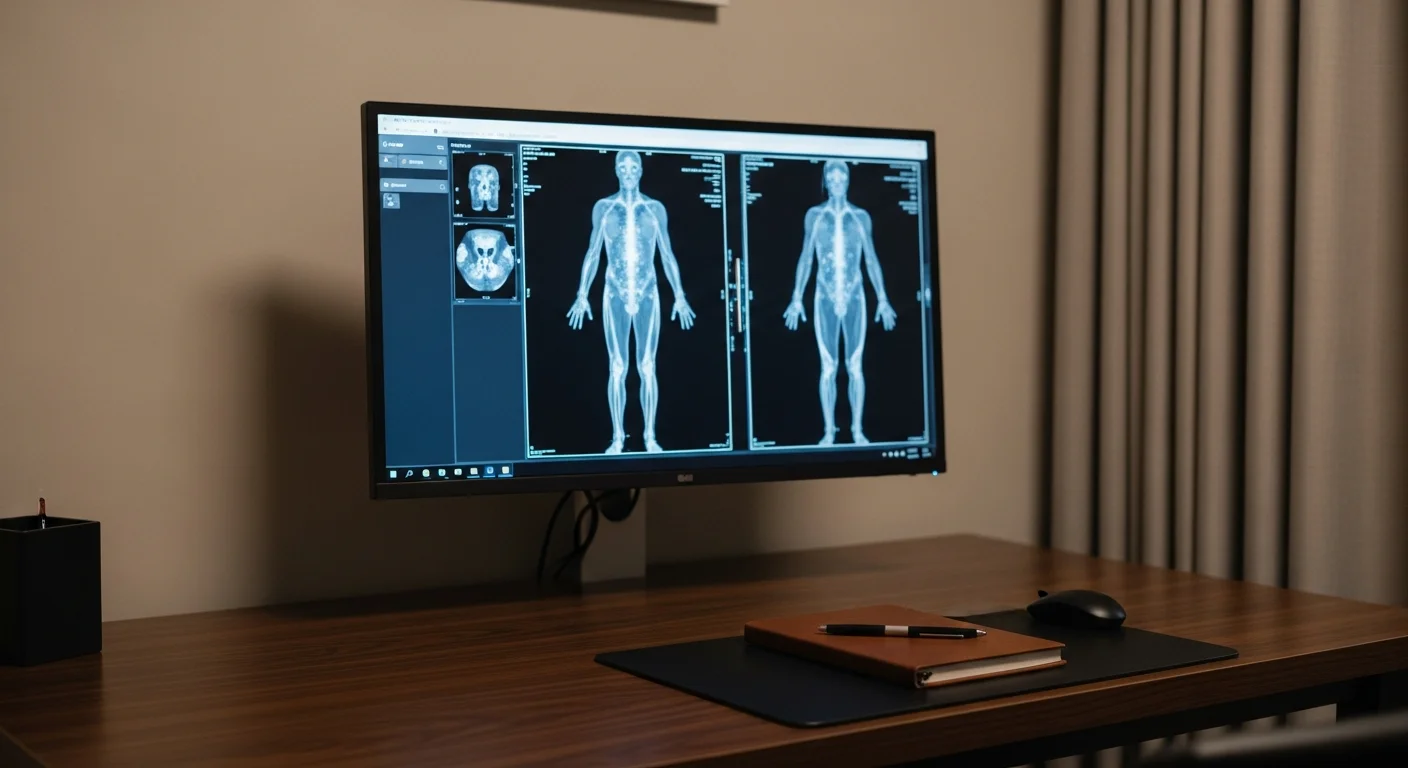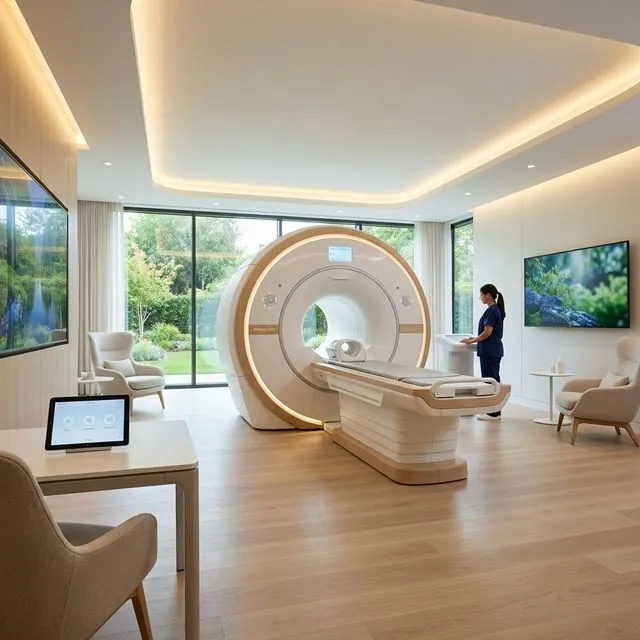

Boutique whole-body screening services use MRI to look for cancer and structural disease without radiation. They can find early tumors but also detect harmless quirks (incidentalomas) that drive follow-up scans and anxiety. We do not sell these scans; we help you decide whether one adds anything to your specific risk profile before you spend the money, and where it fits alongside Galleri or genetic testing.
High-tech "boutique" full-body screening MRIs are growing fast for early cancer detection. For the right patient they bring peace of mind, and they also turn up false positives often enough to matter. At Fishtown Medicine, we help you figure out whether these scans are a high-leverage tool for your biology, or whether they will mostly produce anxiety.
The useful question is who these scans are good for, and at what cost.
What is the rise of the full-body MRI?
The rise of the full-body MRI has been driven by faster scanners, AI-assisted reads, and consumer demand for proactive screening, and the demand itself was built as carefully as the technology. A mouthwash invented a disease is the clearest history of how that works, and it is worth reading before you buy any screen you went looking for on your own. Modern protocols can image most solid organs in 60 minutes without radiation. For patients with specific genetic risks or a history of cancer, these scans are a key part of a precision prevention plan.
For the average person, however, these scans can be a double-edged sword. The same sensitivity that catches early disease also catches harmless quirks.
What are the boutique imaging options compared?
Boutique imaging options compared head-to-head:
| Service | Primary Claim | Pros | Cons |
|---|---|---|---|
| Full-Body MRI (MRI-DWI) | Early cancer and aneurysm detection. | No radiation, high soft-tissue detail. | High cost ($1,500 to $2,500), high incidental finding rate. |
| Liquid Biopsy (Galleri) | Multi-cancer early detection via blood. | Simple draw, highly specific. | May miss very early small tumors. |
| PET-CT Scans | Metabolic activity of cancer cells. | Finds active growing tumors. | High radiation, not used for screening healthy adults. |
| Body Composition (DEXA) | Fat vs. muscle mass. | Gold standard for metabolic health. | Low cost, high clinical value. |
| Cleerly CCTA | Coronary plaque phenotyping. | Quantifies soft and calcified plaque. | Targeted to heart only, uses radiation. |
What is the "incidentaloma" problem?
The "incidentaloma" problem is the biggest risk of over-imaging. An incidentaloma is a finding that is technically abnormal but clinically harmless.
- You might have a small, benign cyst on your liver or a "spot" on your lung that has been there for decades.
- A high-tech scan will find it.
- That finding can trigger more scans, biopsies, and anxiety that could have been avoided.
At Fishtown Medicine, we act as the interpreter. If you choose to do a boutique scan, we review the raw report to help you separate signal from noise. We have seen patients spend a year in fear over a finding that was, in the end, harmless.
Guidance from the clinic
Fishtown Medicine
A 90-minute conversation with Dr. Ash. A written plan you can follow.

Actionable Steps for Informed Imaging
Do not scan in the dark.
- Risk audit first: Run a genetic and family history review to know which organs we need to watch.
- Choose the right tool: If you are most concerned about heart disease, a Cleerly CTA is far more valuable than a general body MRI.
- Pair with Galleri: A multi-cancer blood test catches signals that MRI may miss.
- Consult before you scan: We can help you compare the dozens of boutique options in the Philadelphia area to find the one with the highest medical integrity.
Key Takeaways
- Whole-body MRI is powerful but carries a real false-positive risk.
- Incidentalomas are common and require thoughtful clinical interpretation.
- Selective imaging beats "scanning everyone."
- Galleri liquid biopsy is a less-invasive, high-leverage alternative for many.
A note on cost: any discount we negotiate on labs and imaging passes straight through to you, with no markup. Our affordable labs and imaging guide covers how the billing works.
Scientific References
- Hricak H, et al. "Medical imaging and nuclear medicine: a Lancet Oncology Commission." The Lancet Oncology. 2021.
- Westwood M, et al. "Whole-body magnetic resonance imaging for staging and monitoring." Health Technology Assessment. 2020.
- Berland LL, et al. "Managing Incidental Findings on Abdominal CT." Journal of the American College of Radiology. 2010.
- Schrag D, et al. "Blood-based tests for multicancer early detection (PATHFINDER): a prospective cohort study." The Lancet. 2023.
Dr. Ash is a board-certified internal medicine physician specializing in preventive medicine and healthspan optimization at Fishtown Medicine in Philadelphia.

Frequently Asked Questions
Common Questions
Deep-Dive Questions
Ready when you are
The chat is our AI assistant, answering from our published guides. To talk it through with Dr. Ash himself, start with the intake.