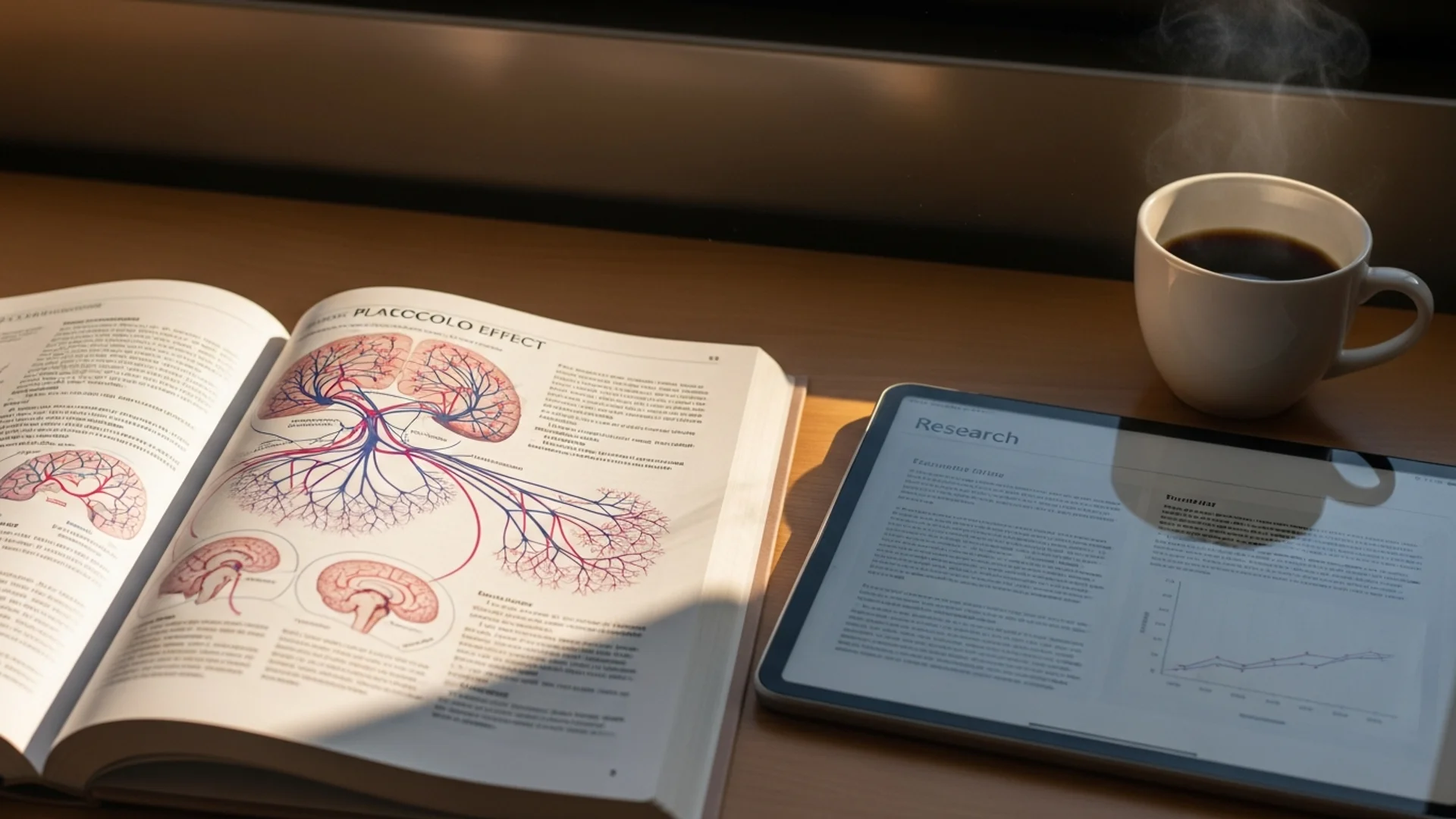
The nocebo effect is the placebo effect's dark twin. Where a placebo can make you feel better because you expect to, a nocebo makes you feel worse because you expect to. The word comes from Latin for "I shall harm." It is a well-documented medical phenomenon: when people are warned about a side effect, more of them report that side effect, even on a sugar pill, and when people expect pain, they feel more of it. The reason is that the brain does not passively receive symptoms; it predicts them, and expectation, mood, and context all shape what you feel. This matters more than ever because many people now bring a vague symptom to a search engine or an AI chatbot, which, given thin context, often foregrounds the scariest explanation. That primes anxiety and vigilance, which can worsen the very symptom. The antidote is context, calm framing, and a physician who tells you the truth about risk while also reminding you of your body's capacity to heal.
TL;DR: The nocebo effect is the placebo effect's dark twin. Where a placebo can make you feel better because you expect to, a nocebo makes you feel worse because you expect to. The word comes from Latin for "I shall harm." It is a well-documented phenomenon: when people are warned about a side effect, more of them report it, even on a sugar pill, and when people expect pain, they feel more of it. The brain does not passively receive symptoms; it predicts them, and expectation, mood, and context all shape what you feel. This matters more than ever because many people now bring a vague symptom to a search engine or an AI chatbot, which, given thin context, often foregrounds the scariest explanation, priming anxiety and vigilance that can worsen the very symptom. The antidote is context, calm framing, and a physician who tells you the truth about risk while reminding you of your body's capacity to heal.
Most people have heard of the placebo effect, where believing a treatment will help can produce a benefit. Far fewer have heard of its opposite, which is just as powerful and shapes far more of everyday health than we admit. This page explains the nocebo effect, why it is amplified by the way we now look up symptoms, and how to keep expectation from becoming a symptom.
What is the nocebo effect?
A placebo is an inert treatment that helps because of what you expect and feel around it. A nocebo is the mirror image: an expectation of harm that produces harm. The name comes from the Latin for "I shall harm," and it describes a measurable pattern rather than a figure of speech.1
The clearest demonstrations come from drug trials. When patients are read a list of a medication's possible side effects, a portion of them go on to report those side effects even when they were given a sugar pill. In studies of nonspecific side effects, a large share of the symptoms people attribute to a drug also show up on placebo, which means the expectation of harm, rather than the chemistry, is producing them.2 Expectation is part of the cure, and it can become part of the illness.
Is the nocebo effect a recognized medical phenomenon?
Yes, and understanding why requires a change in how you picture symptoms. We tend to imagine the body as a simple signaling machine: something goes wrong, a signal travels to the brain, and you feel it. Pain science over the past few decades has shown that the brain is not a passive receiver. It actively predicts and interprets, and it opens or closes a kind of gate on incoming signals based on your expectations, your prior experiences, your mood, and your context. The same stimulus can hurt more on a bad day than a good one, in the same person, because the brain is weighing more than the signal itself.
Pain is the clearest example, because it is sensation plus emotion plus context, all at once. If you expect something to hurt, it is far more likely to hurt, and if anxiety is high, the volume gets turned up. This is why a warning can be self-fulfilling. Told that a treatment often causes nausea, a primed brain scans for nausea and interprets ordinary gut sensations through that lens, and the nausea arrives. The nocebo effect is not people imagining things or faking; the discomfort is truly felt. It is that the brain, which is where all symptoms are ultimately registered, has been tuned toward threat.
The statin story: a telling example
Cholesterol medications called statins offer one of the best-studied cases. Many people stop statins because of muscle aches, and those aches are not imagined. But a clever trial had patients take, in random order, the statin, an identical-looking placebo, and no pill at all, without knowing which was which on any given month. The striking result was that people reported almost as much muscle pain in the placebo months as in the statin months, and far more than in the no-pill months.3 The act of taking a pill they associated with muscle pain produced most of the muscle pain. That is the nocebo effect in action, and it is why the way a medication's risks are explained can change how many people suffer them.
How Dr. Google and AI make it worse
Here is where the old phenomenon meets a new amplifier. More and more, the first thing people do with a symptom is type it into a search engine or ask an AI chatbot. Given only a few words of context, these tools tend to hedge toward caution and surface serious possibilities, because flagging a rare danger feels safer than missing one. That instinct is not wrong, but it has a cost.
Imagine typing "neck pain and headache" into a chatbot the day after a backyard barbecue where you played volleyball in the pool. With no knowledge of the barbecue, a reasonable response might warn that neck pain and headache can sometimes signal serious cardiovascular, neurological, or musculoskeletal problems, and that stress can cause lasting damage. Nothing in that answer is false. But it foregrounds threat, primes you to monitor the sensation more intensely, and raises anxiety and muscle tension, all of which can make the pain worse. Had the tool known about the volleyball, the answer would have started somewhere calmer. The problem is not that AI is pessimistic by design; it is that a prediction made from thin context becomes a forecast that shapes how you feel and behave next.
This is the nocebo effect scaled up. A generation ago you might have worried after a conversation with a neighbor; now you can summon a catastrophic reading of any twinge in seconds, at 2 a.m., with an authoritative tone. The forecast becomes the prevailing force, and the belief does not sit still waiting to be confirmed. It changes your behavior and your body now.
How do you protect yourself from a nocebo?
The goal is not to ignore warning signs, which matter, but to keep expectation from manufacturing symptoms. A few practical moves help.
Give context before you ask. Whether you are talking to a chatbot or a person, the difference between "I have neck pain" and "I have neck pain after a day of volleyball, it eases with movement, and I feel fine otherwise" is the difference between a threat forecast and a calm one. Thin questions get catastrophic answers. Ask what else could explain this, and whether the most likely cause is benign, rather than only asking what the worst case is. And treat a search result or an AI answer as a starting point for a conversation rather than a verdict, because neither one knows you.
The deeper protection is a relationship with a physician who knows your history and can frame risk plainly without catastrophizing. An experienced doctor does not end every visit by reciting everything that could go wrong; they diagnose plainly, explain the risks, and then reinforce the body's capacity to recover, because prognosis and reassurance are part of the treatment. That framing is not spin. It is the difference between the two outcomes the nocebo research keeps finding.
How Fishtown Medicine thinks about the nocebo effect
Knowing that expectation shapes symptoms changes how I practice. When I explain a medication's side effects, I am direct about them, because you deserve the truth and informed consent requires it, but I am also careful, because I know that a fear-forward delivery can conjure the very side effect I am naming. So I put risks in proportion, tell you which ones matter and which are rare, and pair the caution with what usually goes right. That is not softening the facts; it is delivering them in a way that does not do harm on its own.
The relationship is the other half of it. Much of the anxiety that feeds a nocebo comes from uncertainty and from facing a scary symptom alone with a search bar. A doctor who knows your history, answers your text the same day, and can say "that pattern is almost certainly the volleyball, here is what to watch for" takes the catastrophic forecast off the table before it can take root. Whether you are in Fishtown or Fairmount, part of what you are buying with an ongoing relationship is a calmer, truer read on what your body is doing, which is its own kind of medicine.
Guidance from the Clinic

Key Takeaways
- The nocebo effect is the placebo's dark twin: expecting harm can produce harm, from the Latin for "I shall harm."
- It is well-documented, most clearly in drug trials, where warned patients report side effects even on sugar pills.
- The symptoms are truly felt, produced by a brain that predicts and interprets rather than passively receiving signals.
- The statin case is the sharpest: in a blinded trial, most muscle pain occurred on placebo months, as much as on active-drug months.
- Search engines and AI amplify it, foregrounding worst-case explanations from thin context, which primes anxiety and worsens symptoms.
- The antidotes are context, calm framing, and a physician who knows you and can give an accurate, reassuring read.
Related at Fishtown Medicine
- The Placebo Effect and Social Media - the nocebo's better-known twin, and how feeds amplify both
- Should You Upload Your Labs to AI? - the limits of context-free AI health advice
- Finding a Doctor Through AI Search - using these tools well rather than being used by them
- Nervous About Statins? - the medication where the nocebo effect is best studied
- Your Relationship With Yourself - agency, and narrating your health from calm rather than fear
- A Mouthwash Invented a Disease - marketing that manufactures the worry a product then treats
Scientific References
- Colloca L, Barsky AJ. "Placebo and nocebo effects." New England Journal of Medicine. 2020;382(6):554-561.
- Barsky AJ, Saintfort R, Rogers MP, Borus JF. "Nonspecific medication side effects and the nocebo phenomenon." JAMA. 2002;287(5):622-627.
- Wood FA, Howard JP, Finegold JA, et al. "N-of-1 trial of a statin, placebo, or no treatment to assess side effects (SAMSON)." New England Journal of Medicine. 2020;383(22):2182-2184.
- Häuser W, Hansen E, Enck P. "Nocebo phenomena in medicine: their relevance in everyday clinical practice." Deutsches Ärzteblatt International. 2012;109(26):459-465.
- Benedetti F, Lanotte M, Lopiano L, Colloca L. "When words are painful: unraveling the mechanisms of the nocebo effect." Neuroscience. 2007;147(2):260-271.

Frequently Asked Questions
Common Questions
Deep-Dive Questions
Ready when you are
The chat is our AI assistant, answering from our published guides. To talk it through with Dr. Ash himself, start with the intake.