
FishtownFish wrapped around the rod of AsclepiusMedicine
Philadelphia Primary Care
Articles
Digital Health Literacy
Cut through health misinformation
Symptoms
What your body is telling you
Treatments
Protocols, prescriptions, therapies
Longevity
Medicine 3.0 strategies
Heart Health & Risk
Protect your heart & vessels
Metabolism
Insulin, blood sugar, weight
Hormones
TRT, thyroid, menopause, andropause
Performance
VO2 max, muscle, sleep, gut
Playbooks
Step-by-step frameworks
About
Meet Dr. Ash
Your Physician
GER·O·SPAN
Our Clinical Framework
What People Say
124 patient reviews across 6 platforms
Pricing & Membership
Transparent membership pricing
FAQ
Common Questions
Get Started
Lion's Mane: Neurogenesis & Mental Clarity | Fishtown Medicine
Fishtown Medicine•7 min read
4.96 (124)

Lion's Mane: Neurogenesis & Mental Clarity | Fishtown Medicine

Ashvin Vijayakumar MD

Medically Reviewed

Ashvin Vijayakumar MD•Updated May 2, 2026
On This Page
  • What lions mane is and what it does
  • Who this is for (and who it isnt)
  • How we evaluate it: safety, then effectiveness, then cost
  • How to dose it, and when
  • Flaws, side effects, and interactions
  • What we recommend, and what we dont
  • Guidance from the Clinic
  • Actionable Steps
  • Common Questions
  • What is lions mane?
  • Will lions mane have psychoactive effects?
  • Can I just eat the lions mane mushroom instead of taking an extract?
  • How long does it take for lions mane to start working?
  • Is lions mane safe with ADHD medications like Adderall or Vyvanse?
  • Can lions mane help with anxiety or depression?
  • Is lions mane safe to take every day?
  • Should I take lions mane on an empty stomach?
  • Deep Questions
  • How is lions mane different from other nootropic supplements?
  • Does lions mane actually grow new brain cells?
  • Can lions mane help with dementia or Alzheimers prevention?
  • Is lions mane safe during pregnancy or breastfeeding?
  • Can lions mane help nerve damage or neuropathy?
  • How does lions mane affect blood sugar or cholesterol?
  • What does lions mane do for the gut-brain axis?
  • Will lions mane interact with antidepressants like SSRIs?
  • Does lions mane lose effect over time?
  • Is mycelium-on-grain lions mane worthless?
  • Can lions mane help with post-COVID brain fog?
  • Why does Philly winter make lions mane more relevant for some patients?
  • ✦Key Takeaways
  • Scientific References

Get a preventive doctor that knows you.

Consult Dr. Ash
TL;DR30-second take

Lion's mane is an edible mushroom that helps the brain make Nerve Growth Factor (NGF), a protein that keeps neurons healthy. A 1,000 to 2,000 mg daily extract supports focus, memory, and recovery from brain fog over 4 to 8 weeks. It is not a stimulant and not psychoactive.

In the Center City and Fishtown practice, we see a specific pattern in driven professionals. It is not just physical fatigue. It is cognitive drag: the friction is higher than it used to be when sitting down to do deep work. The standard fix is more caffeine or a prescription stimulant, which borrows energy rather than building it. Lions mane works on a different mechanism entirely.

Brain fog or burnout? A Precision Medicine workup pinpoints the real driver.

What lions mane is and what it does

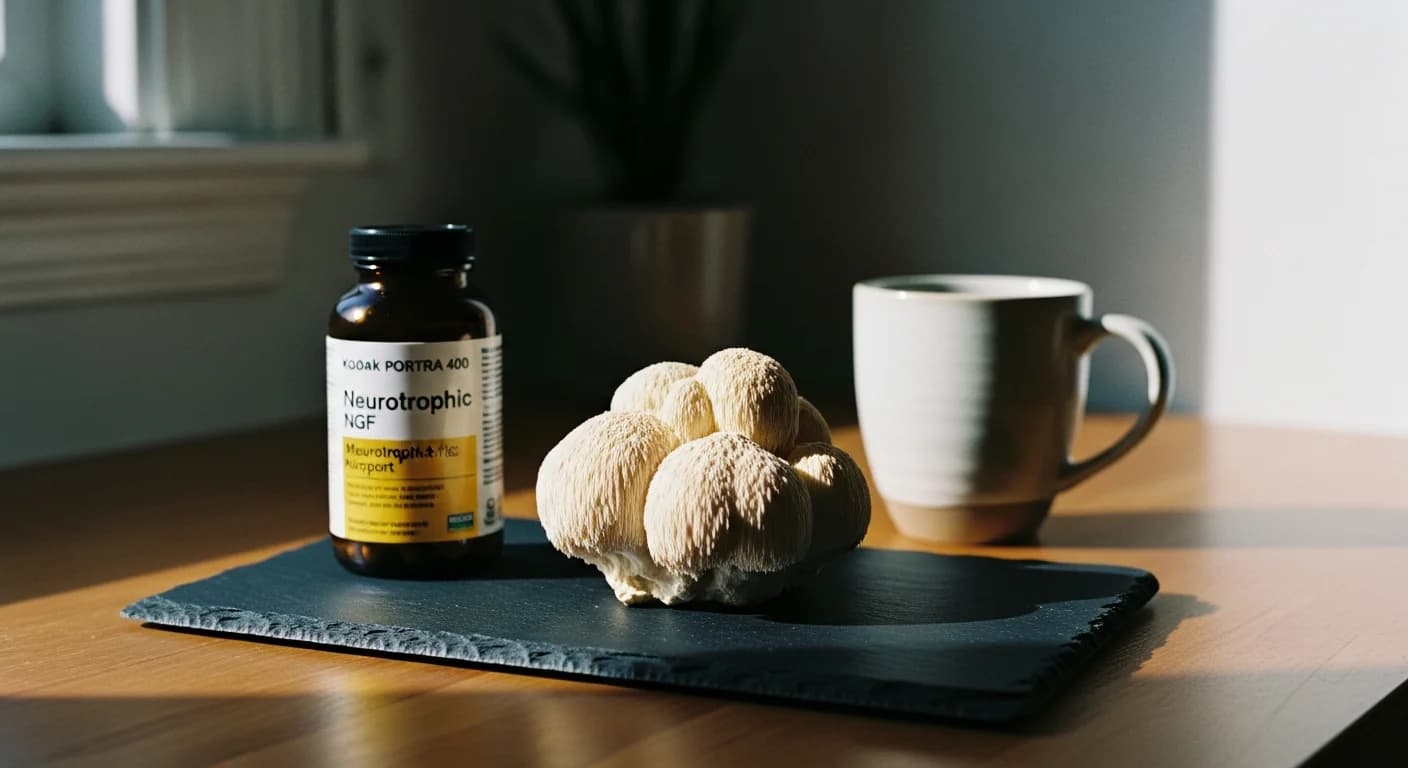
Lions mane is an edible mushroom (Hericium erinaceus) that grows on hardwood trees. Its bioactive compounds, primarily hericenones and erinacines, stimulate the production of Nerve Growth Factor (NGF) and brain-derived neurotrophic factor (BDNF), two proteins the brain requires for neurogenesis (the growth of new neurons) and synaptic plasticity (the ability to form new connections).

Think of caffeine as the gas pedal and lions mane as engine maintenance. Caffeine makes everything go faster. Lions mane does not deliver a jittery rush. It helps the machinery run smoother over weeks and months. Beyond the brain, lions mane acts as a prebiotic, feeding healthy gut bacteria that in turn produce short-chain fatty acids and better-balanced neurotransmitter precursors. Many patients see gut health and thinking clarity improve together.

Who this is for (and who it isnt)

We look for specific patterns before recommending lions mane:

  • The deep work professional. Coders, writers, strategists, and lawyers logging 4 to 6 hours of sustained concentration and hitting a wall earlier than they used to.
  • Cognitive longevity. Adults over 50 who want proactive neuroprotection, steps to keep neurons healthy as they age.
  • The brain fog patient. People recovering from a long viral illness, sustained stress, or post-COVID cognitive symptoms. Lions mane is one of the supplements most often considered for that picture.
  • Gut-brain axis support. Patients whose gut and mood tend to track together often see both improve.

It is not the right first move, or it needs a conversation first, if:

  • You have a mushroom or fungi allergy. Avoid if you react to culinary mushrooms.
  • You take a blood thinner (warfarin, apixaban, or similar) or have a bleeding disorder. Lions mane has mild blood-thinning effects.
  • You have surgery scheduled within the next 2 weeks. Stop lions mane at least 2 weeks before any planned procedure.

How we evaluate it: safety, then effectiveness, then cost

Every supplement we recommend runs the same three gates, in order (we go deep on this in how we choose supplements).

  • Safety first. We check for mushroom allergy, bleeding risk, and upcoming surgery. Then we want a third-party-tested product, because the lions mane supplement market has serious quality problems. Many products labeled "lions mane" are mycelium grown on grain, not actual mushroom extract, and they vary dramatically in active compound content.
  • Effectiveness second. The preferred form is a dual extract (water plus alcohol) of the fruiting body, the actual mushroom cap. If a label lists "polysaccharides" but not "beta-glucans," that is a red flag for mycelium-on-grain filler. Trusted starting points include Real Mushrooms, Oriveda, and Om Mushroom.
  • Cost last. A 60 to 90 day supply of genuine fruiting body extract typically runs $25 to $50. Products under $15 are almost always mycelium on grain at therapeutic doses. The price gap reflects a real quality difference, not marketing.

How to dose it, and when

The goal with lions mane is cumulative brain building. Consistency is the main driver of effect, not timing precision.

  • Standard dose: 1,000 to 2,000 mg of extract daily.
  • Timing: Most patients take it in the morning with coffee. It pairs well with caffeines focus effect and adds a layer of calm stability rather than more stimulation.
  • The focus stack: Pairing lions mane with L-theanine (a calming amino acid in green tea) and coffee produces the best results for many patients.
  • Cycling: Strict cycling is not required for safety, but taking weekends off can help maintain a clear sense of effect over months of use, and doing 3 weeks on and 1 week off is a reasonable approach if the effect starts feeling less distinct.

What to expect on the timeline: some patients notice a subtle lift within 2 weeks. The more meaningful benefits to memory and focus build over 4 to 8 weeks of daily use. The most common patient feedback is "words come easier" and "less friction starting tasks." If you have used it consistently for 12 weeks at the right dose with no effect, the issue is probably not NGF-related.

Flaws, side effects, and interactions

Fishtown Medicine

A 90-minute conversation with Dr. Ash. A written plan you can actually follow.

Start your intake

No supplement is perfect, and being honest about the downsides is part of the job.

  • Mild blood thinning. The anti-platelet effect is real. We advise stopping lions mane at least 2 weeks before major surgery and use caution with blood thinners.
  • Digestive notes. Mild stomach upset is the most common side effect. Taking it with food usually resolves it.
  • Skin. Rare itchy skin reactions have been reported, most often in people with mushroom sensitivities.
  • Quality gap. The biggest real-world flaw is product variability. Mycelium-on-grain products are not worthless, but they are weaker than fruiting body extracts at the same label dose, and many consumers are paying for a clinical effect they are not getting.
  • Diminishing return. Some patients describe reduced effect after months of daily use, which usually reflects the brain settling into a new baseline. Cycling (weekends off, or 3 weeks on and 1 week off) helps maintain a clear sense of impact.

What we recommend, and what we dont

  • We look for: A dual extract (water plus alcohol) of the fruiting body, third-party tested, with confirmed beta-glucan content on the label. Real Mushrooms, Oriveda, and Om Mushroom are reliable starting points.
  • Worth considering alongside it: L-theanine and coffee for the focus stack. Lions mane can also be eaten as food (sauteed, the texture is similar to crab or lobster), though getting a consistent clinical dose from food requires a large daily amount.
  • We dont lean on: Mycelium-on-grain products as the primary tool for cognitive support. They are not the right product for a clinical effect at the doses people typically use.

Guidance from the Clinic

"Lions mane is the supplement I use when a patient feels fried, not just tired. The brain has real capacity to grow and repair, but it needs the right inputs. NGF is one of them, and lions mane is the most practical way to support it without a prescription. Give it 6 to 8 weeks of consistent daily use before judging it. The patients who quit at week 3 are the ones who miss the benefit."

Dr. Ash

Actionable Steps

Build cognitive capacity, dont just borrow it.

  1. Pick the right form. Look for fruiting body dual extract with beta-glucans listed on the label, not just polysaccharides.
  2. Take 1,000 to 2,000 mg daily. Consistency matters more than perfect timing. Morning with coffee is a reliable routine.
  3. Add L-theanine for the focus stack. Calm, sustained attention beats jittery stimulation for deep work.
  4. Give it 4 to 8 weeks. Neural growth is slow. Dont judge it at week 2.
  5. Stop 2 weeks before surgery. The mild blood-thinning effect is real, and anesthesiologists need to know what you're taking.

Book Your Warm Invitation Call

✦

Key Takeaways

  1. Lions mane stimulates NGF and BDNF, building cognitive capacity over 4 to 8 weeks. It is engine maintenance, not a gas pedal.
  2. The standard dose is 1,000 to 2,000 mg of fruiting body dual extract daily. Fruiting body extract with confirmed beta-glucans is the only form worth using for a clinical effect.
  3. The main safety cautions are mushroom allergy, bleeding disorders or blood thinners, and surgery within 2 weeks.
  4. Cycling (weekends off, or 3 weeks on and 1 week off) helps maintain a clear sense of effect over months of use.
  5. Lions mane is one of the best-supported supplements for post-COVID brain fog, mild cognitive impairment, and the cognitive endurance needs of busy professionals.

Scientific References

  1. Mori, K., et al. (2009). Improving effects of the mushroom Yamabushitake (Hericium erinaceus) on mild cognitive impairment: A double-blind placebo-controlled clinical trial. Phytotherapy Research, 23(3), 367-372.
  2. Lai, P. L., et al. (2013). Neurotrophic properties of the Lion's mane medicinal mushroom, Hericium erinaceus (Higher Basidiomycetes) from Malaysia. International Journal of Medicinal Mushrooms, 15(6), 539-554.
  3. Nagano, M., et al. (2010). Reduction of depression and anxiety by 4 weeks Hericium erinaceus intake. Biomedical Research, 31(4), 231-237.
  4. Wong, K. H., et al. (2012). Neuroregenerative potential of lion's mane mushroom, Hericium erinaceus (Bull.: Fr.) Pers., in the treatment of peripheral nerve injury. International Journal of Medicinal Mushrooms, 14(5), 427-446.

Medical Disclaimer: This resource provides clinical context for educational purposes. In the world of Precision Medicine, there is no "one size fits all". The right supplement plan must be matched to your unique lab work, physiology, and goals. Consult Dr. Ash to determine if this approach is right for you, particularly if you have chronic health conditions or are taking prescription medications.
Ashvin Vijayakumar MD (Dr. Ash)

Fishtown Medicine | Articles

2418 E York St, Philadelphia, PA 19125·(267) 360-7927·hello@fishtownmedicine.com·HSA/FSA Eligible

Book Your Diagnostic

Frequently Asked Questions

Common Questions

Lions mane is an edible mushroom that grows on hardwood trees and looks like a white pom-pom. It helps the brain produce Nerve Growth Factor (NGF) and BDNF, two proteins that keep neurons healthy. People use it for focus, memory, and recovery from brain fog.
No. Lions mane is not psilocybin or any related compound. It is legal, non-psychoactive, and approved as a food in the US. You should feel sharper and clearer over time, not altered.
Yes, and it is delicious sauteed (the texture is similar to crab or lobster). However, getting a consistent clinical dose from food requires a large, daily amount. Most patients use extracts for consistency and add the cooked mushroom for variety.
Most patients notice cognitive effects between weeks 4 and 8 of daily use. Some feel a subtle lift within 2 weeks, but the deeper benefits to memory and focus build slowly. If you have used it for 12 weeks at the right dose with no effect, the issue is probably not NGF-related.
Lions mane is generally safe with ADHD medications because it works on a different pathway (NGF and neuroinflammation, not dopamine release). Some patients use it to support baseline focus. We review each case to confirm timing and dose are right.
Lions mane has small but encouraging studies on mild anxiety and depressive symptoms, particularly in midlife women. The likely mechanism is reduced neuroinflammation. It is not a replacement for antidepressants, but it can be a meaningful add-on, particularly when brain fog and low mood travel together.
Yes, daily lions mane is generally safe at 1,000 to 2,000 mg of extract for healthy adults. The most common side effects are mild stomach upset or rare itchy skin. People with mushroom allergies, bleeding disorders, or upcoming surgery should avoid it or coordinate with their doctor.
Lions mane absorbs well with or without food. Most patients prefer it with breakfast or morning coffee for routine. If you have a sensitive stomach, taking it with food usually solves any mild nausea.

Deep-Dive Questions

Lions mane works on the brains structure, not just its chemistry. Stimulants and racetams change neurotransmitter signaling for a fast effect that fades when you stop. Lions mane builds Nerve Growth Factor over time, which can produce more lasting changes in focus, memory, and resilience.
Lions mane stimulates NGF and BDNF, two proteins required for neurogenesis and synaptic plasticity. Most of the strongest evidence is in animal studies. Human evidence is more modest but consistent for cognitive function and mild cognitive impairment, particularly over 12 weeks or longer.
Lions mane has promising early data for mild cognitive impairment (MCI), the stage that often precedes Alzheimers. A 2009 Japanese trial showed measurable cognitive improvements over 16 weeks. It is not a cure or guaranteed prevention, but it is a reasonable piece of a brain health protocol that also includes sleep, exercise, and metabolic care.
We do not have strong human safety data on lions mane during pregnancy or breastfeeding, so we avoid concentrated extracts during those windows unless there is a specific reason. Eating lions mane as food is fine. Confirm any supplement with your obstetrician or midwife.
Lions mane has supportive evidence for peripheral nerve regeneration in animal studies, particularly after physical injury. Human data is limited but promising for mild diabetic neuropathy and post-surgical nerve repair. We sometimes use it as a supportive tool alongside addressing the upstream cause (blood sugar control, B12 status, inflammation).
Lions mane has small effects on blood sugar control and lipid profiles in animal and early human studies, likely through its prebiotic action on gut bacteria. The effects are modest, so we do not lean on it as a metabolic tool. It is a nice bonus for patients already using it for cognitive support.
Lions mane acts as a prebiotic and helps reduce gut inflammation. The healthier microbiome then produces more short-chain fatty acids (signaling molecules that lower brain inflammation) and better-balanced neurotransmitter precursors. Many patients report less bloating and clearer thinking together.
Lions mane is generally compatible with SSRIs and SNRIs and works through different pathways. No significant drug interaction has been documented. If you are on an antidepressant and adding lions mane, mention it to your prescriber so they can track any subtle changes.
Some patients describe a diminishing return after months of daily use, which usually reflects the brain settling into a new baseline. Taking weekends off, or doing 3 weeks on and 1 week off, can help maintain a clear sense of the impact.
Mycelium-on-grain products contain some active compounds but are diluted by the grain (rice or oats) they are grown on, and they typically have low beta-glucan content. They are not worthless, but they are weaker than fruiting body extracts at the same label dose. For a clinical effect, fruiting body dual extracts are the better tool.
Lions mane is one of the supplements most often considered for post-COVID cognitive symptoms. The proposed mechanism is reduced neuroinflammation plus support for nerve regeneration. We pair it with sleep optimization, mitochondrial support, and addressing blood sugar volatility.
Short days, low vitamin D, and indoor confinement drive a cognitive slump for many patients from November through March. Lions mane is one of several tools we layer on (along with vitamin D, exercise, and sleep) to keep the brain steady through the dark months. It is not a fix on its own, but it is a useful piece of the system.

Ready when you are

Start your intake

Dr. Ash reads every intake himself, and answers questions personally - usually within a few hours.

Related Intelligence

Alzheimer's Prevention and Cognitive Optimization Philadelphia | Medicine 3.0 Brain Health

Alzheimer's Prevention and Cognitive Optimization Philadelphia | Medicine 3.0 Brain Health

Address brain fog and protect long-term memory. A Philadelphia primary care practice helping APOE4 carriers and busy professionals build cognitive reserve.

Read Deep Dive
Emotional Health and Longevity Philadelphia | Medicine 3.0

Emotional Health and Longevity Philadelphia | Medicine 3.0

Suicide and overdose are leading causes of death for adults under 45. How a Philadelphia primary care practice integrates emotional health into longevity care.

Read Deep Dive
Medicine 3.0 Philadelphia | The Systems-Biology Model of Longevity

Medicine 3.0 Philadelphia | The Systems-Biology Model of Longevity

What Medicine 3.0 means and how a Philadelphia primary care practice uses it to extend healthspan, not just lifespan.

Read Deep Dive

New patients

Talk it through with Dr. Ash.

If anything you read here raised a question, start with a short intake - your story in your own words. Dr. Ash reads every one personally, and you can text or email us anytime.

HSA/FSA eligible
No initiation or cancellation fees
No copays
Start your intake →
FishtownFish wrapped around the rod of AsclepiusMedicine
Philadelphia Primary Care
2418 E York St, Philadelphia, PA 19125Primary care in PhiladelphiaHome visits in Greater PhiladelphiaPricing & MembershipGER·O·SPAN: our clinical frameworkDigital Health Literacy

Serving Fishtown · Northern Liberties · East Kensington · Olde Richmond · Port Richmond · Old City · Callowhill · Poplar · Center City · Center City West · Art Museum · Bella Vista · Chestnut Hill · Fairmount · Fitler Square · Graduate Hospital · Logan Square · Manayunk · Queen Village · Rittenhouse · Roxborough · Society Hill · Southwark · Bryn Mawr, PA · Gladwyne, PA · Villanova, PA · Wayne, PA · Cherry Hill, NJ · Haddonfield, NJ · Medford, NJ · Moorestown, NJ · Voorhees, NJ

Explore by topic

Women’s Health
  • Perimenopause
  • Menopause 3.0
  • PCOS
  • Fertility
Men’s Health
  • Testosterone (TRT)
  • Sleep Apnea & Low T
  • Andropause
  • Low Libido
Metabolic
  • Medical Weight Loss
  • Ozempic vs Metformin
  • Fasting Protocols
  • Visceral Fat
Cardiovascular
  • apoB & Heart Health
  • apoB vs LDL
  • Lp(a) Cholesterol
  • ED & Heart Risk
Longevity + Performance
  • Healthspan vs Lifespan
  • Biological Age
  • VO2 Max
  • Zone 2 Training
Supplements
  • Magnesium
  • Creatine
  • Omega-3
  • Foundational Stack
  • Supplement Guides
Care in Philadelphia +
Direct Primary Care in Philadelphia, PAConcierge Medicine in Philadelphia, PAConcierge vs DPC in Philadelphia, PALongevity Medicine in Philadelphia, PAPreventive Care in Philadelphia, PAExecutive Physical in Philadelphia, PAAnnual Physical in Philadelphia, PAHealthspan Optimization in Philadelphia, PAFunctional Medicine in Philadelphia, PASame-Day Sick Visits in Philadelphia, PATestosterone Replacement Therapy in Philadelphia, PAPerimenopause Care in Philadelphia, PAMenopause Care in Philadelphia, PAThyroid Treatment in Philadelphia, PAPCOS Care in Philadelphia, PAGLP-1 Weight Loss in Philadelphia, PAMetabolic Health in Philadelphia, PAHormone Optimization in Philadelphia, PAAdvanced Lipid Testing in Philadelphia, PAVO2 Max Testing in Philadelphia, PADEXA Scan in Philadelphia, PACGM in Philadelphia, PALong COVID Care in Philadelphia, PAChronic Fatigue Treatment in Philadelphia, PAPOTS Treatment in Philadelphia, PAMCAS Treatment in Philadelphia, PALyme Disease Care in Philadelphia, PABrain Fog Treatment in Philadelphia, PASleep Disorders Treatment in Philadelphia, PAStrep Throat Treatment in Philadelphia, PAUTI Treatment in Philadelphia, PASinus Infection Treatment in Philadelphia, PASTI Testing in Philadelphia, PATravel Medicine in Philadelphia, PAPre-Op Clearance in Philadelphia, PASports Club Medicine in Philadelphia, PA

Made it this far? You’re already most of the way there. let’s get started → Dr. Ash reads every word personally.

Content is for educational purposes only and does not constitute medical advice.

TermsPrivacyScope of PracticeClinical Independence