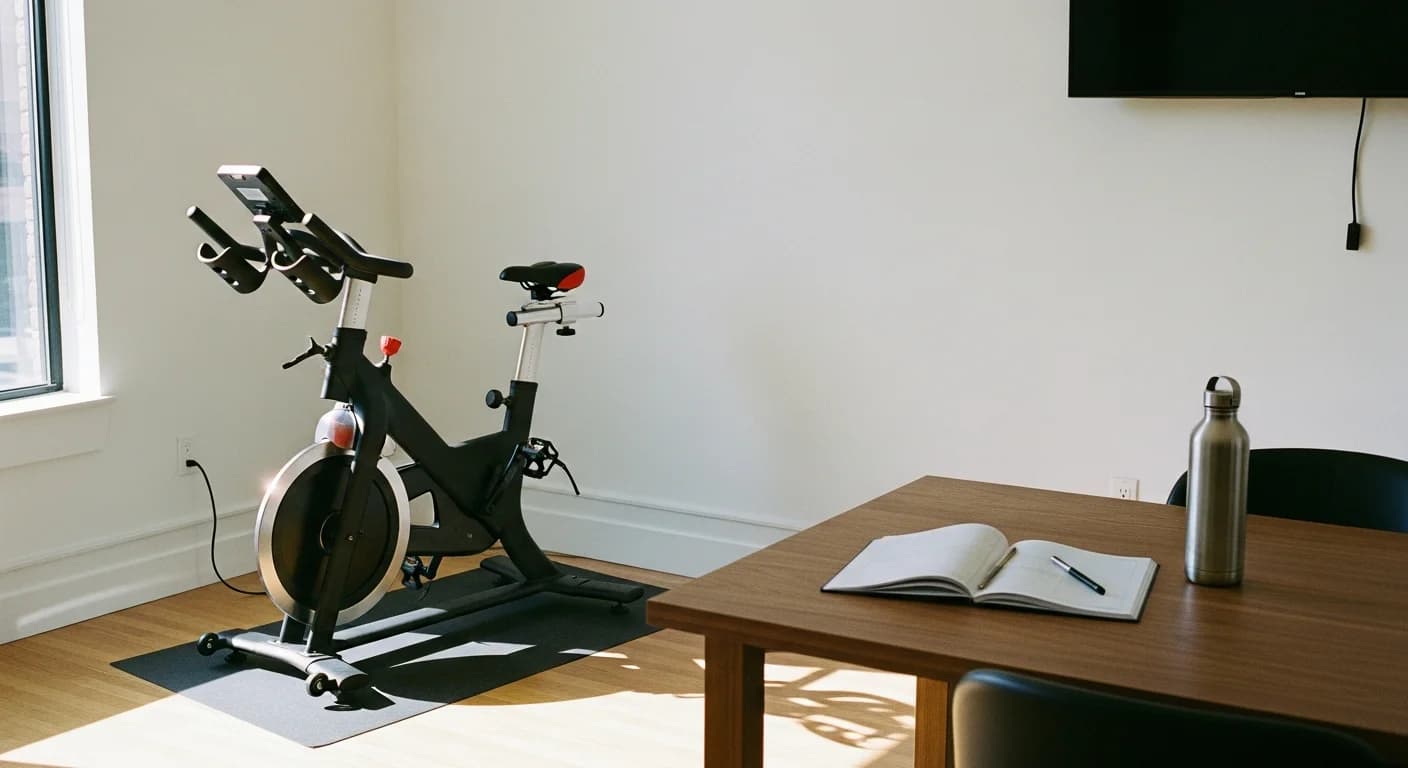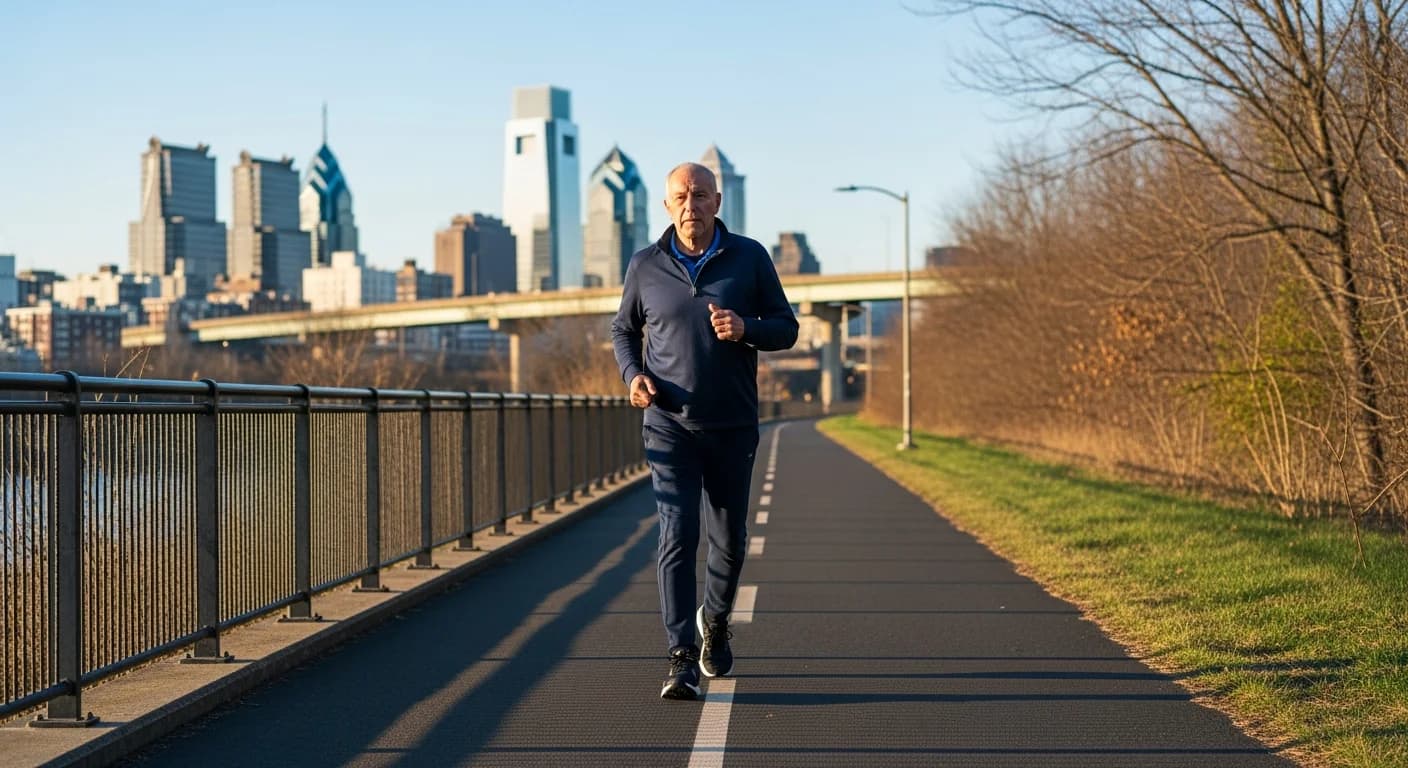

The centenarian decathlon, an idea from Peter Attia's Outlive, is a personal list of about 10 physical tasks you want to be able to do in your 80s or 90s, such as lifting a grandchild, carrying groceries upstairs, or getting up off the floor. Because strength and fitness decline with age, you train for those tasks decades early, with margin. A physician's version adds measurement (DEXA, functional tests), medical risk work, and follow-through over years.
TL;DR: Pick about 10 things you want your body to be able to do at 80 or 90. Lift a 30-pound grandchild. Carry 2 grocery bags up a flight of stairs. Get up off the floor without using your hands. Hike an easy trail. Then train for that list now, with extra margin, because everything you can do today shrinks a little each decade. This is the centenarian decathlon, and it turns "exercise more" into an event you are training for. We build it into member care with strength targets, DEXA numbers, and a plan sized to where you are starting, in Philadelphia and by telehealth in 40 states.
Most exercise advice fails because it has no finish line. "Get 150 minutes a week" is a chore that renews forever. The centenarian decathlon, an idea Peter Attia developed in Outlive, replaces the chore with an event: a personal list of physical tasks you intend to be able to do late in life, trained for the way an athlete trains for a competition that has a date and a start list.
What is the centenarian decathlon?
It is your own list of roughly 10 physical tasks, chosen from the life you want to be living in your 80s and 90s. Nobody's list is the same. Common entries look like:
- Lift a 30-pound child from the floor safely
- Carry 2 full grocery bags up a flight of stairs
- Get up from the floor without using hands or furniture
- Walk 3 miles on uneven ground
- Put a carry-on bag in an overhead bin
- Swim half a mile, or dance at a wedding for an hour
- Drive confidently, which means neck rotation and reaction time
- Climb 4 flights of stairs without stopping
The word decathlon is doing work here. An athlete training for 10 events does not train vaguely; each event names its demands, and the program covers all of them. Your list does the same. Every entry decomposes into strength, endurance, balance, and mobility requirements you can train today.
Why do I have to train for it decades early?
Because of the arithmetic of decline. Muscle mass and strength fall with every decade after your 30s, and the drop steepens after 70. Aerobic capacity follows the same slope. That means the version of each task you can do at 80 is roughly a discounted version of what you can do now, and the discount compounds.
So you train with margin. If the goal at 85 is lifting 30 pounds from the floor, the 55-year-old version of you wants to handle meaningfully more than that, comfortably and with good mechanics, so that decades of ordinary decline still leave the task inside your envelope. Backcasting, working backward from the future demand to the present target, is the whole method. It is also why starting at 50 or 60 is not late; it is the last window where margin is cheap to build.
What does the training look like?
Less exotic than the name suggests, and it maps directly onto the events:
- Strength, 2 or more days a week. Push, pull, hinge, squat, and carry. The loaded carry is the most centenarian-decathlon exercise there is, because half the list is some version of carrying something while walking.
- A base of easier aerobic work. Sessions at a conversational pace, several days a week, build the engine that walking, hiking, and traveling draw on.
- Some hard breathing, about once a week, to hold peak capacity, which is the number that predicts how well the decades go.
- Balance and getting off the floor, practiced on purpose. Rising from the floor is on nearly everyone's list and is itself associated with how long people live.
If you are starting from very little, the list does not ask for heroics. The first month is a 10-minute daily walk and 5 sit-to-stands from a chair, and the program grows from there. Progress on this scale is measured in months and kept for decades.
Longevity Medicine
A personalized longevity strategy starts with knowing your real baselines.
How does a physician version differ from doing it myself?
The book version of the decathlon is a training idea. The care version adds 3 things.
Measurement. A DEXA scan turns "build muscle" into a lean-mass percentile with a target, and visceral fat into a number the nutrition plan answers to. Functional tests, what you can carry, whether you can rise from the floor, how stairs feel, get recorded and trended the way labs are.
Risk work in parallel. The decathlon assumes you arrive at 80 without a stroke, a hip fracture, or a late-caught cancer having rewritten the plan. That is the medical half: blood pressure, ApoB, bone density, and screening kept current while the training compounds.
Follow-through. The plan survives contact with injuries, travel, and lost months because somebody is watching it with you. When a knee or a shoulder complains, the plan works around it rather than stopping, and your answers about pain rewrite the program instead of ending it.
Members see this as the movement focus on their patient hub: 1 focus at a time, computed from their own answers and numbers, with what we are watching named on the card.
Can I do this by telehealth?
Yes. Programming, check-ins, DEXA orders, and labs all run remotely. Dr. Ash is licensed in 40 states, with bloodwork at a Quest or Labcorp near you and scans at a center near you; the current state list lives at AL, AZ, CO, CT, DC, DE, FL, GA, GU, HI, IA, ID, IL, IN, KY, LA, ME, MD, MN, MO, MS, MT, NE, NH, NJ, NV, NY, ND, OH, OK, PA, SD, TN, TX, UT, VT, WA, WI, WV, WY. Philadelphia members add in-person visits, and this city is a good training partner: rowhome stairs, Wissahickon trails, and walkable neighborhoods count toward the decathlon every day.
Key Takeaways
- The centenarian decathlon is your own list of about 10 physical tasks for
Scientific References
- Attia P. Outlive: The Science and Art of Longevity. Harmony; 2023. The centenarian decathlon's origin.
- Leong DP, et al. Prognostic value of grip strength: findings from the PURE study. Lancet. 2015;386(9990):266-273.
- Brito LB, et al. Ability to sit and rise from the floor as a predictor of all-cause mortality. Eur J Prev Cardiol. 2014;21(7):892-898.
- Fiatarone MA, et al. Exercise training and nutritional supplementation for physical frailty in very elderly people. N Engl J Med. 1994;330(25):1769-1775.
- Mandsager K, et al. Association of cardiorespiratory fitness with long-term mortality. JAMA Netw Open. 2018;1(6):e183605.
- García-Hermoso A, et al. Muscular strength as a predictor of all-cause mortality in an apparently healthy population. Arch Phys Med Rehabil. 2018;99(10):2100-2113.
Medical Disclaimer
This article is for educational purposes and is not a substitute for personalized medical advice, diagnosis, or treatment. Talk with your physician before starting a new training program, particularly if you have heart disease, joint problems, or a recent surgery.

Frequently Asked Questions
Common Questions
Deep-Dive Questions
Ready when you are
The chat is our AI assistant, answering from our published guides. To talk it through with Dr. Ash himself, start with the intake.