
September in Philadelphia asks 3 things of you: flu and COVID shots timed for late September or October so protection peaks with the season, a routine rebuilt around a fixed wake time while schedules are steady, and household habits that keep the first school-year cold from taking everyone down. Fishtown Medicine's September guide walks through each one, with the live flu tracker to watch as the season builds.
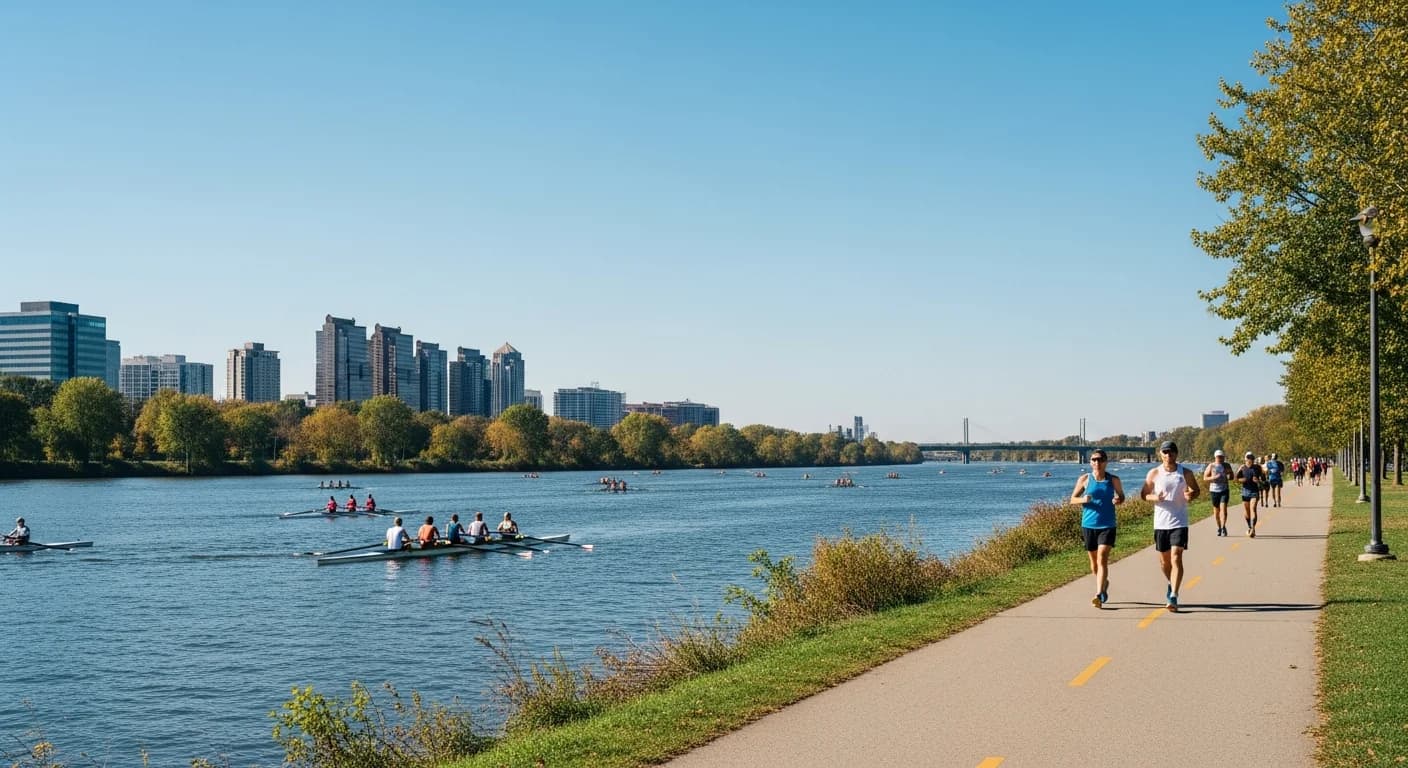
September is Philadelphia at its best. The humidity finally breaks, the shore traffic thins out, the school buses come back to the block, and the Schuylkill River Trail fills with runners logging their first long miles toward the November marathon. It is also the month with the highest leverage of the year for your health, because the decisions you make now, about your shots, your schedule, and your household, decide how December feels. This guide walks through the 3 that matter most.
How to time your flu and COVID shots
The question every September brings is not whether to get the flu shot but when, and the timing matters more than most people realize. Your immune system takes about 2 weeks after the shot to build its full antibody response, and that protection is strongest in the first 3 to 4 months before it fades, month by month, faster in older adults. Philadelphia's flu season most often peaks between late December and February. Put those 2 curves together and the math points to a window: late September through the end of October. A shot in that window means your peak protection lines up with the season's peak, with enough left in the tank for the late-winter tail. A shot in early August, by contrast, can leave you with meaningfully less protection by the time the February wave arrives.
The same window works for the updated COVID vaccine, and you do not need 2 separate trips. Flu and COVID shots can be given at the same visit, one in each arm, and the studies on co-administration show the immune response to each holds up. The trade-off is a modestly higher chance of feeling it the next day: sore arms, some fatigue, maybe a low-grade headache. If you have a big presentation or a 20-mile training run the next morning, schedule around that, not around the shots themselves.
A few situations bend the timing:
- Earlier makes sense if pregnancy is part of your fall. A flu shot during pregnancy protects both mother and baby, and antibodies passed in the third trimester cover the newborn through their first months, before they can be vaccinated themselves. If you are due mid-season, do not wait for October.
- Earlier also wins if later means never. The best-timed shot is the one that happens. If August is when you are standing in the pharmacy anyway, an August shot protects you far better than a perfectly timed shot you never get around to.
- Later makes sense after a recent COVID infection. If you had COVID this summer, waiting about 3 months from the infection before the updated vaccine lets your immune system get more out of the dose. Your flu shot does not need to wait with it.
- Adults 65 and older should ask for the stronger versions. Higher-dose and adjuvanted flu vaccines exist for older immune systems, which respond less vigorously to the standard dose, and the trial data show they prevent more flu in this group. You do not need a brand name; asking the pharmacist for "the high-dose or adjuvanted flu vaccine for 65 and up" gets you there. The same group should aim for the earlier half of the window rather than pushing into November.
Once you are vaccinated, the useful move is watching the season rather than guessing at it. Our live flu tracker follows what is circulating in Philadelphia week by week, including when the season turns and what to do in the first 48 hours if it catches you anyway.
How to rebuild a routine that holds
September is the strongest reset month on the calendar, and it is worth understanding why so you can use it deliberately. Habits form around cues, and cues need a stable background: the same wake time, commute, and Tuesday rhythm, week after week. September hands you that stability for free. School is back, work rhythms return, the shore weekends stop scrambling the calendar, and there are still 2 clear months of steady schedule before Thanksgiving starts the holiday scramble. A routine built now gets roughly 10 weeks of undisturbed repetition to set, which is close to what the habit research says a new behavior needs to become automatic.
This is also why the January version of the same plan so often fails. January asks you to build new habits on a foundation of holiday debt, short dark days, and a schedule still recovering from travel. December asks you to build them during the disruption itself. September asks almost nothing; the structure is already there, and you are borrowing it. A small change made now, kept through a stable fall, will still be standing in the new year. A large change attempted in December usually does not survive its second week.
Build in this order:
- Anchor sleep first, before touching anything else. A fixed wake time, 7 days a week, is the single highest-leverage habit in this guide, because everything downstream, appetite, training recovery, mood, immune function, keys off your circadian rhythm, and the wake time is what sets it. Pick a time you can hold on weekends, get outside light within the first hour, and let bedtime find its level over 2 weeks. The full protocol, including what to do when it does not come easily, lives in our sleep optimization guide.
- Then add training, on top of the sleep, not instead of it. September in Philadelphia is marathon-building season, and the Schuylkill Banks, Kelly Drive, and the Wissahickon are full of people doing this right: gradual weekly mileage, long runs in the cool mornings, rest days honored. You do not need a marathon on the calendar to borrow the structure. Three fixed workout slots per week, protected like meetings, outlast any ambitious 6-day plan. If running with company helps it stick, and for most people it does, Philly's run clubs are one of the best free health interventions in the city; our running clubs guide matches clubs to pace and neighborhood. One September detail for anyone on the Wissahickon trails: adult ticks come back out in the fall, so the nightly tick check is still earning its keep in October.
- Keep each change small enough to survive a bad week. The routine that holds is the one that continues through the week you get a cold, the week work goes sideways, and the week it rains every day. A 20-minute walk you never skip builds more health over a year than a 60-minute workout you abandon in week 5, because consistency is what your cardiovascular system, your sleep architecture, and your habit circuitry all respond to.
How to keep one cold from taking the whole house
The first weeks of school reshuffle every virus in the region. Classrooms concentrate rhinoviruses and enteroviruses, kids trade them efficiently, and 2 to 3 days later the same viruses arrive home. Pediatric emergency departments see it so reliably that the mid-September rise in asthma flares has its own name in the literature, the September epidemic, and households follow the same curve: one runny-nosed kid on Tuesday, a scratchy-throated parent by Friday. If you live in a rowhome, where a household shares 1 bathroom, 1 staircase, and a lot of doorknobs, the spread is faster still. You cannot opt out of the season, but you can decide whether each cold visits one person or everyone.
The habits that do the heavy lifting are unglamorous, and they work:
- Protect sleep, yours included. Short sleep measurably raises your odds of catching the cold you have been exposed to; in the experimental studies, people sleeping under 6 hours were several times more likely to get sick after the same viral exposure than people sleeping 7 or more. The wake-time anchor from the section above is also your immune plan.
- Wash hands at the re-entry points. Soap and water for 20 seconds when kids come home from school and before meals catches the highest-traffic transmission moments. Respiratory viruses ride hands to faces more than they ride the air across a room.
- Stop sharing cups, towels, and toothbrush cups the day symptoms start. Assign the sick person their own hand towel and their own water glass, and run the dishwasher hot. It sounds small, and it is the difference between 1 case and 4.
- Give the sick person the bedroom and a cracked window when you can. Fresh air exchange lowers the viral load everyone else breathes, and September's weather makes this easy in a way January's does not.
For the adults in the house, sick-day thresholds deserve to be decided in advance, not negotiated at 6:45 AM through a headache. A fever means staying home until you have been fever-free for 24 hours without medication, both for your own recovery and because the febrile days are the most contagious ones. A scratchy throat with no fever and reasonable energy is usually workable with distance and handwashing, and pushing through a full-blown flu-like illness helps no one; it lengthens your own course and seeds the office. If it is flu season proper, sudden fever with body aches is worth a same-day test, because the antiviral window closes 48 hours after the first symptom; the flu tracker covers that decision in detail. And when the stomach bug version arrives instead, usually later in the fall, the norovirus tracker is the page to pull up.
Fishtown Medicine
A 90-minute conversation with Dr. Ash. A written plan you can follow.
Most colds resolve in 7 to 10 days, and some symptoms deserve attention when they overstay that welcome. A cough that is still going at 3 weeks, a fever that returns after you had clearly started improving, fatigue that is not lifting after 2 weeks, or any shortness of breath beyond what a stuffy nose explains, each of those is a reason to be seen rather than to wait another week. The fever-that-comes-back pattern in particular can signal a bacterial infection settling into the sinuses or chest on the heels of the virus, and it is a much easier problem at day 2 than at day 10.
Guidance from the clinic

Actionable Steps
3 moves to set up in the first week of September.
- Put the shots on the calendar now, for late September or October. Flu and COVID at the same visit, one in each arm, on a Friday if you like a quiet recovery day. If you are 65 or older, ask for the high-dose or adjuvanted flu vaccine.
- Pick your wake time and hold it for 14 days before changing anything else. Same time weekends included, outside light within the hour. Let this settle before you add training on top.
- Set the household sick plan while everyone is healthy. Separate cups and hand towels ready to assign, soap at the sink, and an agreed fever rule: home until 24 hours fever-free without medication.
Key Takeaways
- Late September through October is the flu and COVID shot window for most adults: antibodies peak about 2 weeks after the shot and are strongest for 3 to 4 months, lining up with Philadelphia's December-to-February peak.
- Flu and COVID shots work fine at the same visit, one in each arm; adults 65 and older should ask for high-dose or adjuvanted flu vaccine and vaccinate in the earlier half of the window.
- September is the year's strongest reset month because schedules are steady for roughly 10 weeks before the holidays; small changes made now outlast large ones attempted in December.
- Anchor a fixed wake time first, then add training; marathon season on the river trails is the local model of gradual, structured building.
- School-year colds spread home in 2 to 3 days; sleep, handwashing at re-entry points, and separate cups and towels do most of the prevention, and a cough past 3 weeks or a fever that returns after improvement deserves a visit.
Scientific References
- DiazGranados, C. A., Dunning, A. J., Kimmel, M., et al. (2014). Efficacy of high-dose versus standard-dose influenza vaccine in older adults. New England Journal of Medicine, 371(7), 635-645.
- Ferdinands, J. M., Fry, A. M., Reynolds, S., et al. (2017). Intraseason waning of influenza vaccine protection: evidence from the US Influenza Vaccine Effectiveness Network, 2011-12 through 2014-15. Clinical Infectious Diseases, 64(5), 544-550.
- Johnston, N. W., Johnston, S. L., Duncan, J. M., et al. (2005). The September epidemic of asthma exacerbations in children: a search for etiology. Journal of Allergy and Clinical Immunology, 115(1), 132-138.
- Prather, A. A., Janicki-Deverts, D., Hall, M. H., & Cohen, S. (2015). Behaviorally assessed sleep and susceptibility to the common cold. Sleep, 38(9), 1353-1359.
- Lally, P., van Jaarsveld, C. H. M., Potts, H. W. W., & Wardle, J. (2010). How are habits formed: modelling habit formation in the real world. European Journal of Social Psychology, 40(6), 998-1009.
Related at Fishtown Medicine
- Live flu tracker - what is circulating in Philadelphia and the 48-hour antiviral window
- Philadelphia seasonal illness tracker - flu, COVID, and norovirus status, updated through the season
- Sleep optimization - the full protocol behind the fixed wake time
- Philly running clubs - clubs by pace and neighborhood for the fall training season
- Norovirus tracker - for when the stomach bug version reaches the house
- Vitamin D3 and K2 clinical guide - as the daylight starts to shorten
- COVID strategy - serial testing and treatment as the fall wave builds
- October in Philly - October, with benefit dollars and the fall workup

Frequently Asked Questions
Common Questions
Deep-Dive Questions
Ready when you are
The chat is our AI assistant, answering from our published guides. To talk it through with Dr. Ash himself, start with the intake.