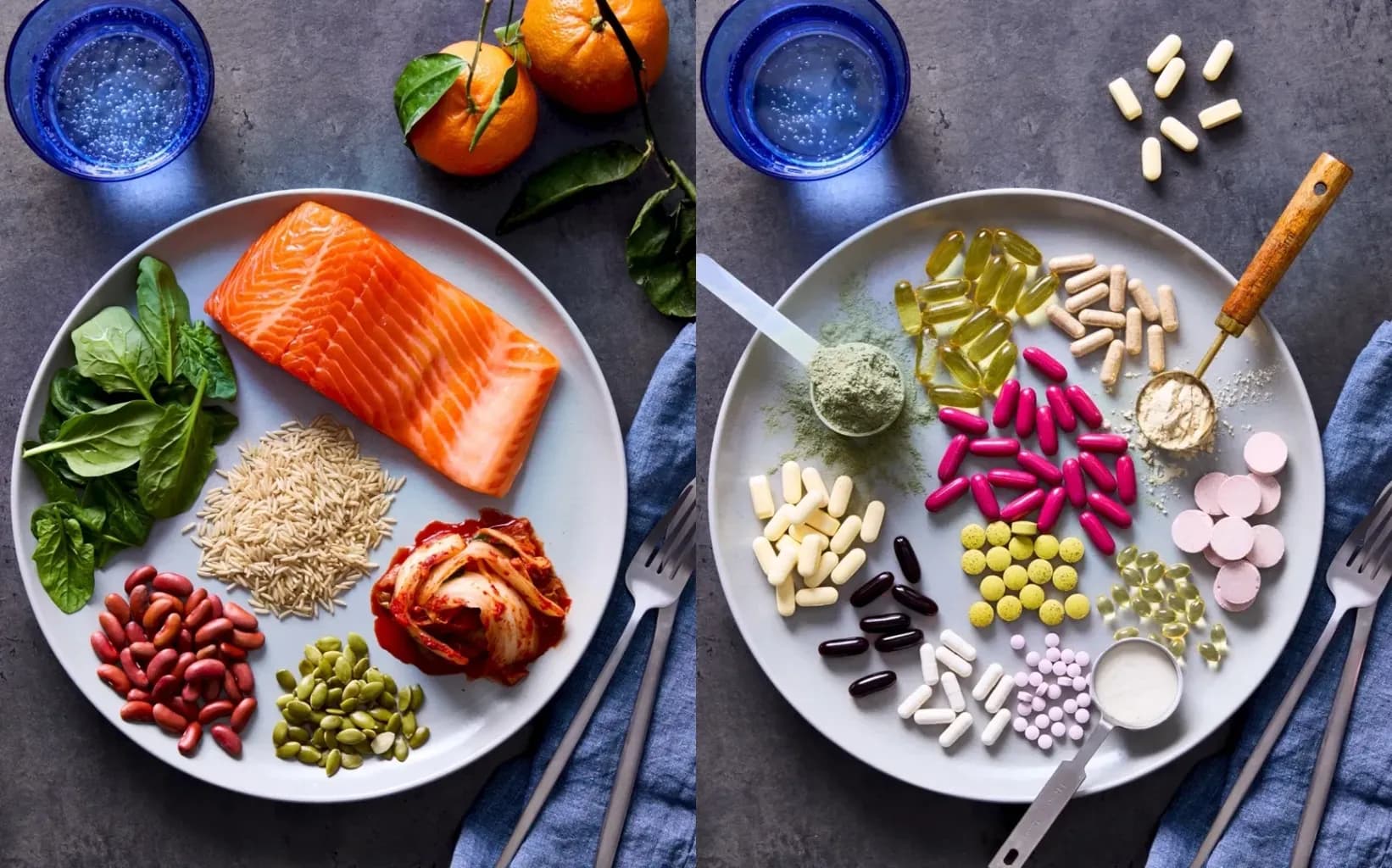

Fishtown Medicine builds dietary guidance around 5 groups patients can eat freely: vegetables, fruit, beans, nuts and seeds, and fish. The second half of the guidance is timing. Breakfast should be the largest meal of the day, loaded with protein and healthy fat rather than a small yogurt or cereal, and eating should finish roughly 4 hours before bed. Morning is when digestion and decision-making both work best.
TL;DR: Eat as much as you want of 5 things: vegetables, fruit, beans, nuts and seeds, and fish. You do not have to weigh or count any of them. Make breakfast your biggest meal of the day, and put protein and a healthy fat in it, so a small yogurt or a bowl of cereal is not the whole thing. Try to stop eating about 4 hours before you go to bed. Keep fried food, chips, candy, cookies, soda, and fast food to once in a while instead of daily. If you change a single habit this week, make it breakfast. It is the meal where a change is easiest to hold, because your body handles food better in the morning and your decisions are better then too.
Two conversations in my practice, weeks apart, arrived at the same place. Both patients had been told their labs were mostly normal. Both had insulin resistance underneath, the kind that does not show up as diabetes yet still drives inflammation, fatigue, skin flares, and cholesterol that will not move. And both asked a version of the same question, which is the most practical question in medicine and the one that gets answered worst: what do I put on the plate tomorrow?
The usual answer is a list of things to stop. That list is easy to write and hard to live on, and it leaves out the part people need most, which is what to eat instead and when. So this is the food-first version of the guidance I give in visits, and it starts with breakfast, because breakfast is where most of the leverage sits and where almost nobody is eating enough.
What Should I Eat? Five Groups You Do Not Have to Measure
Five food groups do the heavy lifting, and you can eat them freely: vegetables, fruit, beans, nuts and seeds, and fish.
That word freely is deliberate. For most people with a metabolic picture like the ones above, there is no portion I would set on these. Eat the vegetables until you are full. Have the second piece of fruit. The reason is that these 5 groups are difficult to overeat in a way that hurts you, because fiber, water, and protein all reach the brain's fullness signals before the calories add up. The foods that get people into trouble are engineered in the opposite direction, stripped of fiber and water so that a large amount of energy goes down before anything tells you to stop.
Within each group, variety matters more than picking the perfect item.
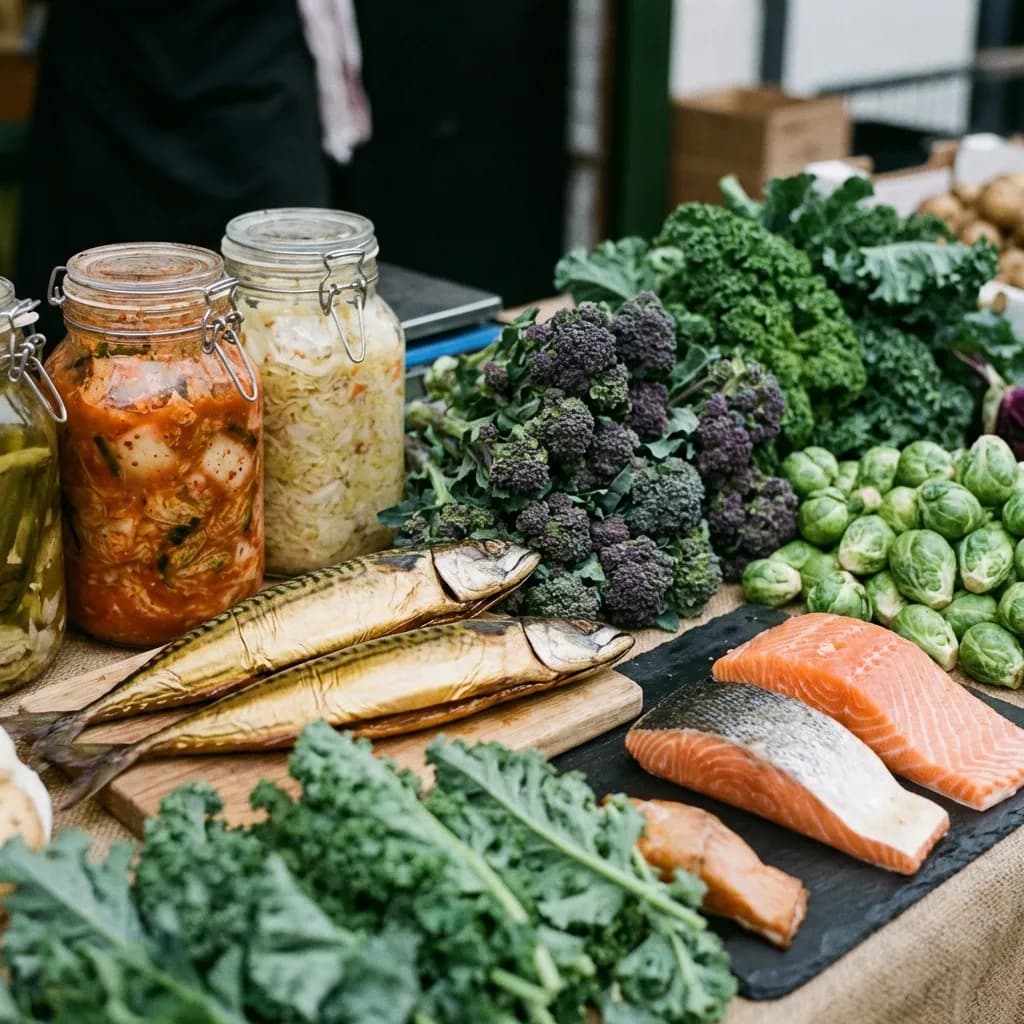
- Vegetables: leafy greens, cruciferous vegetables like broccoli and cabbage, peppers, onions, mushrooms, squash, tomatoes, whatever is cheap at the market that week. Different colors carry different compounds, so a mixed plate does more than a large amount of one vegetable.
- Fruit: berries, citrus, apples, pears, stone fruit, melon. Patients often expect me to restrict fruit because of the sugar, and for the overwhelming majority I do the opposite and ask for more. Whole fruit arrives with its fiber, which changes how the sugar is absorbed. A glass of juice does not.
- Beans and lentils: black beans, chickpeas, lentils, kidney beans, white beans. This is the group most Americans skip, and it is the one that gives you protein and fiber in the same bite. Canned and rinsed is fine.
- Nuts and seeds: walnuts, almonds, pistachios, pumpkin seeds, chia, ground flax. A handful is a snack that does not spike anything.
- Fish: salmon, sardines, mackerel, anchovies, herring, trout. The oily ones carry the omega-3 fats that most people are low in.
There are 2 caveats worth stating plainly. White potato is not unhealthy, and it is the one item in the vegetable family where portions in the United States tend to run away, so give that one a normal serving rather than free rein. And nothing on this list survives being deep fried, which changes the fat and adds a large amount of energy to something that started out helping you.
The list of what to keep occasional is short and predictable: fried food, chips, candy, cookies, soda, and fast food. I do not ask patients to never have these. I ask them to stop being a daily default, because the daily corner store run of an energy drink, a bag of candy, and a snack cake is not a small event. That is well over 100 grams of added sugar inside 15 minutes, and the inflammation that follows lasts days, not minutes.
Why Should Breakfast Be the Biggest Meal of the Day?
Breakfast should be the biggest meal of the day because your body handles food better in the morning than at night, and because your ability to make a good decision about food is also at its best in the morning.
The physiology here is simple. Insulin sensitivity follows a daily rhythm and is highest earlier in the day, so the same plate of food produces a smaller blood sugar rise at 8am than it does at 9pm. Your gut, liver, and kidneys are more active in the morning as well, and the whole system gets more sluggish as the day goes on. When someone eats lightly all morning and heavily at night, they are asking their metabolism to do its hardest work in the hours it is least equipped for.
Controlled research supports the pattern. In a randomized trial of women with excess weight, a plan that put the largest meal at breakfast produced greater weight loss and better triglycerides and insulin than an identical calorie load with the largest meal at dinner (Jakubowicz and colleagues, Obesity, 2013). Skipping breakfast runs the other way, with higher blood sugar rises after lunch and dinner on the days it is skipped.
Two points of honesty are owed here, because this topic attracts overclaiming. First, a careful crossover study found that loading calories in the morning did not change how many calories people burned, and the benefit showed up as markedly lower hunger through the day rather than a faster metabolism (Ruddick-Collins and colleagues, Cell Metabolism, 2022). Eating earlier helps because it makes eating less feel possible. It is not a loophole that lets the same food count for less. Second, the strongest evidence sits with the pattern of front-loading the day rather than with the specific claim that a person who feels ill in the morning must force food down at 7am. If mornings are hard for you, we work with that.
The part patients recognize immediately is the decision piece. It is difficult to eat half a tub of ice cream at 8 in the morning and easy at 10 at night. Willpower is not evenly distributed across the day, and building the plan around the hours when yours is strongest is a design choice rather than a character judgment.
What Does a Big Breakfast Look Like?
A big breakfast looks like a plate rather than a cup. Most people I ask are eating a small yogurt, a bowl of cereal, or a coffee and a pastry, and then wondering why they are hungry by 10:30 and negotiating with themselves by 9pm.
The build is simple enough to do without a recipe. Every breakfast wants a protein, a healthy fat, something with fiber, and something with color. Hit those 4 and the specific food barely matters.
Here is a range of options, so you can find one that fits how you eat rather than one that fits how someone else does.
| Breakfast | What is in it | Roughly the protein |
|---|---|---|
| The savory plate | 3 eggs, sauteed spinach or kale, half an avocado, black beans | 25 to 30 g |
| Tinned fish on toast | Sardines or mackerel, whole grain toast, olive oil, lemon, sliced tomato | 20 to 25 g |
| The loaded bowl | Greek yogurt, berries, walnuts, ground flax, chia, cinnamon | 20 to 25 g |
| Beans and greens | White beans, garlic, olive oil, wilted greens, a fried or poached egg on top | 20 to 25 g |
| Overnight oats, done properly | Oats soaked in Greek yogurt or milk with chia, flax, nut butter, and fruit | 15 to 25 g |
| Smoked salmon plate | Smoked salmon, cottage cheese or cream cheese, cucumber, capers, rye | 20 to 25 g |
| Leftovers | Last night's dinner, reheated, with an egg added | varies |
| The blender version | Protein powder, frozen berries, spinach, flax, nut butter, milk or water | 25 to 35 g |
| Shakshuka style | Eggs poached in spiced tomato and pepper sauce, chickpeas, bread to mop | 20 to 25 g |
| Cottage cheese bowl | Cottage cheese, sliced peaches or berries, pumpkin seeds, olive oil, black pepper | 25 to 30 g |
On fish at breakfast, which reliably gets a reaction: a tin of sardines is one of the least expensive ways to get a large dose of omega-3 fat and 20-odd grams of protein into the first meal of the day, and it takes no cooking. Plenty of food cultures have eaten fish in the morning forever. If the idea is a hard no, smoked salmon and canned tuna are gentler entry points, and the loaded yogurt bowl gets you to the same place through a different door.
If your mornings are short, and for a lot of people in Philadelphia they are, the answer is preparation rather than heroics. Overnight oats assemble in 3 minutes the night before. A pot of beans or a tray of hard-boiled eggs on Sunday covers most of a week. Tinned fish needs a can opener. If you work from home, you are allowed to eat while you work, and the meal does not need to be finished before the day starts.
On supplements, if you take vitamin D, omega-3, or a B complex, take them with the first meal of the day that contains fat. Those vitamins absorb substantially better with fat present, which is another argument for a breakfast that includes some.
Which Fats Should I Be Eating?
The fats to build around are the omega-3 fats from oily fish, along with olive oil, avocado, nuts, and seeds.
Omega-3 fats deserve their own paragraph because they are the ones most people are short on and the ones with the most direct measurement. The oily fish to look for are sardines, mackerel, anchovies, salmon, and herring, and 2 to 3 servings a week moves the number meaningfully. Walnuts, ground flaxseed, and chia contain a plant form of omega-3 that the body converts inefficiently, so they help without replacing fish. For people who do not eat fish, algae oil supplies the same fats fish get them from in the first place.
This is one of the few places in nutrition with a direct blood test behind it. The Omega-3 Index measures EPA and DHA in your red blood cells. The published desirable range is 8 to 12%, and at Fishtown Medicine we work toward 12 to 15%, above that range on purpose rather than because the literature demands it. Most people who have never supplemented land somewhere near 4%, which is where the risk sits. Getting from there to target usually takes 2 to 3 grams a day of combined EPA and DHA, with a recheck at 3 to 4 months.
One detail that causes a lot of confusion: many standard panels run an assay called OmegaCheck, which measures different fats in whole blood and is optimal at roughly 5.5% and above. It is not the same scale as the Omega-3 Index, so a result of 3.9 on OmegaCheck read against a target of 12 to 15 will make you think you are far worse off than you are. If we are going to track your number against 12 to 15, we order the Omega-3 Index by name. The full detail lives in the Omega-3 Index guide.
Olive oil and avocado are the everyday fats, and they earn that spot on the strength of the Mediterranean diet trials, where olive oil and nuts were the added variables that lowered cardiovascular events. Use olive oil generously on vegetables, which has the useful side effect of making vegetables taste like something you want to eat again.
How Much Protein, and Why Does the Variety Matter?
Aim for roughly 30 grams of protein per meal, and pull that protein from as many different sources as you can across the week.
The 30-gram anchor comes from muscle physiology. Muscle protein synthesis responds to a threshold dose of the amino acid leucine, and spreading protein evenly across meals stimulates more 24-hour muscle protein synthesis than the common American pattern of a tiny breakfast, a moderate lunch, and a large dinner. Muscle is the tissue that pulls glucose out of the bloodstream, so building and keeping it is metabolic work rather than cosmetic work. The deeper version is in the protein guide.
Variety is the part that gets left out. Different proteins arrive with different things attached, and you are eating the whole package rather than the macronutrient.
- Fish brings omega-3 fats, iodine, selenium, and vitamin D.
- Beans and lentils bring fiber and resistant starch that feed gut bacteria, plus folate, magnesium, and potassium.
- Eggs bring choline for the brain and the carotenoids that concentrate in the eye.
- Greek yogurt, cottage cheese, and kefir bring calcium and live cultures.
- Poultry and lean red meat bring heme iron, B12, and zinc, which are harder to get elsewhere.
- Nuts and seeds bring magnesium, vitamin E, and the plant omega-3s.
- Whey or pea protein powder is a practical way to close a gap on a busy morning.
Rotating through these covers micronutrient bases without a single supplement, and it feeds a wider range of gut bacteria than eating chicken breast 9 meals a week. Nobody has to hit every category daily. Over a week, most people can touch all of them without trying very hard.
When Should I Stop Eating at Night?
Try to finish eating about 4 hours before bedtime, so a 10pm bedtime means the kitchen closes around 6pm.
The reason mirrors the morning argument. Late eating falls in the window when insulin sensitivity is lowest and digestion has slowed, so the same food produces a higher and longer glucose rise. Controlled work on late eating found it increased hunger the following day, reduced energy expenditure, and changed the way fat tissue behaved, all while calories were held identical. Eating late also competes with sleep, and reflux, night waking, and a restless first few hours are common when a large meal goes down close to bed.
The framing that works better in practice is to stop treating dinner as the meal to sacrifice. Most people find it easier to add to breakfast than to subtract from dinner, and the dinner shrinks on its own once the morning is doing more work. Dinner is also the meal most tangled up with family, friends, and culture, so it is the worst one to fight over first.
A 10 to 15 minute walk after a meal helps more than its size suggests, because working muscle pulls glucose out of circulation directly. Patients with a dog have a built-in system for this and generally know it.
How Fishtown Medicine Approaches Nutrition
In my practice, dietary guidance is built from your bloodwork rather than from a diet name. Fasting insulin, HbA1c, the triglyceride to HDL ratio, ApoB, hs-CRP, and the Omega-3 Index tell me which direction to push and how hard, and those numbers are how we measure whether a change is working instead of relying on the scale.
Nutrition is the N in GER·O·SPAN, our clinical framework, and it sits on the same side as sleep and physical activity, the parts that move day to day. The reason nutrition rarely works alone is that a metabolic problem is usually being fed from more than one direction. Short sleep raises appetite and worsens glucose handling by itself, and muscle built through strength training changes how much glucose your body can absorb without insulin having to force it. Food is the largest lever of the 3 for most people, and it is the one that gets easier when the other 2 are moving.
For patients in Philadelphia, the sourcing part is easier than it looks. The Italian Market on 9th Street and Reading Terminal both run cheap on produce, dried beans, and whole fish, and most neighborhood corner stores carry tinned sardines and canned beans. The food on this list is not a specialty grocery project.
If you want to work on this with data behind it, tell me what a normal day of eating looks like for you right now, including the parts you are not proud of. That is more useful to me than a perfect plan you have never followed.
Key Takeaways
- Five groups can be eaten freely by most people: vegetables, fruit, beans, nuts and seeds, and fish. White potato gets a normal portion, and nothing on the list should be deep fried.
- Breakfast should be the largest meal of the day, built from a protein, a healthy fat, something with fiber, and something with color.
- Front-loading the day works through appetite rather than through metabolic rate, which is a smaller claim than the internet makes and still a useful one.
- Aim for roughly 30 grams of protein per meal and rotate the sources, because each protein arrives with different micronutrients attached.
- Oily fish 2 to 3 times a week moves the Omega-3 Index, and we work toward 12 to 15% on that assay specifically rather than on OmegaCheck.
- Finish eating about 4 hours before bed, and add a 10 to 15 minute walk after meals.
- Add to breakfast before subtracting from dinner. The dinner usually shrinks on its own.
Related at Fishtown Medicine
- Precision Nutrition - the strategy layer, protein leverage and testing your own carbohydrate tolerance
- Protein for Longevity and Muscle - how much, from where, and the kidney question
- Omega-3 Index - the test, the target, and the OmegaCheck confusion
- Ultra-Processed Food - why the processing itself drives overeating
- Metabolic Health - insulin resistance, the driver underneath most of this
- GER·O·SPAN - where nutrition sits in the wider framework
Scientific References
- Jakubowicz D, Barnea M, Wainstein J, Froy O. "High caloric intake at breakfast vs. dinner differentially influences weight loss of overweight and obese women." Obesity. 2013.
- Ruddick-Collins LC, Morgan PJ, Fyfe CL, et al. "Timing of daily calorie loading affects appetite and hunger responses without changes in energy metabolism in healthy subjects with obesity." Cell Metabolism. 2022.
- Vujović N, Piron MJ, Qian J, et al. "Late isocaloric eating increases hunger, decreases energy expenditure, and modifies metabolic pathways in adults with overweight and obesity." Cell Metabolism. 2022.
- Poggiogalle E, Jamshed H, Peterson CM. "Circadian regulation of glucose, lipid, and energy metabolism in humans." Metabolism. 2018.
- Sutton EF, Beyl R, Early KS, et al. "Early Time-Restricted Feeding Improves Insulin Sensitivity, Blood Pressure, and Oxidative Stress Even Without Weight Loss in Men with Prediabetes." Cell Metabolism. 2018;27(6):1212-1221.
- Mamerow MM, Mettler JA, English KL, et al. "Dietary protein distribution positively influences 24-h muscle protein synthesis in healthy adults." Journal of Nutrition. 2014.
- Harris WS, Del Gobbo L, Tintle NL, et al. "The Omega-3 Index and relative risk for coronary heart disease mortality: Estimation from 10 cohort studies." Atherosclerosis. 2017;262:51-54.
- Estruch R, Ros E, Salas-Salvadó J, et al. "Primary prevention of cardiovascular disease with a Mediterranean diet supplemented with extra-virgin olive oil or nuts." New England Journal of Medicine. 2018.
- Hall KD, Ayuketah A, Brychta R, et al. "Ultra-Processed Diets Cause Excess Calorie Intake and Weight Gain: An Inpatient Randomized Controlled Trial of Ad Libitum Food Intake." Cell Metabolism. 2019;30(1):67-77.
- Reynolds A, Mann J, Cummings J, et al. "Carbohydrate quality and human health: a series of systematic reviews and meta-analyses." The Lancet. 2019.

Frequently Asked Questions
Common Questions
Deep-Dive Questions
Ready when you are
The chat is our AI assistant, answering from our published guides. To talk it through with Dr. Ash himself, schedule the free 20-minute call.