
FishtownFish wrapped around the rod of AsclepiusMedicine
Philadelphia Primary Care
Articles
Digital Health Literacy
Cut through health misinformation
Symptoms
What your body is telling you
Treatments
Protocols, prescriptions, therapies
Longevity
Medicine 3.0 strategies
Heart Health & Risk
Protect your heart & vessels
Metabolism
Insulin, blood sugar, weight
Hormones
TRT, thyroid, menopause, andropause
Performance
VO2 max, muscle, sleep, gut
Playbooks
Step-by-step frameworks
About
Meet Dr. Ash
Your Physician
GER·O·SPAN
Our Clinical Framework
What People Say
124 patient reviews across 6 platforms
Pricing & Membership
Transparent membership pricing
FAQ
Common Questions
Get Started
Iron Bisglycinate: High Absorption, No Gut Pain
Fishtown Medicine•8 min read
4.96 (124)

Iron Bisglycinate: High Absorption, No Gut Pain

Ashvin Vijayakumar MD

Medically Reviewed

Ashvin Vijayakumar MD•Updated June 7, 2026
On This Page
  • What iron bisglycinate is and what it does
  • Who this is for (and who it isnt)
  • How we evaluate it: safety, then effectiveness, then cost
  • How to dose it, and when
  • Flaws, side effects, and interactions
  • What we recommend, and what we dont
  • Guidance from the Clinic
  • Actionable Steps
  • Common Questions
  • Why do most doctors prescribe ferrous sulfate instead of bisglycinate?
  • Will iron bisglycinate make me constipated?
  • Can I fix iron deficiency by eating more steak?
  • Should I take iron with food or on an empty stomach?
  • Why do you prefer alternate-day dosing for iron?
  • How long should I keep taking iron?
  • Will iron stain my teeth or turn my stool dark?
  • Can I take iron with my multivitamin?
  • Deep Questions
  • Is iron bisglycinate safe during pregnancy?
  • Does iron interact with prescription medications?
  • Is iron safe for people with kidney disease?
  • Can iron supplements cause heart palpitations or trouble sleeping?
  • What is the difference between heme and non-heme iron?
  • Should I worry about hemochromatosis or iron overload?
  • What ferritin level do you target in the clinic?
  • Can iron deficiency cause hair loss, restless legs, or anxiety?
  • How does iron interact with heavy menstrual bleeding?
  • Should I take iron after gastric bypass or with PPIs?
  • Are there contamination or quality concerns with iron supplements?
  • How does iron compare to lactoferrin or heme iron polypeptide?
  • How much does a quality iron supplement cost in Philly?
  • Why might iron matter particularly for athletes in Philly?
  • Can I take too much iron?
  • ✦Key Takeaways
  • Scientific References

Get a preventive doctor that knows you.

Consult Dr. Ash
TL;DR30-second take

Ferrous bisglycinate is iron bonded to the amino acid glycine, making it gentler on the stomach and better absorbed than standard ferrous sulfate. It is the preferred form for adults with documented iron deficiency, heavy periods, plant-based diets, or poor tolerance to other iron supplements. A typical dose is 25 to 60 mg of elemental iron, often taken every other day with vitamin C on an empty stomach. The critical caution: never supplement iron without confirmed labs, since iron overload (hemochromatosis) is a real risk, and iron interacts with several common medications.

Iron deficiency is one of the most common nutritional gaps I see in women at Fishtown Medicine. Standard iron supplements (like ferrous sulfate) are notorious for causing constipation, nausea, and stomach pain. Ferrous bisglycinate is bonded to the amino acid glycine, which makes it easier on the digestive system and better absorbed. Most of my patients can tolerate it long enough to actually fix the deficiency, which is the whole point.

Tired of being pale and exhausted?

What iron bisglycinate is and what it does

Ferrous bisglycinate is iron chelated to two glycine molecules. That chelation routes iron through a different intestinal absorption pathway than ferrous sulfate, reducing direct exposure of gut tissue to free iron and increasing the proportion that actually reaches the bloodstream. Once absorbed, iron goes to work producing hemoglobin (the protein in red blood cells that carries oxygen) and rebuilding ferritin (the bodys iron storage protein). The result is more oxygen delivered to muscles, brain, and organs, which is why correcting iron deficiency so reliably improves energy, focus, and exercise tolerance.

The Ferrochel patented form from Albion Minerals is the most studied version and the one I most often use with patients.

Who this is for (and who it isnt)

Iron bisglycinate fits several patient groups I see regularly.

  • People with documented iron deficiency. Anyone with confirmed anemia (low red blood cell count) or low ferritin (the bodys iron storage protein) based on labs.
  • People who are pregnant. Iron needs roughly double during pregnancy, and bisglycinate causes less constipation and reflux than ferrous sulfate.
  • People with heavy periods. Women losing significant blood each month often run low without realizing it.
  • Plant-based eaters. Vegetarians and vegans, since plant iron (non-heme) is harder to absorb than heme iron from meat.
  • Athletes. Particularly female athletes, who have higher iron demands and turnover.

It needs a conversation first, or a pause, if:

  • You have hemochromatosis. This genetic condition causes iron overload, and iron supplements can be dangerous.
  • You have high ferritin or transferrin saturation on labs. Iron supplements can cause harm in this group.
  • You have stomach ulcers or active gastritis. Use caution and confirm with your physician first.

How we evaluate it: safety, then effectiveness, then cost

Every supplement we recommend runs the same three gates, in order (we go deep on this in how we choose supplements).

  • Safety first. Iron is one supplement that requires documented deficiency before starting. We check hemoglobin, hematocrit, ferritin, and transferrin saturation. We also look for the Ferrochel label or an explicit "ferrous bisglycinate" statement, third-party seals (NSF or USP), and avoid blends with iron oxide or "iron citrate" when the goal is treating real deficiency. Cheap iron may contain unlisted forms that absorb poorly, or fillers and dyes.
  • Effectiveness second. Form and timing both matter. Ferrous bisglycinate absorbs well even at lower doses, and alternate-day dosing actually delivers more total iron than daily dosing because daily doses raise hepcidin (a hormone that blocks further absorption). Pairing with vitamin C (250 to 500 mg) significantly improves absorption.
  • Cost last. A 60 to 90 day supply of third-party tested ferrous bisglycinate usually costs $15 to $30 at health stores in Fishtown, Northern Liberties, or Center City, or online. Practitioner-only brands sit at the higher end. Insurance generally does not cover supplements.

How to dose it, and when

The goal is to maximize absorption while keeping side effects low.

  • For deficiency: 60 to 120 mg of elemental iron, often taken on alternate days. Newer research shows alternate-day dosing actually delivers more total iron, because daily doses raise hepcidin (a hormone that blocks further absorption).
  • For maintenance: 15 to 30 mg of elemental iron per day.
  • Timing: Take in the morning on an empty stomach, at least 30 minutes before a meal.
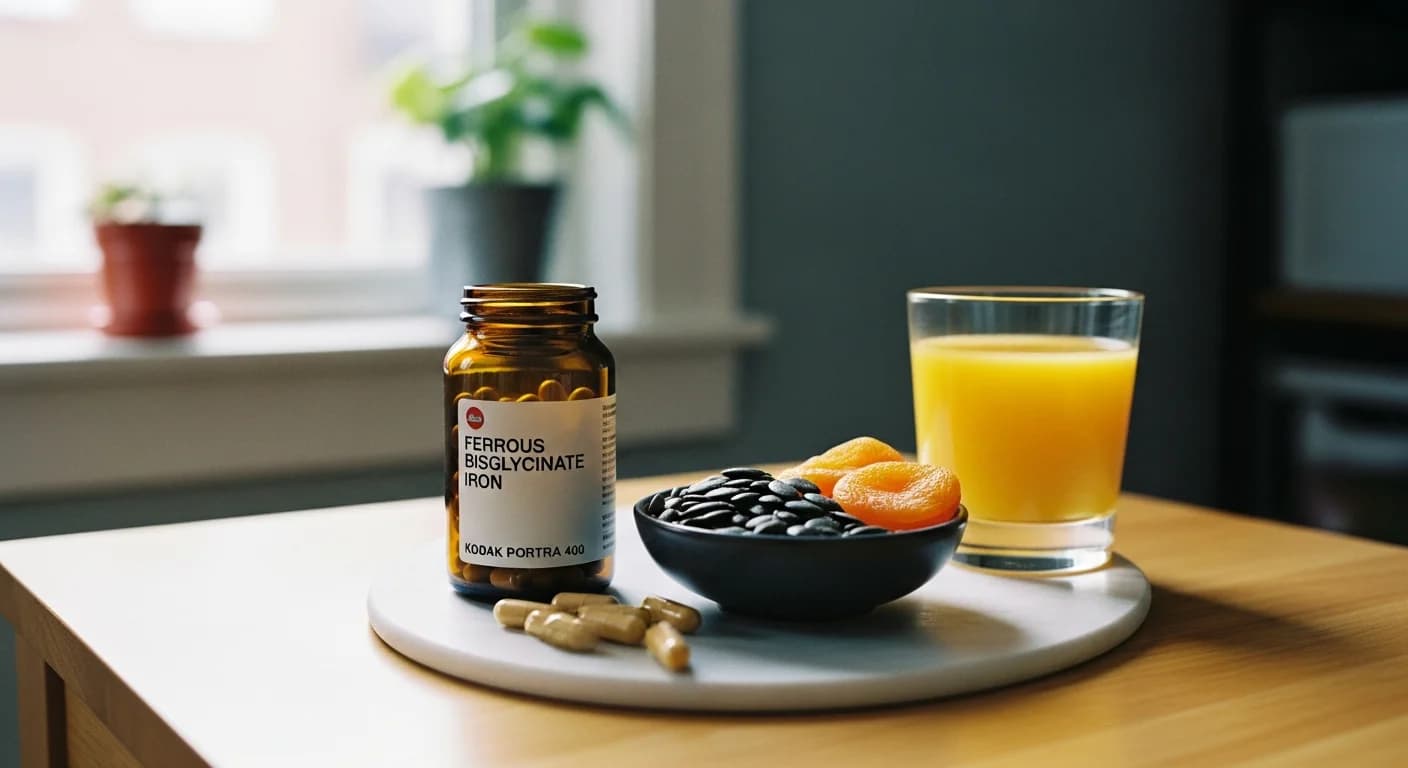
  • Vitamin C synergy: Pair with a glass of orange juice or 250 to 500 mg of vitamin C to significantly improve absorption.
  • Avoid pairing with: Coffee, tea, milk, calcium supplements, or antacids within 2 hours, since they all block iron absorption.

What to expect on the timeline: some patients notice less fatigue within 1 to 2 weeks. Hemoglobin usually rises measurably within 4 to 6 weeks. Fully refilling ferritin can take 2 to 4 months of consistent use.

The hardest part is taking it long enough to actually finish the job. A morning anchor helps: take it as soon as you wake up with a glass of water and a vitamin C source. Keep the bottle next to your toothbrush or coffee maker. If you are dosing every other day, mark it on your phone calendar.

Flaws, side effects, and interactions

Fishtown Medicine

A 90-minute conversation with Dr. Ash. A written plan you can actually follow.

Start your intake

No supplement is perfect, and being honest about the downsides is part of the job.

  • Stool changes. Iron commonly turns stool dark or black, which is normal and not a cause for alarm. Liquid iron can stain teeth, so use a straw and rinse afterward. Capsules and tablets do not stain teeth.
  • Digestive symptoms. Ferrous bisglycinate rarely causes constipation compared to ferrous sulfate. If it still does, switching to every-other-day dosing and adding magnesium glycinate at night usually solves the problem. Hydration and fiber matter too.
  • Iron overload risk. Iron toxicity is a real risk. Chronic excess can damage the liver, heart, and pancreas. Never take iron without a documented deficiency, and never exceed prescribed doses. If you suspect overdose, call Poison Control (1-800-222-1222) or 911 immediately.
  • Medication interactions. Iron can interact with several medications. The biggest are thyroid hormone (levothyroxine), certain antibiotics (tetracyclines, fluoroquinolones), L-dopa (Parkinson's medication), and proton pump inhibitors (PPIs, like omeprazole, which lower stomach acid and reduce iron absorption). Separate doses by 2 to 4 hours and confirm with your prescriber.

What we recommend, and what we dont

  • We look for: the Ferrochel patented ingredient from Albion Minerals, or an explicit ferrous bisglycinate label, with third-party testing seals (NSF or USP).
  • Brands we trust: Thorne (Iron Bisglycinate, well-formulated and well-tested), Designs for Health (Ferrochel, reliable practitioner brand), and Pure Encapsulations (Iron-C, combines iron with vitamin C for absorption).
  • Worth considering: heme iron polypeptide (HIP) or lactoferrin in stubborn cases under medical guidance.
  • We dont lean on: ferrous sulfate as a first choice (causes constipation or nausea in about half of patients), combo products with too many other minerals that compete for absorption, or iron supplements without a confirmed lab deficiency.

Guidance from the Clinic

"Lab normal for ferritin often starts at 15 ng/mL, but I aim for 50 to 100 ng/mL in most adult women and 75 to 150 ng/mL in active men. Ferritin under 30 ng/mL almost always causes fatigue, hair shedding, restless legs, or exercise intolerance. And iron deficiency in adults is never just low iron. We look for the reason: heavy periods, gut bleeding, celiac disease, or low absorption from long-term acid blockers. Fix the cause, fill the tank, and recheck at 6 to 8 weeks."

Dr. Ash

Actionable Steps

A simple plan to fix iron deficiency without gut pain.

  1. Start with labs. Get hemoglobin, hematocrit, ferritin, and transferrin saturation before adding iron. Treating without numbers is guessing.
  2. Pick the right form. Choose ferrous bisglycinate (Ferrochel) from a third-party tested brand.
  3. Dose smart. Take 25 to 60 mg of elemental iron with vitamin C on alternate mornings, on an empty stomach, at least 2 hours from coffee, tea, dairy, or calcium.
  4. Recheck at 6 to 8 weeks. Repeat hemoglobin and ferritin. Adjust dose based on the data.
  5. Find the cause. Iron deficiency in adults is never just "low iron." We look for heavy periods, gut bleeding, celiac disease, or low absorption from things like long-term acid blockers.

Book Your Warm Invitation Call

✦

Key Takeaways

  1. Ferrous bisglycinate is the gentler, better-absorbed form of iron: chelated to glycine, it avoids the constipation and nausea that stop so many patients from finishing ferrous sulfate courses.
  2. Always confirm deficiency with labs (hemoglobin, ferritin, transferrin saturation) before starting iron; overload is as dangerous as deficiency.
  3. Alternate-day dosing of 25 to 60 mg of elemental iron with vitamin C on an empty stomach maximizes absorption by letting hepcidin reset between doses.
  4. Expect energy improvement within 1 to 2 weeks, hemoglobin correction by 4 to 6 weeks, and full ferritin repletion after 2 to 4 months; recheck labs at 6 to 8 weeks.
  5. Iron interacts with levothyroxine, certain antibiotics, and PPIs; separate doses by 2 to 4 hours and always find the underlying cause of the deficiency.

If you'd like us to source it for you:

Order online

Scientific References

  1. Milman N, et al. Ferrous bisglycinate 25 mg iron is as effective as ferrous sulfate 50 mg iron in the prophylaxis of iron deficiency and anemia during pregnancy in a randomized placebo-controlled trial. J Perinat Med. 2014.
  2. Name JJ, et al. Iron Bisglycinate Chelate and Iron (III) Polymaltose Complex in the Treatment of Iron Deficiency Anemia in Children. J Hematol Thromb Dis. 2018.
  3. Ferrari P, et al. Treatment of mild iron deficiency anemia in pregnancy with L-methylfolate and iron bisglycinate chelate. Minerva Ginecol. 2012.
  4. Stoffel NU, et al. Iron absorption from oral iron supplements given on consecutive versus alternate days and as single morning doses versus twice-daily split dosing in iron-depleted women: two open-label, randomised controlled trials. Lancet Haematol. 2017.
  5. Bumrungpert A, et al. Efficacy and safety of ferrous bisglycinate and folinic acid in the control of iron deficiency in pregnant women: a randomized, controlled trial. Nutrients. 2022.

Medical Disclaimer: This resource provides clinical context for educational purposes. In the world of Precision Medicine, there is no "one size fits all". The right supplement plan must be matched to your unique lab work, physiology, and goals. Consult Dr. Ash to determine if this approach is right for you, particularly if you have chronic health conditions or are taking prescription medications.
Ashvin Vijayakumar MD (Dr. Ash)

Fishtown Medicine | Articles

2418 E York St, Philadelphia, PA 19125·(267) 360-7927·hello@fishtownmedicine.com·HSA/FSA Eligible

Frequently Asked Questions

Common Questions

Most doctors prescribe ferrous sulfate because it is old, cheap, and covered by insurance. Unfortunately, it causes stomach pain or constipation in about half of patients, so many people stop it before they finish the course. Ferrous bisglycinate has become the modern standard in many integrative and preventive practices.
Iron bisglycinate rarely causes constipation compared to ferrous sulfate. If it still does, switching to every-other-day dosing and adding magnesium glycinate at night usually solves the problem. Hydration and fiber matter too.
You can support iron levels with red meat (a great heme iron source), but if your ferritin is already low, food alone is rarely enough to catch up quickly. You usually need the therapeutic push of a supplement for 2 to 4 months, and then food can maintain the level. Anemia is harder to undo than to prevent.
Iron absorbs best on an empty stomach, ideally 30 minutes before breakfast. If your stomach cannot tolerate that, take it with a small amount of food and add vitamin C. Avoid pairing iron with coffee, tea, milk, or calcium supplements, since these block absorption.
I prefer alternate-day dosing because daily iron raises a hormone called hepcidin, which actually blocks further iron absorption for the next 24 hours. By dosing every other day, hepcidin drops between doses, so the body absorbs more total iron with fewer side effects. Multiple recent studies support this approach.
Most adults need 2 to 4 months of consistent dosing to refill ferritin stores after a true deficiency. Stopping too early is the most common reason iron deficiency comes back. Recheck labs at the end of treatment and confirm both hemoglobin and ferritin are in a healthy range.
Iron commonly turns stool dark or black, which is normal and not a cause for alarm. Liquid iron can stain teeth, so use a straw and rinse afterward. Capsules and tablets do not stain teeth.
You can, but many multivitamins contain calcium, magnesium, or zinc that compete with iron for absorption. The best practice is to take iron alone with vitamin C, and take your multivitamin with a different meal. This usually doubles the iron you actually absorb.

Deep-Dive Questions

Yes, iron bisglycinate is widely considered safe during pregnancy and is often the preferred form, because it causes less constipation and reflux than ferrous sulfate. Iron needs roughly double during pregnancy. Always confirm exact dose with your obstetrician or midwife, particularly if you have a history of high ferritin.
Yes, iron can interact with several medications. The biggest are thyroid hormone (levothyroxine), certain antibiotics (tetracyclines, fluoroquinolones), L-dopa (Parkinson's medication), and proton pump inhibitors (PPIs, like omeprazole, which lower stomach acid and reduce iron absorption). Separate doses by 2 to 4 hours and confirm with your prescriber.
People with chronic kidney disease often need iron, since their kidneys make less of the hormone EPO that drives red blood cell production. The form and dose should always be guided by your nephrologist, and many patients with advanced CKD use IV iron rather than oral. Self-dosing is not safe in kidney disease.
Iron itself does not usually cause palpitations or insomnia at standard doses. Some people feel slightly more energetic in the first weeks, which can feel "wired" if taken at night. Take iron in the morning to avoid sleep disruption.
Heme iron comes from animal sources (red meat, poultry, fish) and is well absorbed. Non-heme iron comes from plants (lentils, spinach) and from supplements, and absorbs less efficiently. Vitamin C boosts non-heme iron absorption, while coffee, tea, and calcium block it.
Hemochromatosis is a genetic condition that causes iron buildup in tissues and can be dangerous. People with a family history, persistently high ferritin, or unexplained joint pain and fatigue should be tested before starting iron. A simple blood test for transferrin saturation and ferritin is the first step.
Lab "normal" for ferritin often starts at 15 ng/mL, but I aim for 50 to 100 ng/mL in most adult women and 75 to 150 ng/mL in active men, depending on symptoms. Ferritin under 30 ng/mL almost always causes fatigue, hair shedding, restless legs, or exercise intolerance. Numbers in the lab "normal" range are not the same as optimal.
Yes, low iron is a common driver of telogen effluvium (a form of hair shedding), restless legs syndrome, and even anxiety or low mood. These symptoms often improve weeks before hemoglobin fully normalizes. Iron repletion is one of the most underused fatigue and hair loss tools I see in primary care.
Heavy periods are the most common cause of iron deficiency in women of reproductive age. We look for periods that last more than 7 days, soak through a pad or tampon every hour, or pass clots. Treating the underlying cause (fibroids, hormonal imbalance, IUD complications) along with iron usually solves the deficiency.
Yes, people with gastric bypass surgery or on long-term PPIs (proton pump inhibitors that lower stomach acid) are at high risk for iron deficiency. Ferrous bisglycinate often works better than sulfate in these patients, because absorption is less dependent on stomach acid. Some patients still need IV iron.
Yes, supplement quality is uneven. Cheap iron may contain unlisted forms (oxide, citrate) that absorb poorly, or fillers and dyes. I look for products that explicitly say Ferrochel or ferrous bisglycinate with third-party seals like NSF or USP, and I avoid combo products with too many other minerals.
Lactoferrin is a milk protein that helps the body absorb and use iron, sometimes used alongside oral iron. Heme iron polypeptide (HIP) is a meat-derived form with strong absorption and minimal stomach upset, but it is less commonly stocked in retail stores. Both can be useful in stubborn cases under medical guidance.
A 60 to 90 day supply of third-party tested ferrous bisglycinate usually costs $15 to $30 at health stores in Fishtown, Northern Liberties, or Center City, or online. Practitioner-only brands (Thorne, Designs for Health) sit at the higher end. Insurance generally does not cover supplements.
Athletes (particularly female runners, cyclists, and CrossFit lifters) lose extra iron through sweat, foot strike, and training stress. Add cold winter training and heavy menses, and the deficit grows. Many of my Philly athletes feel a meaningful boost in energy and pace within 6 to 8 weeks of correcting low ferritin.
Yes, iron toxicity is a real risk. Acute overdose can cause severe poisoning. Chronic excess can damage the liver, heart, and pancreas. Never take iron without a documented deficiency, and never exceed prescribed doses. If you suspect overdose, call Poison Control (1-800-222-1222) or 911 immediately.

Ready when you are

Start your intake

Dr. Ash reads every intake himself, and answers questions personally - usually within a few hours.

Related Intelligence

The New York Times is Right (and Wrong) About Supplements

The New York Times is Right (and Wrong) About Supplements

Why 'just eat real food' is lazy advice, and why 'take everything' is dangerous. A look at precision medicine and why testing beats guessing.

Read Deep Dive
Sleep Optimization Doctor Philadelphia | Medicine 3.0 Sleep Architecture

Sleep Optimization Doctor Philadelphia | Medicine 3.0 Sleep Architecture

Optimize your sleep architecture for longevity. We use Oura, Whoop, and Apple Watch data to dial in REM and Deep Sleep. Led by Ashvin Vijayakumar MD.

Read Deep Dive
Performance Physical Philadelphia: 4 Tests That Predict How You Age

Performance Physical Philadelphia: 4 Tests That Predict How You Age

A performance physical measures how well you are aging: VO2 max, grip strength, mobility, and body composition - the 4 tests that predict healthspan.

Read Deep Dive

New patients

Talk it through with Dr. Ash.

If anything you read here raised a question, start with a short intake - your story in your own words. Dr. Ash reads every one personally, and you can text or email us anytime.

HSA/FSA eligible
No initiation or cancellation fees
No copays
Start your intake →
FishtownFish wrapped around the rod of AsclepiusMedicine
Philadelphia Primary Care
2418 E York St, Philadelphia, PA 19125Primary care in PhiladelphiaHome visits in Greater PhiladelphiaPricing & MembershipGER·O·SPAN: our clinical frameworkDigital Health Literacy

Serving Fishtown · Northern Liberties · East Kensington · Olde Richmond · Port Richmond · Old City · Callowhill · Poplar · Center City · Center City West · Art Museum · Bella Vista · Chestnut Hill · Fairmount · Fitler Square · Graduate Hospital · Logan Square · Manayunk · Queen Village · Rittenhouse · Roxborough · Society Hill · Southwark · Bryn Mawr, PA · Gladwyne, PA · Villanova, PA · Wayne, PA · Cherry Hill, NJ · Haddonfield, NJ · Medford, NJ · Moorestown, NJ · Voorhees, NJ

Explore by topic

Women’s Health
  • Perimenopause
  • Menopause 3.0
  • PCOS
  • Fertility
Men’s Health
  • Testosterone (TRT)
  • Sleep Apnea & Low T
  • Andropause
  • Low Libido
Metabolic
  • Medical Weight Loss
  • Ozempic vs Metformin
  • Fasting Protocols
  • Visceral Fat
Cardiovascular
  • apoB & Heart Health
  • apoB vs LDL
  • Lp(a) Cholesterol
  • ED & Heart Risk
Longevity + Performance
  • Healthspan vs Lifespan
  • Biological Age
  • VO2 Max
  • Zone 2 Training
Supplements
  • Magnesium
  • Creatine
  • Omega-3
  • Foundational Stack
  • Supplement Guides
Care in Philadelphia +
Direct Primary Care in Philadelphia, PAConcierge Medicine in Philadelphia, PAConcierge vs DPC in Philadelphia, PALongevity Medicine in Philadelphia, PAPreventive Care in Philadelphia, PAExecutive Physical in Philadelphia, PAAnnual Physical in Philadelphia, PAHealthspan Optimization in Philadelphia, PAFunctional Medicine in Philadelphia, PASame-Day Sick Visits in Philadelphia, PATestosterone Replacement Therapy in Philadelphia, PAPerimenopause Care in Philadelphia, PAMenopause Care in Philadelphia, PAThyroid Treatment in Philadelphia, PAPCOS Care in Philadelphia, PAGLP-1 Weight Loss in Philadelphia, PAMetabolic Health in Philadelphia, PAHormone Optimization in Philadelphia, PAAdvanced Lipid Testing in Philadelphia, PAVO2 Max Testing in Philadelphia, PADEXA Scan in Philadelphia, PACGM in Philadelphia, PALong COVID Care in Philadelphia, PAChronic Fatigue Treatment in Philadelphia, PAPOTS Treatment in Philadelphia, PAMCAS Treatment in Philadelphia, PALyme Disease Care in Philadelphia, PABrain Fog Treatment in Philadelphia, PASleep Disorders Treatment in Philadelphia, PAStrep Throat Treatment in Philadelphia, PAUTI Treatment in Philadelphia, PASinus Infection Treatment in Philadelphia, PASTI Testing in Philadelphia, PATravel Medicine in Philadelphia, PAPre-Op Clearance in Philadelphia, PASports Club Medicine in Philadelphia, PA

Made it this far? You’re already most of the way there. let’s get started → Dr. Ash reads every word personally.

Content is for educational purposes only and does not constitute medical advice.

TermsPrivacyScope of PracticeClinical Independence