
Skin ages two ways: intrinsic aging you are born to do, and extrinsic aging from the outside world (sun, smoke, pollution, and blood sugar). Sun exposure drives most visible facial aging, so daily broad-spectrum SPF 30+ is the single highest-yield step. The only topical with gold-standard evidence is a retinoid. Lowering your glycemic load protects the collagen that keeps skin firm. Skin is also a visible readout of how fast the rest of you is aging, so the cheap, boring habits that protect skin protect arteries and brain too.
Skin is the one organ you watch age with your own eyes, right there in the mirror, which is why it drives a multibillion-dollar industry built mostly on hope and very little evidence. So lets separate the small handful of things that truly work from the expensive things that mostly don't, and then talk about why your skin is telling you something about the rest of you.
Two kinds of skin aging, and only one you can fight
This is the most useful distinction in the whole topic.
Intrinsic aging is the slow, genetically programmed kind. Collagen production drifts down by roughly 1 percent a year after your twenties, cell turnover slows, the skin thins. You can't stop this, but you can slow the pace.
Extrinsic aging is everything from the outside that speeds it up, and its where the leverage lives because its modifiable. The big drivers are ultraviolet light, tobacco smoke, air pollution, and your diet (specifically blood sugar). Dermatologists call this whole external load the exposome.
Heres the part most people miss: the majority of what we read as "old-looking" skin (wrinkles, brown spots, leathery texture, sagging) is photoaging from accumulated sun rather than the calendar. The proof is on your own body. Compare the skin on your face or forearms to the skin on your buttock or inner upper arm, which has seen almost no sun. Same age, very different skin. That gap is the part you control.
What photoaging looks like
When dermatologists talk about sun damage, they mean a specific cluster of changes, and naming them helps you spot your own:
- Fine and coarse wrinkles, deepest where sun exposure is highest (forehead, around the eyes, upper lip).
- Sun spots and mottled tone (the flat brown spots called lentigines, plus uneven patchy pigment).
- Telangiectasias, the little broken-looking surface blood vessels.
- Loss of elasticity and that lit-from-within translucency, with a drier, rougher, sometimes sallow texture.
- Actinic keratoses, rough scaly patches that show up after years of sun.
That last one matters most, because actinic keratoses are precancerous. They're the step that can lead to a squamous cell skin cancer. The same UV that wrinkles your skin also seeds skin cancer, so sun damage is a health issue as much as a cosmetic one, and protecting against one protects against the other. If you have a rough, scaly, persistent patch that won't heal, that's not a wrinkle to ignore. Its worth getting looked at.
What is happening underneath
A quick tour, because the interventions make more sense once you can picture it:
- Collagen and elastin decline. Fewer fibroblasts make less collagen, the dermis thins, and the scaffolding that keeps skin firm gives way.
- Glycation. Sugar in the bloodstream cross-links collagen fibers into stiff, brittle bundles (the end products are called AGEs, advanced glycation end products). People sometimes call the result "sugar sag." This is where skin aging meets metabolic health directly.
- Slower turnover and a drier barrier. The outer layer renews more slowly and holds water less well, so skin looks duller and feels rougher.
- Structural change. Fat pads move and bone remodels, which changes the architecture of the face independent of the skin itself. This is a different problem from skin quality and worth understanding on its own; we cover it in the architecture of facial aging.
The throughline is familiar if you follow aging biology at all: oxidative stress, chronic low-grade inflammation, glycation, and cellular senescence. Those same processes age your blood vessels and your brain. Your skin is just the version you can see.
The evidence-based core
Heres the hierarchy. A few things have strong evidence. Most of what is on the shelf does not.
1. Sun protection (by a wide margin, the most important)
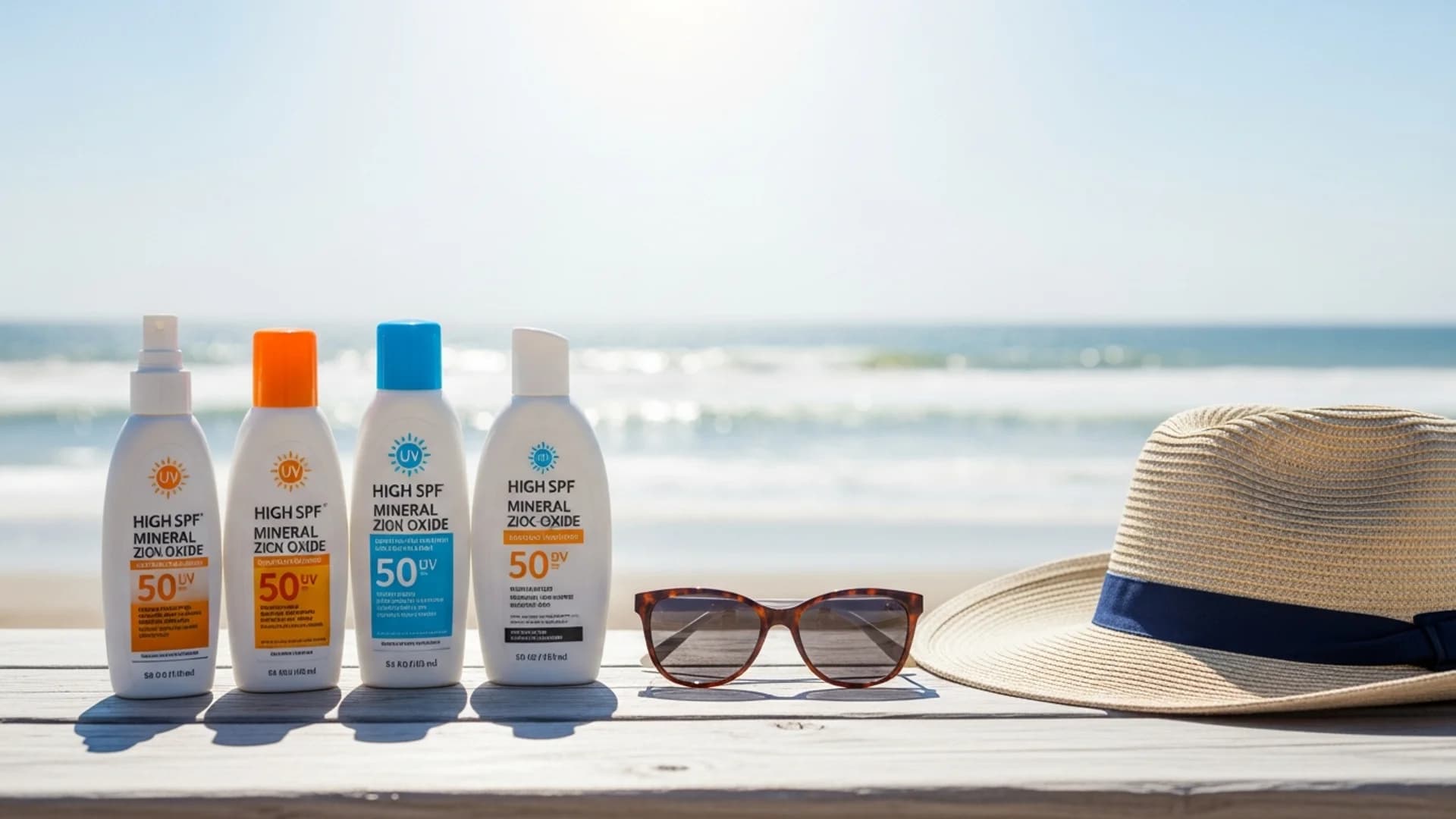
Daily broad-spectrum sunscreen, SPF 30 or higher, is the single highest-yield thing you can do for how your skin ages. A well-known randomized trial out of Australia followed adults using daily sunscreen versus discretionary use, and the daily group showed visibly less skin aging over 4-plus years. It also prevents skin cancer, so you're buying two things at once. Mineral filters (zinc oxide, titanium dioxide) and chemical filters both work; if you prefer a mineral formula, that is a reasonable choice, and there's little reason to chase numbers above SPF 50, since how evenly you apply and reapply matters more than the label.
The catch most people miss is that this isn't only about beach days. Incidental UV adds up: the drive to work, the walk to lunch, the light through a window (UVA penetrates glass). Sunscreen is a daily habit rather than a special-occasion thing, and the best one is the one you'll reapply, so it is worth finding a texture and finish you like rather than forcing a greasy or chalky one you will skip. Use enough, too: most people apply only about a quarter of the amount an SPF rating is based on, which drops the protection you get without you noticing, so a nickel-to-quarter-size dollop for the face, neck, and ears, reapplied every 2 hours out in the sun, is the rough target. Hats, shade, and UPF clothing add meaningful protection too. For a long beach day or a Jersey Shore summer, where it is all about cover-up and reapplication, see our guide to sun protection for Philly and Jersey Shore summers.
2. Retinoids (the only topical with gold-standard evidence)
Prescription tretinoin, and to a lesser degree over-the-counter retinol and retinaldehyde, are vitamin A derivatives with decades of randomized data behind them. They prompt new collagen, speed cell turnover, fade pigment, and smooth texture. Nothing else on the topical shelf comes close to that evidence base.
Use it the same careful way you would for acne: start low and slow (a pea-sized amount a couple of nights a week, building up), expect some redness and flaking at first, apply at night, and pair it with daily sunscreen. If you have rosacea, perioral dermatitis, eczema, or simply very dry or sensitive skin, start at the lowest strength and the slowest pace, because your skin will protest more. One firm rule: skip retinoids if you are pregnant, trying to conceive, or breastfeeding.
A combination many dermatologists favor is a retinoid alongside niacinamide and azelaic acid. The retinoid does the heavy lifting on collagen and texture, niacinamide supports the skin barrier, and azelaic acid evens out tone and fades the brown marks. The bonus is that the barrier support and the gentler actives take some of the edge off the retinoid irritation, so you can stay consistent, which is the part that matters.
3. Dont smoke, and mind the air
Smoking produces a recognizable "smoker's face": accelerated wrinkling from collagen breakdown and damaged microcirculation. Air pollution is a newer but well-documented driver, with particulate matter linked to more pigment spots and wrinkles. You can't control the city's air, but cleansing at the end of a high-pollution day and keeping the skin barrier healthy helps at the margins.
4. Blood sugar and the glycation lever
A diet heavy in sugar and refined carbohydrates drives the glycation that stiffens collagen. Lowering your glycemic load is one of the few diet moves with a believable mechanism for skin aging, and conveniently its the same move that protects your metabolic health. Adequate protein gives collagen its building blocks. Collagen supplements have modest, mixed evidence, and I treat them as optional rather than essential.
5. The unglamorous basics
A good moisturizer with ceramides supports the barrier, gentle cleansing beats harsh scrubbing, and sleep matters more than any serum. These won't rebuild deep collagen, but they keep skin functioning well day to day.
One free upgrade most people miss is timing: smooth moisturizer, or a body lotion, onto skin that is still slightly damp from cleansing or the shower. The humectants in it (hyaluronic acid, glycerin) pull that surface water in, while the occlusives (ceramides, natural oils) seal it, which blunts the water loss that leaves skin tight. The same move pays off right after shaving, when the barrier is freshly disrupted. As for the wash itself, gentle and pH-balanced beats harsh and high-foaming, fragrance is the most common irritant so go fragrance-free if your skin reacts, and you can skip antibacterial washes and gritty physical scrubs that strip the barrier for no benefit. The technique matters more than the bottle, but if you want vetted picks, the Wirecutter body lotion and body wash guides are a sound place to start.
Longevity Medicine
A personalized longevity strategy starts with knowing your real baselines.
6. Take it off at night, gently
Whatever the day put on your skin, sunscreen, makeup, sweat, the grime of a city commute, take it off before bed. Letting it sit overnight clogs pores and dulls the skin, and airborne pollution is itself a documented aging driver, so a nightly cleanse is a piece of prevention, clearing the day's pollutants before they add to the slow damage.
The consideration that matters more than which bottle you buy is gentleness. The job is to lift the day off without stripping the skin barrier, the mortar of ceramides and fatty acids that holds your skin cells together. Harsh, squeaky, high-foaming washes and hot-water scrubbing strip those protective oils and leave skin tight and reactive, the opposite of aging well. Aim for a mild cleanser that leaves your face comfortable rather than squeaky. If you wear long-wearing sunscreen or makeup, lifting it with an oil-based remover first and then a gentle wash (sold as "double cleansing," really just common sense) does the trick. If you wear very little, one gentle pass is plenty.
The supporting cast, ranked by the evidence
People want to know where the popular ingredients land, so here is my read of the evidence tiers:
- Topical vitamin C. Reasonable evidence as an antioxidant and a cofactor for collagen. Pairs well under sunscreen.
- Niacinamide. Decent evidence for barrier, tone, and pigment. Gentle and worth including.
- Exfoliating acids (AHA, BHA, PHA). Gentle chemical exfoliation beats the old gritty scrubs, which cause micro-tears. Water-soluble AHAs (glycolic, lactic) work at the surface on tone, texture, and fine lines; the oil-soluble BHA (salicylic) drops into pores and suits oily, acne-prone skin; PHAs are the largest and gentlest, for sensitive skin. Clear benefit, with a modest collagen bump, but go slow (once or twice a week to start), don't use them the same night as your retinoid, and skip them during an eczema or rosacea flare.
- Peptide creams. Mostly weak evidence, and these are topical creams, separate from the injectable "research-grade" peptides some clinics market, which we don't prescribe.
- The long tail of serums. Mostly marketing.
What we don't sell
A few things you will see marketed hard that we don't offer:
- Proprietary anti-aging supplement stacks with long ingredient lists and no head-to-head data.
- "Research-grade" peptides for skin (copper-peptide injectables and the like). State medical boards prohibit prescribing non-FDA-approved peptides, and we don't sell or guide their use.
- Expensive serums with no evidence behind them. Id rather you spend a few dollars a day on sunscreen and a retinoid than three hundred dollars on a jar of hope.
The regenerative-medicine offerings making the rounds (so-called vampire facials, exosome serums, stem-cell creams) sit in the same bucket: weak evidence, loose regulation, high cost. When a patient asks, we say so plainly. See stem cells and exosomes for longevity and joints for the fuller picture, and The Skin Playbook for what we do instead.
The longevity reframe
Heres the part that makes this a healthspan conversation and not a vanity one. Your skin is the most visible organ of aging, and it tracks with how the rest of you is aging. Studies on perceived age (how old people look versus their birthday) find that looking older than your years is associated with worse underlying health. The drivers are nearly the same: sun and smoke and high blood sugar and inflammation age your skin, and inflammation and high blood sugar and oxidative stress age your arteries and brain.
The same pattern holds for hair, where the marketing runs far ahead of the evidence and the workup is what changes outcomes. Our hair playbook covers it. So the cheap, boring habits win twice: sunscreen, a retinoid, not smoking, steady blood sugar, enough sleep, and exercise that keeps your microcirculation healthy. That list protects your face and your healthspan with the same moves. The serum is the part the industry wants you focused on, and its the part that matters least.
Guidance from the Clinic
"If I could get every patient to do two things for their skin, it would be wear sunscreen every day and use a retinoid at night. Thats most of the evidence, for a few dollars a day. Everything fancier than that is optional, and the $300 serum is optional and overpriced. Protect the collagen you have, and treat your skin like the readout of your whole-body aging that it is."
Actionable Steps in Philly
A practical plan you can start this week.
- Sunscreen, every day, all year. Broad-spectrum SPF 30 or higher, even in a Philly January and even when its cloudy. UVA comes through clouds and car windows. Make it the last step of your morning routine.
- Add a retinoid at night. Start low and slow, expect a few weeks of adjustment, and keep moisturizing through it.
- Pull down your glycemic load. Fewer refined carbs and added sugars protects your collagen from glycation and your metabolism at the same time.
- Dont smoke or vape, and watch the air. On bad-air-quality days (summer ozone, the wildfire-smoke days we've had), check the AQI and cleanse your skin at the end of the day.
- Get a skin check. Healthy aging includes catching skin cancer early. A full-body skin exam belongs on the calendar, and we coordinate dermatology when its due.
Scientific References
- Hughes MCB, et al. "Sunscreen and Prevention of Skin Aging: A Randomized Trial." Ann Intern Med. 2013.
- Krutmann J, et al. "The Skin Aging Exposome." J Dermatol Sci. 2017.
- Gkogkolou P, Bohm M. "Advanced Glycation End Products: Key Players in Skin Aging?" Dermatoendocrinol. 2012.
- Mukherjee S, et al. "Retinoids in the Treatment of Skin Aging: An Overview of Clinical Efficacy and Safety." Clin Interv Aging. 2006.
- Brincat MP, et al. "Estrogens and the Skin." Climacteric. 2005.
Buying skincare online? Fake and diverted products turn up on third-party marketplaces, and they can be inert (an oxidized serum does nothing) or contaminated. Buy from the brand or an authorized seller, and see how to spot counterfeit skincare and supplements.

Fishtown Medicine | Longevity
Frequently Asked Questions
Common Questions
Deep-Dive Questions
Ready when you are
The chat is our AI assistant, answering from our published guides. To talk it through with Dr. Ash himself, start with the intake.