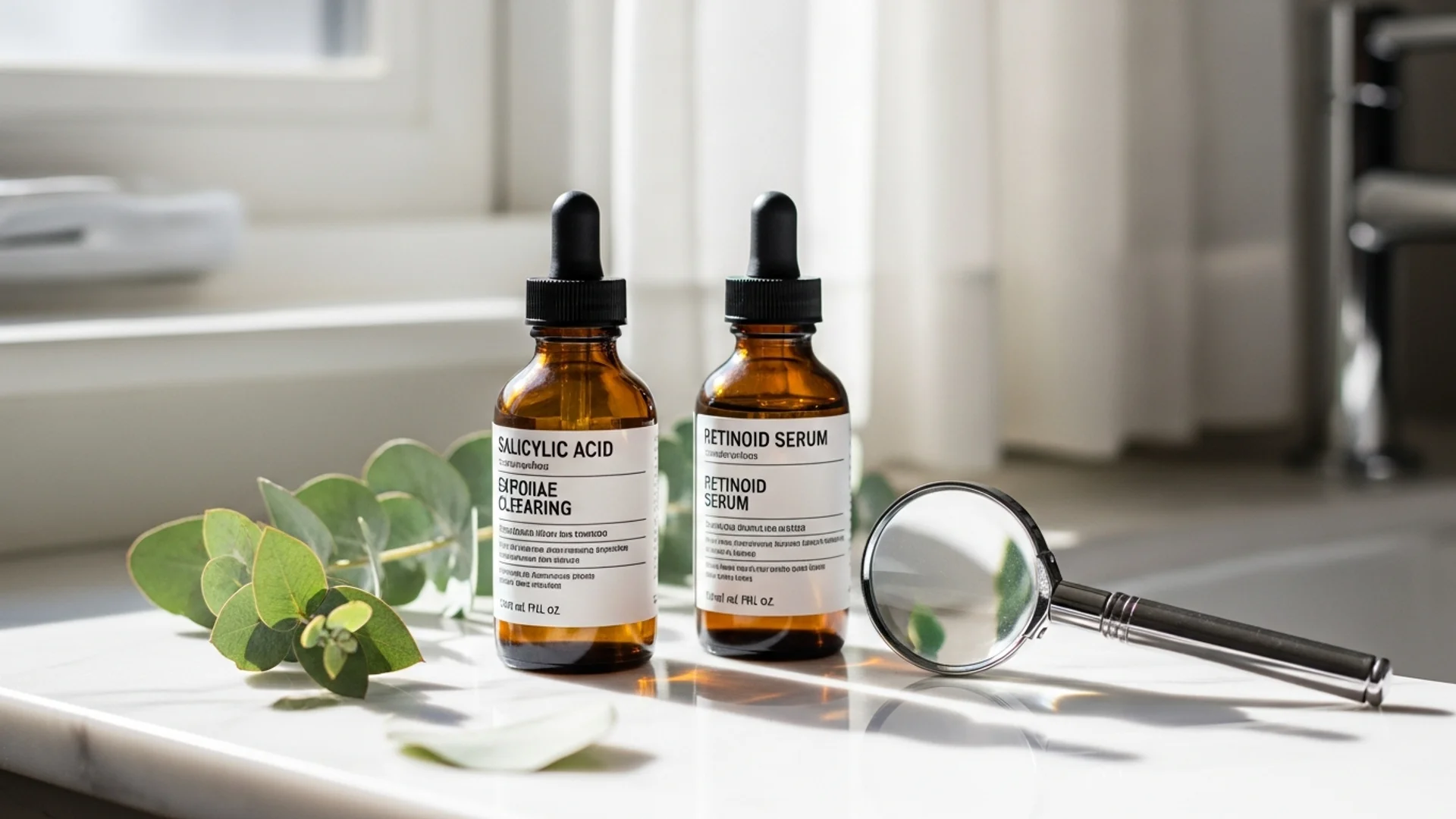

Acne is an inflammatory condition of the oil glands driven by four things at once: pores that clog, glands that make too much oil, overgrowth of the skin bacterium C. acnes, and inflammation. The evidence-based treatments are topical retinoids (tretinoin, adapalene), benzoyl peroxide, azelaic acid, topical and oral antibiotics used carefully and short-term, and for the right patients hormonal therapy (spironolactone, certain birth control pills) or isotretinoin for severe cases. We also look for the hormonal and lifestyle drivers a quick visit skips.
Acne shows up in two very different conversations in my practice. The teenager whose parent booked the visit, in the chair wishing they were anywhere else. And the 34-year-old who thought she was done with this in high school and is privately furious that its back. Both deserve the same thing: to be taken seriously. Acne is a medical condition, as much so as asthma or eczema, and it says nothing about your hygiene or your willpower.
None of it comes from being dirty, eating one greasy meal, or not trying hard enough. Acne is the most common skin condition in the world, and its very treatable once you understand what is driving it.
What acne is
Every pore on your face connects to a little oil gland. That unit (the pore plus its gland) is where acne happens, and four things converge to cause it:
- The pore clogs. The cells lining the pore shed too fast and stick together, plugging the opening.
- The gland makes more oil. Sebum production climbs, usually under hormonal signals. Thats why acne kicks off at puberty.
- A normal skin bacterium overgrows. Cutibacterium acnes (you may see the older name Propionibacterium acnes) is a normal resident that thrives in that clogged, oily environment.
- Inflammation. The immune system reacts, and you get the red, swollen, sometimes painful part.
The kind of lesion tells you which stage you're in. Comedones are the clogged-pore stage (blackheads are open, whiteheads are closed). Papules and pustules are the red bumps and pus bumps of inflammatory acne. Nodules and cysts are the deep, tender lumps that scar, and they define severe acne. Most acne is on the face, but the chest, back, and shoulders are common too.
The lesion type matters because it sets the treatment ladder. Comedonal acne, inflammatory acne, and nodulocystic acne are not treated the same way, and matching the plan to the picture is most of the skill.
Is it acne, or something else?
Heres a thing that costs people years: not everything that looks like acne is acne. When the usual treatments aren't working, the problem is often the diagnosis rather than the effort. A few common look-alikes:
- Rosacea. Central-face redness, flushing, and visible little blood vessels, with bumps but no blackheads. Some standard acne treatments make it worse. It needs its own plan (topical metronidazole or ivermectin, azelaic acid, sometimes low-dose doxycycline).
- Perioral dermatitis. Small grouped bumps around the mouth, nose, or eyes, classically with a thin rim of clear skin right around the lips. Its often triggered or worsened by topical steroid creams, and the fix usually starts with stopping them.
- Folliculitis, including the fungal kind. Uniform, often itchy bumps, frequently on the chest, back, or hairline, with no blackheads. "Fungal acne" (Malassezia folliculitis) doesn't respond to acne medicine and needs an antifungal instead.
- Drug-induced acne. A sudden crop of look-alike bumps that all appear at the same stage, triggered by a medication.
- Acne cosmetica. Breakouts from pore-clogging products.
So when acne refuses to clear, the first question is whether its the right diagnosis at all. Plenty of people carrying a label of stubborn acne have simply been treating the wrong condition for years, and the fix is getting the diagnosis right rather than scrubbing harder.
The hormonal angle a quick visit skips
Androgens (testosterone and its relatives) tell the oil glands to ramp up. Thats the whole reason acne arrives at puberty and flares around the menstrual cycle. So hormones deserve a close look, particularly in adults.
In women, a hormonal pattern looks like acne along the jawline and lower face, deep tender bumps, and a reliable flare the week before the period. When that pattern shows up, or when acne comes with irregular cycles, extra facial or body hair, scalp thinning, or weight changes, we look harder for PCOS. The workup includes total and free testosterone, DHEA-S, SHBG, sometimes 17-hydroxyprogesterone and prolactin, plus fasting insulin and HbA1c when the metabolic picture fits.
In men, the Conversation is about anabolic steroids and high-dose testosterone, including some testosterone therapy, which can trigger or worsen acne. If that's part of the story, we name it without judgment and work the problem.
And some everyday medications drive acne directly: corticosteroids, lithium, androgens and DHEA, iodides and bromides, and a handful of others. We review the medication list before assuming its ordinary acne.
The treatments that work
The good news is that the evidence base here is strong, and most acne responds to a well-built routine. The ladder, roughly mild to severe:
Topical retinoids (the workhorse)
Tretinoin, adapalene, and tazarotene are vitamin A derivatives that normalize how the pore lining sheds, so pores stop clogging, and they calm inflammation. They treat the acne you have and prevent the next round, which is why they're the backbone of almost every plan. Adapalene (Differin) is now available over the counter.
One point of confusion comes up a lot: the "retinol" in drugstore creams is a weaker cousin of prescription tretinoin, and while it can help mildly, it isn't the same tool.
How to use one without hating it:
- Start low and slow. A pea-sized amount, every third night, building to nightly as your skin tolerates it.
- Expect the retinization period. Redness, dryness, and flaking in the first few weeks are normal and not an allergy.
- Expect a possible purge. Skin can look a little worse before it looks better. Give it 6 to 8 weeks.
- Night only, sunscreen by day. Retinoids make skin more sun-sensitive.
- Not in pregnancy. Tretinoin comes off the table if you're pregnant or trying. We switch to azelaic acid.
Benzoyl peroxide
It kills C. acnes directly, and importantly it doesn't breed antibiotic resistance. That makes it the standard partner to any topical antibiotic. Start at 2.5 to 5 percent. Higher isn't better, just more drying. Fair warning: it bleaches towels and pillowcases.
Topical antibiotics
Clindamycin reduces bacteria and inflammation, but never as a solo act. Used alone, topical antibiotics breed resistance, so we always pair them with benzoyl peroxide or a retinoid and keep them part of a combination rather than a standalone fix.
Azelaic acid
An underrated, excellent ingredient. It unclogs pores, calms inflammation, fights bacteria, and fades the brown marks and redness that acne leaves behind. Its gentle and considered safe in pregnancy, which makes it my frequent first pick for pregnant patients and for darker skin tones, where the leftover marks are often more bothersome than the original pimple.
Other useful topicals
- Salicylic acid (over the counter) is an oil-soluble BHA, so it slips down into the pore and breaks up the sebum that clogs it, which is why it works well in a cleanser or a leave-on exfoliant. Go gently: a couple of times a week to start, and a mild warm tingle is fine, but stinging or burning means you're overdoing it and irritating the barrier.
- Niacinamide calms inflammation and supports the skin barrier.
- Clascoterone (Winlevi) is a newer FDA-approved topical that blocks androgens right at the skin. It works for men and women and is a truly new mechanism rather than another retinoid.
- Hydrocolloid pimple patches are the same wound-dressing material used on blisters. Stuck over a whitehead, the patch absorbs the fluid, calms the redness, and, most usefully, physically stops you from picking, which is the thing that turns a passing pimple into a lasting scar or brown mark. They work on surface whiteheads, not deep cystic bumps, and they manage a spot you already have rather than preventing the next one. Medicated versions add a little salicylic acid or a retinoid, but those amounts are mild and no substitute for the treatments above.
Oral antibiotics
Get Real Answers
Tired of being told your labs are 'normal'? Dr. Ash digs deeper.
For moderate-to-severe inflammatory acne, doxycycline or minocycline can settle things down. Two rules keep them safe and effective: time-limited (think 3 to 4 months, not years) and always alongside a topical retinoid plus benzoyl peroxide, so the topicals carry the maintenance once the antibiotic stops. Sarecycline is a newer narrow-spectrum option built for this. Long-term antibiotics breed resistance, and we work hard to avoid that trap.
Hormonal therapy for women
Spironolactone blocks androgens at the oil gland and is one of the best tools for adult female hormonal and jawline acne. Typical doses run 50 to 200 mg daily, it takes a couple of months to show its work, and it needs reliable contraception because its harmful in pregnancy. Certain combined birth control pills are FDA-approved for acne and are a good fit when contraception is also wanted.
Isotretinoin for severe acne
For severe nodulocystic acne, scarring acne, or acne that has failed everything else, isotretinoin is the definitive option. It shrinks the oil glands and can produce lasting remission, the closest thing we have to a cure. Its managed by dermatology through the iPLEDGE program, with strict pregnancy prevention (its a serious teratogen) and routine monitoring. We coordinate that referral and stay in the loop.
On the scary stories: the older worries about depression and inflammatory bowel disease have not held up as cause-and-effect in the best evidence. We still monitor mood and gut symptoms and take any change seriously. The day-to-day reality is mostly dryness and a few lab checks.
For the rare patient who cannot take isotretinoin, dermatologists sometimes use photodynamic therapy (a light-activated treatment that shrinks the oil glands) as an alternative, and we can point you toward it.
What we don't do
A few things you may see marketed that we don't offer:
- Proprietary "custom" mystery blends sold as miracle subscriptions. We use evidence-based ingredients, named, at sensible strengths, so you know what's on your face and why.
- "Research-grade" peptides marketed for skin (copper-peptide injectables and the like). State medical boards prohibit physician prescribing of non-FDA-approved peptides, and we don't sell or guide their use.
- Antibiotics on autopilot for months or years. Thats how resistance happens, and its avoidable.
- Talking you into more than you need. Plenty of acne clears on a simple, cheap routine.
The diet and lifestyle layer
Acne is mostly genetics and hormones. Its not your fault and its not mainly your diet. But a few levers do carry weight:
- Glycemic load. A diet heavy in sugar and refined carbs raises insulin and IGF-1, which rev the oil glands. Lowering the glycemic load helps some people measurably.
- Dairy, particularly skim milk. The association is modest but consistent. Whey protein powder is a common hidden trigger in young men, and a trial off it is worth doing.
- Stress and sleep. Cortisol drives oil and inflammation, which is part of why acne flares during exams, deadlines, and bad sleep stretches.
- The over-washing trap. Scrubbing harder and stripping your skin makes acne worse, not better. Gentle cleanser, don't over-exfoliate.
- Dont pick. Picking turns a temporary bump into a lasting scar or a brown mark that outlasts the pimple by months.
- The gut-skin link exists, but its oversold. We won't sell you a cabinet of probiotics for it.
Guidance from the clinic
"The two things I most often undo in clinic are over-washing and a wrong diagnosis. People come in scrubbing their face raw three times a day, sure they're just not trying hard enough, when half the time they're irritating their skin and the other half its rosacea, not acne. Gentler routine, right diagnosis, a little patience. Thats most of the game."
Actionable Steps in Philly
A practical plan for the next 30 days.
- Simplify the routine. Gentle non-foaming cleanser morning and night, one active treatment, a light non-comedogenic moisturizer, and daily SPF 30. Retire the five-step regimen that's irritating your skin.
- Start the core. A topical retinoid at night (every third night to begin), benzoyl peroxide, and sunscreen by day. For most mild-to-moderate acne, that's the backbone.
- Take photos. Acne improves slowly and the mirror lies day to day. Same lighting, every 2 weeks, so you can see the trend.
- Check the hormonal angle if the pattern fits. Jawline, cyclical, adult-onset, or treatment-resistant acne earns a hormonal workup rather than another cream.
- Know when to escalate. Deep painful cysts, any scarring, or no progress after a full 3-month effort means its time for oral therapy or a dermatology referral for isotretinoin. We make that call with you and coordinate it.
One Philly-specific note: winter air plus indoor heat dries and irritates skin right when a retinoid is already doing that. In the coldest months, ease the retinoid frequency and lean harder on a plain moisturizer.
Scientific References
- Zaenglein AL, et al. "Guidelines of Care for the Management of Acne Vulgaris." J Am Acad Dermatol. 2016.
- Reynolds RV, et al. "Guidelines of Care for the Management of Acne Vulgaris." J Am Acad Dermatol. 2024.
- Santer M, et al. "Effectiveness of Spironolactone for Women with Acne Vulgaris (SAFA) in England and Wales: Pragmatic, Multicentre, Phase 3, Double-Blind, Randomised Controlled Trial." BMJ. 2023.
- Smith RN, et al. "A Low-Glycemic-Load Diet Improves Symptoms in Acne Vulgaris Patients: A Randomized Controlled Trial." Am J Clin Nutr. 2007.
- Barbieri JS, et al. "Trends in Oral Antibiotic Prescription in Dermatology, 2008 to 2016." JAMA Dermatol. 2019.
Buying skincare online? Fake and diverted products turn up on third-party marketplaces, and they can be inert or contaminated. Buy from the brand or an authorized seller, and see how to spot counterfeit skincare and supplements.
Related at Fishtown Medicine
- Hidradenitis Suppurativa - when painful lumps in skin folds are an inflammatory disease rather than acne or boils
- Dandruff & Seborrheic Dermatitis - what works beyond the OTC shampoo aisle
- Premature Gray Hair - the nutritional and metabolic causes worth checking
- Hair Loss (overview) - the hair-loss workup, by pattern and biology
- Hair Loss in Men - androgenetic alopecia and the treatment paths that work
- Hair Loss in Women - the broader differential for hair loss in women (iron, thyroid, hormonal)
- Eyelash Health - when sparse lashes signal an underlying systemic issue
- Hormone Testing Before Birth Control - what testing can and cannot predict when a combined pill is being considered for skin
- The Skin Playbook - how skin, hair, and nail complaints get worked as one picture

Fishtown Medicine | Symptoms
Frequently Asked Questions
Common Questions
Deep-Dive Questions
Ready when you are
The chat is our AI assistant, answering from our published guides. To talk it through with Dr. Ash himself, start with the intake.