
FishtownFish wrapped around the rod of AsclepiusMedicine
Philadelphia Primary Care
Articles
Digital Health Literacy
Cut through health misinformation
Symptoms
What your body is telling you
Treatments
Protocols, prescriptions, therapies
Longevity
Medicine 3.0 strategies
Heart Health & Risk
Protect your heart & vessels
Metabolism
Insulin, blood sugar, weight
Hormones
TRT, thyroid, menopause, andropause
Performance
VO2 max, muscle, sleep, gut
Playbooks
Step-by-step frameworks
About
Meet Dr. Ash
Your Physician
Pricing & Membership
Transparent membership pricing
What People Say
124 patient reviews across 6 platforms
GER·O·SPAN
Our Clinical Framework
Digital Health Literacy
Cut through health misinformation
FAQ
Common Questions
Get Started
Iron, Heavy Periods, and Hair Loss
Fishtown Medicine•6 min read
4.96 (124)

Iron, Heavy Periods, and Hair Loss

Ashvin Vijayakumar MD

Medically Reviewed

Ashvin Vijayakumar MD•Updated July 3, 2026
On This Page
  • How do heavy periods cause hair loss?
  • Why "normal" iron can still be too low for hair
  • Why iron supplements often make things worse
  • When heavy periods themselves need a workup
  • How Fishtown Medicine approaches iron, periods, and hair
  • Actionable steps for iron-related shedding
  • Common questions
  • Can low iron cause hair loss even if I'm not anemic?
  • What ferritin level do I need for hair to grow back?
  • Why does iron make me constipated, and what can I do?
  • How long does it take to regrow hair after fixing iron?
  • Are heavy periods a medical problem or just normal?
  • Deep questions
  • What is the difference between ferritin, serum iron, and hemoglobin?
  • Why does every-other-day iron dosing sometimes work better than daily?
  • How does thyroid disease overlap with iron and hair loss?
  • When is intravenous iron the right choice?
  • Can a plant-based diet contribute to low iron and hair loss?
  • Scientific References
  • Related at Fishtown Medicine

Get a preventive doctor that knows you.

Consult Dr. Ash
TL;DR · 30-second take

Heavy periods are one of the most common hidden causes of iron deficiency, and low iron (measured as ferritin) causes hair shedding long before blood counts show anemia. Many women shed hair with a ferritin in the 'normal' range but below the level hair follicles need. Fishtown Medicine checks ferritin, treats the source of the bleeding, and uses gentler iron forms that do not wreck the gut.

How do heavy periods cause hair loss?

Heavy periods cause hair loss by slowly draining your body's iron, and hair follicles are among the first tissues to feel the shortage. Every menstrual cycle removes blood, and blood carries iron. When periods are heavy or prolonged, the loss each month outpaces what the diet replaces, and iron stores fall over time. Because the decline is gradual, most people never connect the two: the periods have "always been like that," and the shedding shows up months later looking like its own separate problem.

Hair follicles are metabolically demanding and cycle constantly between growth and rest. When iron runs low, the body prioritizes, sending iron to essential organs first and to hair last. Follicles slip prematurely into the resting and shedding phase, a pattern called telogen effluvium. The result is diffuse thinning across the whole scalp rather than a bald patch, and more strands in the brush, the drain, and the pillow.

Why "normal" iron can still be too low for hair

Here is the piece that trips up so many people, including plenty of clinicians. A standard blood count can look completely normal while your iron stores are nearly empty. Anemia (low hemoglobin) is the late sign; low ferritin is the early one. Ferritin is the protein that stores iron, and it drops long before the red blood cell count does. You can be shedding hair, exhausted, and cold-handed with a "normal CBC," because the CBC is measuring the wrong thing for this problem.

There is also a threshold issue. Lab reference ranges often flag ferritin as "normal" down to around 15 nanograms per milliliter, a level set to catch frank anemia, not to keep hair growing. The research on hair loss points to a higher floor: many dermatologists and researchers target a ferritin of at least 40 to 70 ng/mL for hair regrowth, well above the "normal" cutoff. So a report that says "your iron is normal" can be true by the lab's definition and still leave your follicles starved.

Why iron supplements often make things worse

If you have ever tried an iron pill and quit because it turned your stomach or bound you up for days, you are not doing it wrong. Ferrous sulfate, the cheapest and most common iron, is also the harshest on the gut. It commonly causes nausea, cramping, and constipation, and a lot of the iron is not even absorbed, so you get the side effects without the full benefit. People give up, stay deficient, and keep shedding.

Better-tolerated options exist:

  • Iron bisglycinate (a "chelated" form) is gentler on the stomach and absorbs well, so you can often use a lower dose with far fewer side effects.
  • Heme iron (derived from animal sources) is absorbed through a different pathway than plant iron and tends to cause less constipation.
  • Timing and pairing matter: iron absorbs better with vitamin C and away from coffee, tea, calcium, and antacids, which block it. Every-other-day dosing can raise absorption because it avoids triggering the body's iron-blocking hormone (hepcidin).

The right form and schedule turn iron from a chore you abandon into something you can stick with long enough to refill the tank.

When heavy periods themselves need a workup

Replacing iron while ignoring the bleeding is bailing a boat without patching the hole. It is worth knowing what counts as truly heavy. Signs your periods deserve their own evaluation:

  • Soaking through a pad or tampon every hour for several hours, or needing to double up.
  • Bleeding longer than 7 days, or passing clots larger than a quarter.
  • Flooding that leaks through to clothing or bedding.
  • Periods that have changed in a way that worries you, heavier, longer, or newly irregular.

Heavy or newly irregular bleeding can come from hormonal changes, thyroid disease, fibroids, or other treatable causes. The point is not alarm; it is that the bleeding and the iron are one connected story, and both ends deserve attention.

How Fishtown Medicine approaches iron, periods, and hair

We treat this as a single system, not 3 separate complaints landing in 3 separate visits.

Get Real Answers

Tired of being told your labs are 'normal'? Dr. Ash digs deeper.

Start Your Investigation
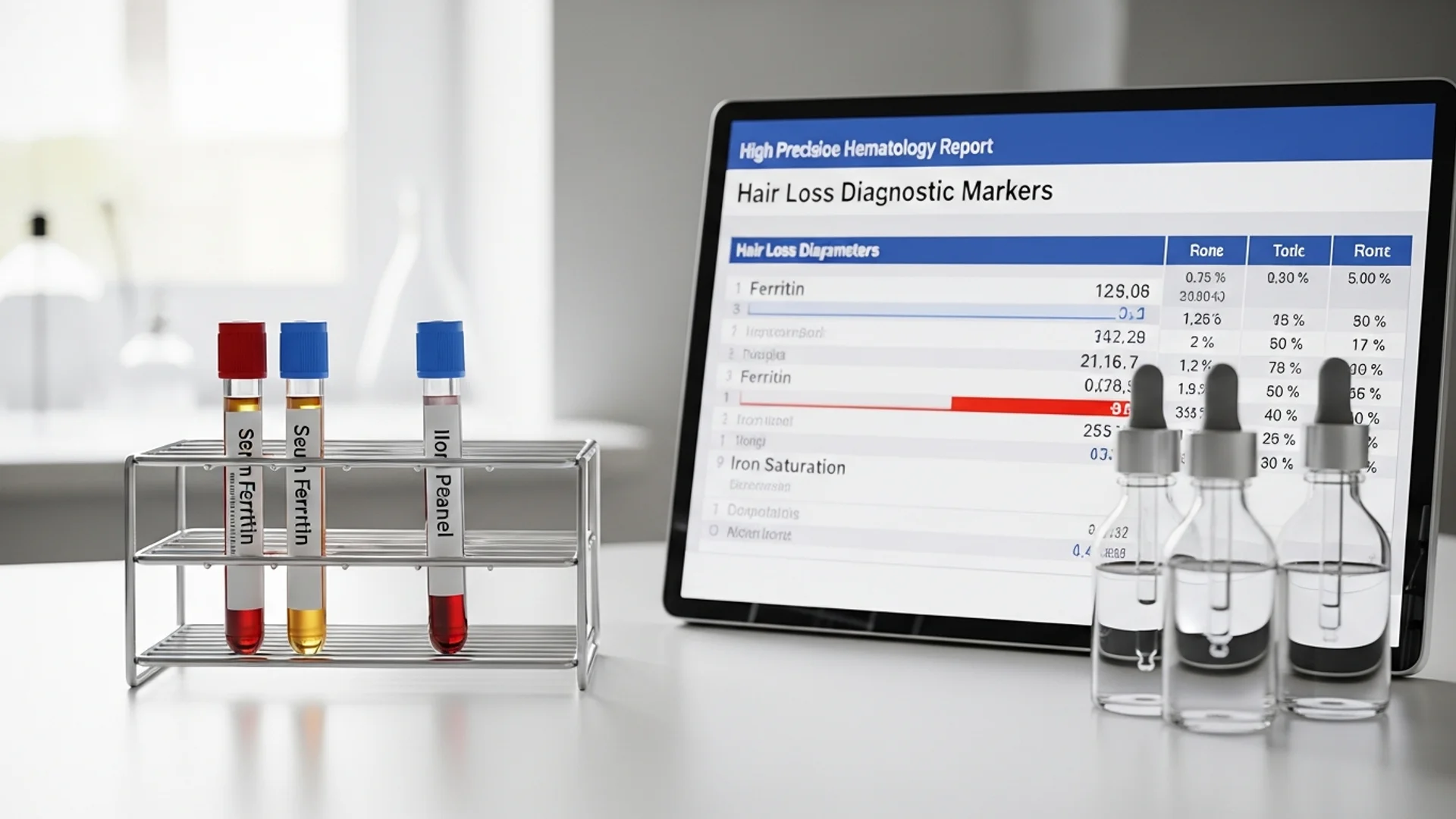
  • We measure ferritin, not just a CBC. A full iron panel (ferritin, serum iron, TIBC, transferrin saturation) shows the stores, not just the late-stage red-cell count. We aim for the hair-supporting range, not merely "not anemic."
  • We read thyroid alongside iron. Thyroid disease causes hair shedding and heavy or irregular periods too, and it hides behind the same symptoms. Checking both at once prevents treating one while missing the other.
  • We pick an iron you can tolerate. Gentler forms, sensible timing, and every-other-day dosing when it helps, so you finish the course.
  • We address the bleeding at the source. If periods are the drain, we look at why and treat it, rather than topping up iron forever into a leak.

"In my practice, the woman shedding hair with a 'normal' iron is one of the most common misses in medicine. Her ferritin is 18, her follicles need 50, and nobody checked the right number. Measure ferritin, fix the bleeding, use an iron that does not wreck her gut, and the hair usually follows." - Dr. Ash

Contact your healthcare provider if you experience:

  • Hair shedding in handfuls or noticeable diffuse thinning
  • Periods that soak a pad or tampon hourly, or last more than 7 days
  • Fatigue, breathlessness, or a racing heart with everyday activity
  • Cravings for ice, or restless legs at night (both classic low-iron clues)

If you're in the Philadelphia area and want a physician who connects the iron, the periods, and the hair into one plan, book an intro call with Fishtown Medicine.

Actionable steps for iron-related shedding

A plan you can start this week.

  1. Ask for ferritin by name. A CBC is not enough. Request a full iron panel with ferritin and note the actual number, not just "normal."
  2. Track your flow carefully. Count pad or tampon changes on your heaviest day and note any clots. Bring it to the visit.
  3. If you supplement, choose a gentle form. Iron bisglycinate or heme iron with vitamin C, away from coffee and calcium. Skip if it makes you sick and tell us.
  4. Give it time. Ferritin rises slowly and hair regrows on its own clock, usually 3 to 6 months after stores refill. Patience is part of the treatment.

Scientific References

  1. Trost LB, Bergfeld WF, Calogeras E. The diagnosis and treatment of iron deficiency and its potential relationship to hair loss. J Am Acad Dermatol. 2006;54(5):824-844.
  2. Moretti D, et al. Oral iron supplements increase hepcidin and decrease iron absorption from daily or twice-daily doses in iron-depleted young women. Blood. 2015;126(17):1981-1989.
  3. Stoffel NU, et al. Iron absorption from oral iron supplements given on consecutive versus alternate days. Lancet Haematol. 2017;4(11):e524-e533.
  4. Kantor J, et al. Decreased serum ferritin is associated with alopecia in women. J Invest Dermatol. 2003;121(5):985-988.

Dr. Ash is a board-certified internal medicine physician specializing in preventive medicine and healthspan optimization at Fishtown Medicine in Philadelphia.

Related at Fishtown Medicine

  • Hair Loss in Women - the fuller differential for female hair thinning
  • Why We Pause DIM Before Hormone Labs - getting a clean read when hair, cycle, and hormones overlap
  • The Neck Lump That Comes and Goes - when a thyroid clue sits alongside shedding and cycle changes
  • Fatigue That Isn't Depression - the metabolic and nutrient workup for unexplained exhaustion
  • Making Labs and Imaging Affordable - getting a full iron panel without a big bill
Medical Disclaimer: This resource provides clinical context for educational purposes. In the world of precision medicine, there is no "one size fits all"; the right plan must be matched to your unique lab work, physiology, and goals. Consult Dr. Ash to determine if this approach is right for you, particularly if you have chronic health conditions or are taking prescription medications.
Ashvin Vijayakumar MD (Dr. Ash)

Fishtown Medicine | Symptoms

2418 E York St, Philadelphia, PA 19125·(267) 360-7927·hello@fishtownmedicine.com·HSA/FSA Eligible

Book Your Diagnostic

Frequently Asked Questions

Common Questions

Yes, low iron can cause hair loss even without anemia. Ferritin, the body's iron store, drops long before hemoglobin does, so you can have a normal blood count and still be shedding from low iron. Research suggests hair follicles need a ferritin of roughly 40 to 70 ng/mL, which is higher than the level a standard lab flags as low. That gap is why "your iron is normal" and "you are losing hair from iron" can both be true.
Many hair-loss researchers and dermatologists target a ferritin of at least 40 to 70 ng/mL for regrowth, above the roughly 15 ng/mL that standard labs use to define deficiency. The exact number varies by source, but the theme is consistent: the level needed to keep hair growing is higher than the level needed to avoid anemia. We treat toward the hair-supporting range, then reassess.
Iron makes many people constipated because the common form, ferrous sulfate, is harsh on the gut and much of it goes unabsorbed. Switching to a gentler form like iron bisglycinate or heme iron, taking it every other day, and pairing it with vitamin C usually solves the problem. If oral iron still fails, intravenous iron is an option that skips the gut entirely.
Regrowing hair after fixing iron usually takes 3 to 6 months once ferritin is back in the healthy range, and sometimes longer. Hair grows slowly and follicles that shifted into the shedding phase need a full cycle to recover. The shedding usually slows first, then new growth follows. Consistency with iron and treating the source of loss are what make it work.
Heavy periods can be a medical problem worth evaluating, not something to simply endure. Soaking a pad or tampon every hour, bleeding longer than 7 days, passing large clots, or flooding through to clothing are all signs to get checked. Heavy bleeding drains iron and can point to treatable causes like thyroid disease, fibroids, or hormonal changes.

Deep-Dive Questions

Hemoglobin is the iron-carrying protein in red blood cells and reflects late-stage iron status, so it drops only after stores are exhausted. Serum iron is the iron circulating in your blood right now and fluctuates with meals. Ferritin is the stored iron, the reserve tank, and it falls first and earliest. For hair loss and early deficiency, ferritin is the number that matters most, which is why a normal hemoglobin can be falsely reassuring.
When you take iron, your body releases a hormone called hepcidin that temporarily blocks further iron absorption for about a day. Taking iron every single day keeps hepcidin elevated, so each dose absorbs less. Dosing every other day lets hepcidin fall between doses, so a larger fraction of each dose gets absorbed. Studies suggest alternate-day dosing can match or beat daily dosing on total absorption, with fewer side effects.
Thyroid disease and iron deficiency share almost the same symptom list: hair shedding, fatigue, heavy or irregular periods, and cold intolerance. An underactive thyroid slows the hair cycle directly and can worsen menstrual bleeding, which in turn drains iron. Because they overlap and can coexist, we test thyroid and iron together, so we do not treat one while the other keeps the problem going.
Intravenous iron is the right choice when oral iron is not tolerated, not absorbed, or not keeping up with ongoing losses, such as very heavy periods or a gut condition that blocks absorption. IV iron delivers a large dose directly, bypassing the stomach entirely, and raises ferritin faster than pills. It is a straightforward option that many people never hear about after struggling with oral iron for months.
Yes, a plant-based diet can contribute to low iron because plant (non-heme) iron is absorbed less efficiently than the heme iron in animal foods. Combined with heavy periods, the gap between intake and loss widens, and stores fall. This does not mean abandoning a plant-based diet; it means being deliberate, pairing iron-rich plants with vitamin C, avoiding absorption blockers at meals, and monitoring ferritin so a deficiency gets caught early.

Ready when you are

Start your intake

Dr. Ash reads every intake himself, and answers questions personally - usually within a few hours.

Related Intelligence

Hair Loss for Women: What Is Driving It, and What Helps

Hair Loss for Women: What Is Driving It, and What Helps

Women's hair loss is rarely one thing - ferritin, thyroid, perimenopause, PCOS, postpartum, and pattern loss overlap. The workup and treatments with evidence.

Read Deep Dive
Hair Loss for Men: Whats Happening, and What Works

Hair Loss for Men: Whats Happening, and What Works

Male pattern hair loss is treatable. Finasteride, minoxidil, the labs that rule out other causes, and the timing question most men get wrong.

Read Deep Dive
The New York Times is Right (and Wrong) About Supplements

The New York Times is Right (and Wrong) About Supplements

Why 'just eat real food' is lazy advice, and why 'take everything' is dangerous. A look at precision medicine and why testing beats guessing.

Read Deep Dive

New patients

Talk it through with Dr. Ash.

If anything you read here raised a question, start with a short intake - your story in your own words. Dr. Ash reads every one personally, and you can text or email us anytime.

HSA/FSA eligible
No initiation or cancellation fees
No copays
Start your intake →
FishtownFish wrapped around the rod of AsclepiusMedicine
Philadelphia Primary Care
2418 E York St, Philadelphia, PA 19125Home visits in Greater PhiladelphiaPricing & MembershipGER·O·SPAN: our clinical frameworkDigital Health Literacy

Serving Fishtown · Northern Liberties · East Kensington · Olde Richmond · Port Richmond · Old City · Callowhill · Poplar · Center City · Center City West · Art Museum · Bella Vista · Chestnut Hill · Fairmount · Fitler Square · Graduate Hospital · Logan Square · Manayunk · Queen Village · Rittenhouse · Roxborough · Society Hill · Southwark · Bryn Mawr, PA · Gladwyne, PA · Villanova, PA · Wayne, PA · Cherry Hill, NJ · Haddonfield, NJ · Medford, NJ · Moorestown, NJ · Voorhees, NJ

NWS alertExtreme Heat Warning· What to do at this level

Explore by topic

Women’s Health
  • Perimenopause
  • Menopause 3.0
  • PCOS
  • Fertility
Men’s Health
  • Testosterone (TRT)
  • Sleep Apnea & Low T
  • Andropause
  • Low Libido
Metabolic
  • Medical Weight Loss
  • Ozempic vs Metformin
  • Fasting Protocols
  • Visceral Fat
Cardiovascular
  • apoB & Heart Health
  • apoB vs LDL
  • Lp(a) Cholesterol
  • ED & Heart Risk
Longevity + Performance
  • Healthspan vs Lifespan
  • Biological Age
  • VO2 Max
  • Zone 2 Training
Supplements
  • Magnesium
  • Creatine
  • Omega-3
  • Foundational Stack
  • Supplement Guides
Care in Philadelphia +
Direct Primary Care in Philadelphia, PAConcierge Medicine in Philadelphia, PAConcierge vs DPC in Philadelphia, PALongevity Medicine in Philadelphia, PAPreventive Care in Philadelphia, PAExecutive Physical in Philadelphia, PAAnnual Physical in Philadelphia, PAHealthspan Optimization in Philadelphia, PAFunctional Medicine in Philadelphia, PASame-Day Sick Visits in Philadelphia, PATestosterone Replacement Therapy in Philadelphia, PAPerimenopause Care in Philadelphia, PAMenopause Care in Philadelphia, PAThyroid Treatment in Philadelphia, PAPCOS Care in Philadelphia, PAGLP-1 Weight Loss in Philadelphia, PAMetabolic Health in Philadelphia, PAHormone Optimization in Philadelphia, PAAdvanced Lipid Testing in Philadelphia, PAVO2 Max Testing in Philadelphia, PADEXA Scan in Philadelphia, PACGM in Philadelphia, PALong COVID Care in Philadelphia, PAChronic Fatigue Treatment in Philadelphia, PAPOTS Treatment in Philadelphia, PAMCAS Treatment in Philadelphia, PALyme Disease Care in Philadelphia, PABrain Fog Treatment in Philadelphia, PASleep Disorders Treatment in Philadelphia, PAStrep Throat Treatment in Philadelphia, PAUTI Treatment in Philadelphia, PASinus Infection Treatment in Philadelphia, PASTI Testing in Philadelphia, PATravel Medicine in Philadelphia, PAPre-Op Clearance in Philadelphia, PASports Club Medicine in Philadelphia, PA

Made it this far? You’re already most of the way there. let’s get started → Dr. Ash reads every word personally.

Content is for educational purposes only and does not constitute medical advice.

TermsPrivacyScope of PracticeClinical Independence