FishtownFish wrapped around the rod of AsclepiusMedicine
Philadelphia Primary Care
How It Works
What People Say
Patient reviews across 6 platforms
Pricing & Membership
Transparent membership pricing
Articles
Symptoms
What your body is telling you
Treatments
Protocols, prescriptions, therapies
Longevity
Medicine 3.0 strategies
Heart Health & Risk
Protect your heart & vessels
Metabolism
Insulin, blood sugar, weight
Hormones
TRT, thyroid, menopause, andropause
Performance
VO2 max, muscle, sleep, gut
Playbooks
Step-by-step frameworks
Dispensary
Dr. Ash's professional-grade supplement picks
About
Meet Dr. Ash
Your Physician
GER·O·SPAN
Our Clinical Framework
FAQ
Common Questions
Book a Free Call
The Future of Medicine 3.0
Fishtown Medicine•5 min read

The Future of Medicine 3.0

On This Page
  • The End of "Sick Care"
  • The Science: The Exponential Curve
  • The Fishtown Strategy: Your Personal Board of Directors
  • The Medical Toolbox: What's Coming?
  • Guidance from the Clinic
  • Actionable Steps in Philly
  • Common Questions
  • What is Medicine 3.0?
  • How is Medicine 3.0 different from traditional primary care?
  • What is the difference between healthspan and lifespan?
  • Will AI replace doctors?
  • Is living to 120 realistic?
  • What is the biggest threat to healthspan?
  • Do I need expensive tests to use a Medicine 3.0 approach?
  • How does Fishtown Medicine make Medicine 3.0 more accessible?
  • Deep Questions
  • How do genomics change everyday medical decisions?
  • What is a liquid biopsy and when is it useful?
  • How does VO2 Max predict longevity?
  • What role do senolytics play in aging?
  • How should I think about CRISPR for prevention?
  • What is the role of mRNA vaccines beyond COVID?
  • How does environment design fit into Medicine 3.0?
  • How does Fishtown Medicine evaluate new technologies?
  • Why is metabolic health the foundation?
  • How do you avoid over-testing?
  • Will Medicine 3.0 be covered by insurance one day?
  • How do I start using a Medicine 3.0 approach without overhauling my life?
  • Scientific References

Get a preventive doctor that knows you.

Consult Dr. Ash
TL;DR · 30-second take

Medicine 3.0 is a proactive, data-driven model that uses genomics, advanced biomarkers, AI imaging, and continuous wearable data to predict and prevent disease decades earlier than traditional sick care. The goal is healthspan: more years lived in full mental and physical function.

The Future of Medicine 3.0: Stewardship of the 100-Year Life

The End of "Sick Care"

We are standing at a critical point in healthcare. The traditional Medicine 2.0 model, which waits for a diagnosis before acting, is increasingly failing to extend our healthspan. Medicine 3.0 is a necessary shift toward predictive, participatory stewardship. You are likely going to live longer than you expect. The key question is not just about the years added to your life. It is about the quality of those years: will the last two decades be spent managing decline, or maintaining the capacity to do what you love? At Fishtown Medicine, we are building the infrastructure for the high-functioning centenarian.

The Science: The Exponential Curve

We are seeing a moment where technology lets us understand biology with unprecedented clarity.
  • Genomics: We can now read your source code (DNA) to identify risks decades before they appear. Genomics is the study of all your genes together.
  • Proteomics: Advanced testing (such as a liquid biopsy, a blood test that looks for cancer signals) offers the potential to detect cancer signals at much earlier stages than traditional methods. Proteomics is the study of the proteins your body makes.
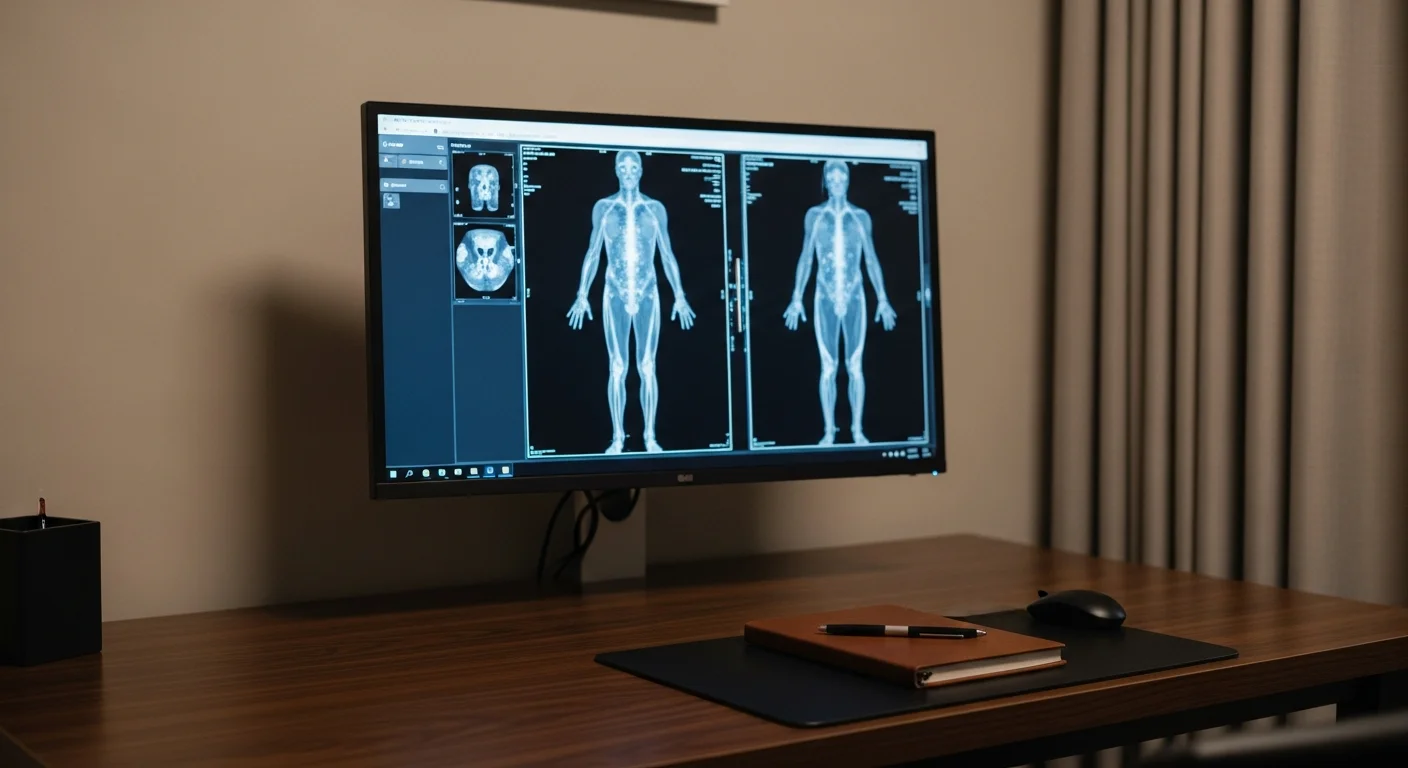
  • AI: Computational tools can analyze imaging data to catch arterial plaque or structural changes that the human eye might overlook.
We are moving from Analog Medicine (reactive, symptom-based) to Digital Medicine (continuous, data-driven monitoring).

The Fishtown Strategy: Your Personal Board of Directors

You probably have a professional managing your financial portfolio. Your health deserves the same level of strategic oversight.
  1. The Quarterback: Your primary physician (us) who synthesizes the data into a coherent strategy.
  2. The Data Stream:
    • Daily: Wearable integration (Oura Ring for sleep, Apple Watch for activity).
    • Monthly: Tracking key biometrics like blood pressure and body composition.
    • Quarterly: Advanced blood panels focusing on ApoB and insulin sensitivity. Insulin sensitivity is how well your cells respond to insulin, the hormone that controls blood sugar.
    • Yearly: Detailed imaging to visualize internal health.
I do not rely on guesswork. Instead, I navigate your health journey using a precise, data-informed map.

The Medical Toolbox: What's Coming?

The technologies we are watching closely for clinical use.
TechnologyStatusPrediction
Gene Editing (CRISPR)Clinical Trials.Currently targets genetic diseases like Sickle Cell. Promising potential for lowering Lp(a) at the source.
SenolyticsResearch.Therapies designed to clear senescent (worn-out) cells to support tissue health.
Personalized VaccinesClinical Use (mRNA).Investigational therapies that use a patient's own tumor markers to train the immune system.
AI DiagnosticsHere Now.Algorithms that may predict cardiovascular events from non-invasive scans like retinal imaging.

Guidance from the Clinic

Dr. Ash
"You possess the greatest asset class in the world: your own physiology."
We Have Your Back: At Fishtown Medicine, the goal is not just to order tests and hand you a result. We interpret, explain, and advocate. You should feel like you have a Chief Medical Officer in your corner, one who fights for clarity and access, not just checkboxes.
> "Dr. Ash, is this level of care only for the wealthy?" Our answer: ideally, no. But in the current system, often yes. It is a hard reality that our insurance model is designed to fund catastrophic care, like an amputation, rather than preventive tools like a Continuous Glucose Monitor (CGM) that could prevent the crisis. We chose to opt out of that broken system to build a model focused on value and outcomes. Our hope is that this prevention-first approach eventually becomes the standard for everyone. Right now, we are simply early adopters paving the way.

Actionable Steps in Philly

Start building your infrastructure today.
  1. Digitize your Data: Move your records out of fragmented hospital portals. Aggregate them so you have a clear baseline.
  2. Invest in Monitoring: Consider tools like an Oura ring or a CGM to understand your metabolic baseline. Data builds agency to make changes.
  3. Find a Partner: Move away from transactional urgent care. Find a relationship-based practice that knows your history and understands your long-term goals.
Own your future. Book Your Warm Invitation Call Here

Scientific References

  1. Topol EJ. "High-performance medicine: the convergence of human and artificial intelligence." Nature Medicine. 2019.
  2. López-Otín C, et al. "The hallmarks of aging." Cell. 2013.
  3. Sniderman AD, et al. "Apolipoproteins versus lipids as indices of coronary risk and as targets for statin treatment." The Lancet. 2011.
  4. Ferrucci L, Zonderman AB. "Free radicals, senescent cells, and the extending horizon of human health span." The Journals of Gerontology: Series A. 2010.

Medical Disclaimer: This resource provides clinical context for educational purposes. In the world of Precision Medicine, there is no "one size fits all"; the right plan must be matched to your unique lab work, physiology, and performance goals. Consult Dr. Ash to determine if this approach is right for you, especially if you have chronic health conditions or are taking prescription medications.

Frequently Asked Questions

Common Questions

Medicine 3.0 is a proactive, data-driven approach to health that uses genomics, advanced biomarkers, AI imaging, and continuous wearable data to predict and prevent disease before it appears. It builds on Medicine 2.0 (modern hospital-based care) by adding earlier action and richer data.
Medicine 3.0 is different from traditional primary care because it does not wait for a diagnosis. Instead, it tracks long-term risk markers like ApoB, insulin sensitivity, VO2 Max, and Lp(a), and treats them years or decades before disease develops.
Lifespan is the total number of years you live. Healthspan is the number of years you live in full mental and physical function. Medicine 3.0 focuses on healthspan, since adding years without function can reduce overall quality of life.
AI will not replace doctors, but it will replace doctors who do not use AI. Human connection, empathy, and strategic decisions about complex health trade-offs still need a human pilot. AI handles pattern recognition and pre-reads; physicians handle judgment and care.
Living to 120 is possible but uncommon, and the science is still evolving. Living to 100 well, with strong cognitive and physical function, is a realistic goal for many people who use today's tools and start early.
The biggest threat to healthspan is poor metabolic health. Insulin resistance and metabolic dysfunction drive most of the chronic disease that shortens healthspan, including heart disease, dementia, and many cancers.
You do not need only expensive tests. The most powerful tools are still nutrition, sleep, training, and basic advanced labs like ApoB and a one-time Lp(a). Imaging and high-end testing add precision but are not the entry point.
Fishtown Medicine makes Medicine 3.0 more accessible by using a flat Direct Primary Care fee instead of insurance billing, by negotiating cash pricing for advanced labs and imaging, and by integrating wearable data into routine care without extra add-on fees.

Deep-Dive Questions

Genomics change everyday medical decisions by flagging high-impact, actionable risks. Examples include Lp(a) for heart disease, BRCA1 and BRCA2 for breast and ovarian cancer, and pharmacogenomics for medication response. We use focused gene panels, not blanket sequencing, when there is a clear clinical question.
A liquid biopsy is a blood test that looks for fragments of DNA or proteins shed by cancer cells. It is useful for patients with elevated cancer risk based on family history, age, or imaging findings. The technology is still maturing, so we use it with clear context, not as a routine screen.
VO2 Max predicts longevity because it reflects the integrated function of your heart, lungs, blood vessels, and muscles. Higher VO2 Max is associated with much lower rates of all-cause mortality. Improving it through structured training is one of the most powerful longevity moves you can make.
Senolytics are early-stage drugs designed to clear senescent (worn-out) cells that accumulate with age and drive inflammation. The data is promising in animal models and early human trials, but we do not consider them ready for routine clinical use. We track the science closely.
You should think about CRISPR (a gene-editing tool) as an emerging therapy that is already approved for some genetic diseases. For broad preventive use, like one-time Lp(a) lowering, the science is in early clinical trials. We watch for safety and durability before recommending it.
The role of mRNA vaccines beyond COVID is expanding into personalized cancer therapies and infectious disease prevention. The platform allows quick design of vaccines that train the immune system against specific tumor markers. Many of these are in active clinical trials.
Environment design fits into Medicine 3.0 because daily exposures (light, air quality, food access, sleep environment) shape biology more than most short-term interventions. Designing your home and work for healthy defaults pays compounding returns over years.
Fishtown Medicine evaluates new technologies by weighing safety, evidence, durability, and patient relevance. We adopt tools when they have a clear clinical question, validated data, and a sensible cost-benefit ratio. We avoid hype and gimmicks.
Metabolic health is the foundation because it influences nearly every chronic disease. Insulin resistance affects the heart, brain, and immune system simultaneously. Fixing the metabolic engine improves outcomes across many disease categories at once.
We avoid over-testing by tying every test to a clinical question and a possible decision. If a result will not change what we do, we do not order it. This keeps care focused, less expensive, and free of false alarms.
Medicine 3.0 will likely be covered by insurance over time as the cost-effectiveness data grows. Some advanced labs (like Lp(a) and ApoB) are already covered by many insurers. The model itself, with its emphasis on time and prevention, will follow once the savings are clear at scale.
You can start using a Medicine 3.0 approach without overhauling your life by picking one foundation at a time: sleep first, then nutrition, then training. Add a single advanced lab (ApoB) and a wearable. Iterate over months. Compound interest works here too.

Still have a question?

He answers personally. Usually within a few hours.

Related Intelligence

Longevity Strategies | Fishtown Medicine

Longevity Strategies | Fishtown Medicine

Strategies to extend your healthspan and optimize lifespan in Philadelphia.

Read Deep Dive
Metabolic Health

Metabolic Health

Why you feel tired at 3 PM, and how to fix it.

Read Deep Dive
Biological Age Testing: Truth vs. Marketing

Biological Age Testing: Truth vs. Marketing

You have two ages: chronological and biological. See why epigenetic methylation clocks are the gold standard for measuring how fast you are aging.

Read Deep Dive

Talk it through with Dr. Ash.

If anything you read here raised a question, this is a free 20-minute Warm Invitation Call. Pick a time and we’ll work through it together.

HSA/FSA eligible
No initiation or cancellation fees
No copays

Loading scheduler...

Having trouble with the scheduler? Book directly on Dr. Ash’s calendar

FishtownFish wrapped around the rod of AsclepiusMedicine
Philadelphia Primary Care
2418 E York St, Philadelphia, PA 19125Home visits in Greater PhiladelphiaPricing & membership

Serving Fishtown · Art Museum · Bella Vista · Callowhill · Center City · Center City West · Chestnut Hill · East Kensington · Fairmount · Fitler Square · Graduate Hospital · Logan Square · Manayunk · Northern Liberties · Old City · Olde Richmond · Poplar · Port Richmond · Queen Village · Rittenhouse · Roxborough · Society Hill · Southwark

Explore by topic

Women’s Health
  • Perimenopause
  • Menopause 3.0
  • PCOS
  • Fertility
Men’s Health
  • TRT Therapy
  • TRT Safety
  • TRT vs Enclomiphene
  • Low Libido
Metabolic
  • Medical Weight Loss
  • Ozempic vs Metformin
  • Fasting Protocols
  • Visceral Fat
Cardiovascular
  • apoB & Heart Health
  • apoB vs LDL
  • Lp(a) Cholesterol
  • ED & Heart Risk
Longevity + Performance
  • Healthspan vs Lifespan
  • Biological Age
  • VO2 Max
  • Zone 2 Training
Supplements
  • Magnesium
  • Creatine
  • Omega-3
  • Foundational Stack
  • Shop the Dispensary
Care in Philadelphia +
Direct Primary Care in Philadelphia, PAConcierge Medicine in Philadelphia, PAConcierge vs DPC in Philadelphia, PALongevity Medicine in Philadelphia, PAPreventive Care in Philadelphia, PAExecutive Physical in Philadelphia, PAAnnual Physical in Philadelphia, PAHealthspan Optimization in Philadelphia, PAFunctional Medicine in Philadelphia, PASame-Day Sick Visits in Philadelphia, PATestosterone Replacement Therapy in Philadelphia, PAPerimenopause Care in Philadelphia, PAMenopause Care in Philadelphia, PAThyroid Treatment in Philadelphia, PAPCOS Care in Philadelphia, PAGLP-1 Weight Loss in Philadelphia, PAMetabolic Health in Philadelphia, PAHormone Optimization in Philadelphia, PAAdvanced Lipid Testing in Philadelphia, PAVO2 Max Testing in Philadelphia, PADEXA Scan in Philadelphia, PACGM in Philadelphia, PALong COVID Care in Philadelphia, PAChronic Fatigue Treatment in Philadelphia, PAPOTS Treatment in Philadelphia, PAMCAS Treatment in Philadelphia, PALyme Disease Care in Philadelphia, PABrain Fog Treatment in Philadelphia, PASleep Disorders Treatment in Philadelphia, PAStrep Throat Treatment in Philadelphia, PAUTI Treatment in Philadelphia, PASinus Infection Treatment in Philadelphia, PASTI Testing in Philadelphia, PATravel Medicine in Philadelphia, PAPre-Op Clearance in Philadelphia, PASports Club Medicine in Philadelphia, PA

Content is for educational purposes only and does not constitute medical advice.

TermsPrivacyScope of PracticeClinical Independence