
Pollen in Philadelphia comes in three waves: tree (February to May), grass (May to August), and weed (September to November). The highest-leverage moves are starting antihistamines and nasal steroids 2 to 4 weeks before your worst window, running a MERV 13 HVAC filter year-round, and timing outdoor activity by the live pollen forecast. The badge at the top of fishtownmedicine.com surfaces the dominant pollen type at a sensitivity-tuned threshold so you can act before symptoms start.
Pollen is the most under-managed environmental driver of how Philadelphians feel from February through November. People come into clinic in March asking why they are so exhausted, and they assume it is the change of season, or the start of allergies on top of work stress. The answer is usually simpler than that: the upstream allergy work was never set up, and the cardiovascular and sleep load that comes with allergic inflammation is what is driving the fatigue.
This page is the playbook. The pollen badge at the top of the homepage links into the right tier section below based on what the current pollen index is doing.
What pollen is, and what it does to you
Pollen is the male reproductive material of seed plants. Trees, grasses, and weeds release it into the air to fertilize other plants of the same species. A single ragweed plant can produce roughly one billion grains of pollen per season. Most grains are 10-100 µm in diameter, large enough that a properly rated HVAC filter catches them efficiently.
For the people who are sensitized to it, pollen sets off an immune response in the upper and lower airway. Mast cells release histamine and a cascade of inflammatory mediators; the nasal lining swells, mucus production surges, the eyes water, and the lower airway tightens. The part you can see is the sneezing, congestion, and itchy eyes. The part you cannot see is the sleep disruption (mouth-breathing at night, fragmented sleep architecture), the worsened asthma, the added cardiovascular load, and the fatigue that builds from week to week.
Pollen seasons in the mid-Atlantic are getting longer and more intense as the climate warms, and the specialists who treat allergic disease are watching it happen. A 2015 survey of allergy specialists from the American Academy of Allergy, Asthma & Immunology found that 73% reported air-pollution-related increases in severity of chronic disease in their own patients, and 63% reported increased allergic sensitization and symptoms; many cited the lengthening pollen seasons explicitly.
Who is at higher risk
- Anyone with known seasonal allergies, particularly if previously diagnosed as hay fever or allergic rhinitis
- People with asthma, particularly allergic asthma
- Children, who tend to be more reactive
- Adults over 60, in whom the cardiovascular and sleep load of allergic inflammation hits harder
- Pregnancy, when sleep loss from poor allergy control matters more
- People with chronic sinusitis or nasal polyps, in whom pollen can flare the underlying condition
- People with eczema or other atopic conditions, since allergic rhinitis frequently travels with them
The Philadelphia pollen calendar
The mid-Atlantic pollen calendar runs in three overlapping waves:
Tree pollen: February through May
The biggest single window of the year for allergic misery in Philadelphia. Oak, maple, birch, sycamore, ash, elm, hickory, walnut, beech, mulberry all overlap. Tree pollen is light, dry, and travels far on wind; on a dry windy spring afternoon a tree-pollen-allergic person can have a rough day without going anywhere near a tree. Oak alone is highly allergenic and runs February through May.
Grass pollen: May through August
The classic late-spring-into-summer hay-fever stretch. Poaceae (the grass family) is the leading cause of pollen allergy worldwide. Mowing, lawn maintenance, and outdoor sports run straight through this window.
Weed pollen: September through November
The fall wave that most people forget about until it arrives. Ragweed is the dominant offender; one ragweed plant produces roughly a billion grains a season, and the grains travel hundreds of miles. That late-summer fatigue, and the "back-to-school cold that won't go away" in September, is often weed pollen rather than a virus.
How our Pollen Watch tiers work
The badge at the top of the homepage uses the Universal Pollen Index (UPI), a 0-5 scale published by Google's Pollen API. We surface earlier than the general-population thresholds, because people who are sensitized to pollen feel it well before the official "high" line. Each tier links to the matching section below.
Watch tier (UPI 2 of 5)
What "Low" means on the official scale. For someone sensitized to the dominant pollen of the day, this is the point at which symptoms start showing up.
Action at Watch tier:
- If you're already on a daily antihistamine and nasal steroid, keep going.
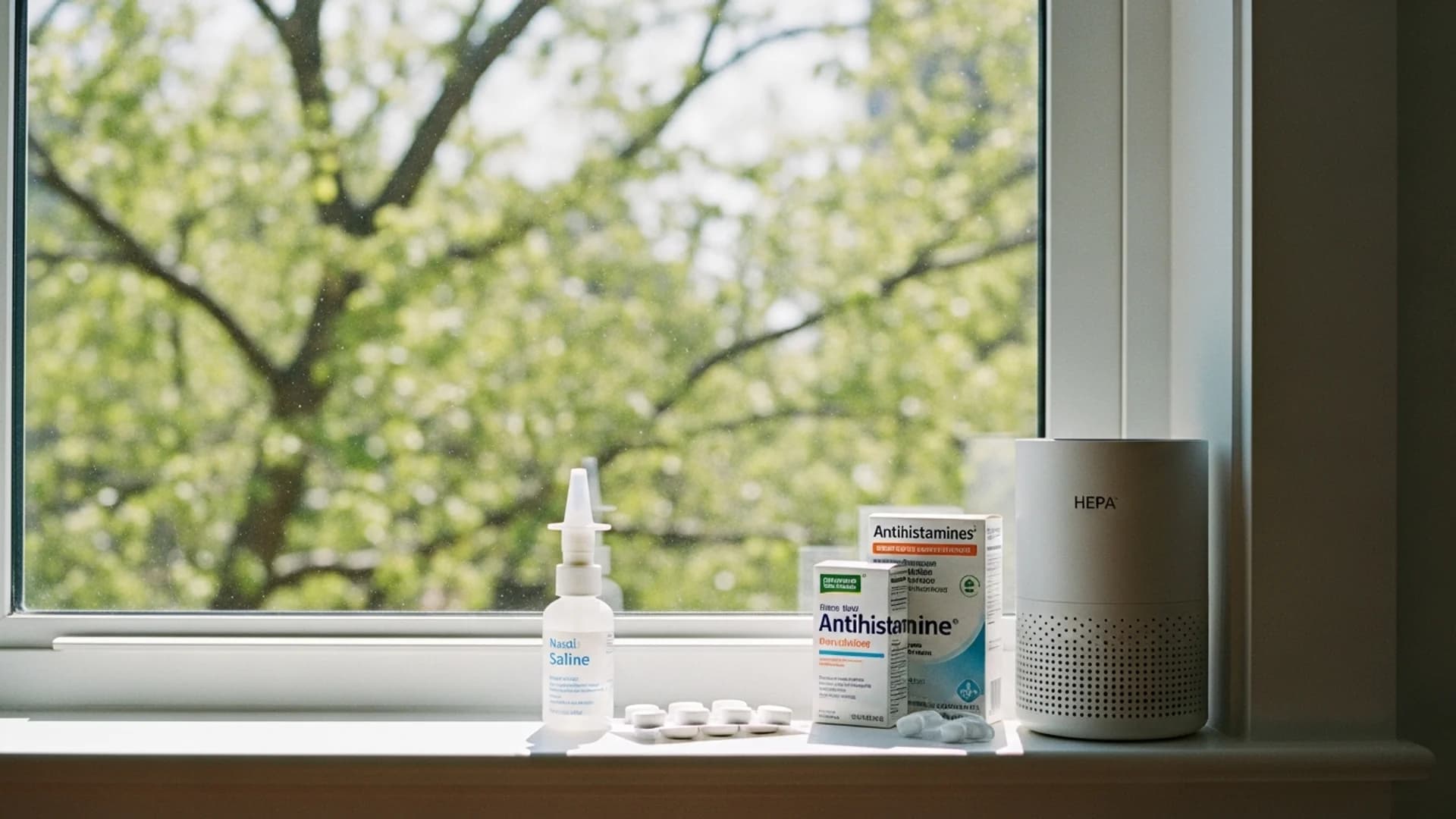
- If you're not, this is the early-warning. Start your daily antihistamine (loratadine, cetirizine, fexofenadine) now and your nasal steroid (fluticasone, mometasone) now; both work better when you're 1-2 weeks into them before the season escalates.
- Run your HVAC on its normal cycle with a MERV 13 filter installed. Replace the filter every 3 months during the season.
Elevated (UPI 3 of 5)
"Moderate" on the official scale. Most allergic folks are symptomatic.
Action at Elevated:
- Daily antihistamine + nasal steroid now non-negotiable if pollen is your driver. Add an antihistamine eye drop (olopatadine) if your eyes are the worst of it.
- Limit outdoor exertion during peak pollen hours (5 to 10 am). Late afternoon is usually a quieter window.
- Shower before bed. Pollen sticks to hair, skin, and clothes; an evening rinse keeps it off your pillow.
- HVAC stays on recirculate; keep windows closed during the day.
High (UPI 4 of 5)
"High" on the official scale. Even mildly sensitized people are usually symptomatic. Asthma flares are more common.
Action at High:
- All of the above, more rigorously.
- If you have asthma, use your controller inhaler as prescribed and have your rescue inhaler available. Pre-treat with a puff of rescue 15 minutes before any outdoor exertion if your specialist has cleared that with you.
- Saline nasal rinse (neti pot or NeilMed bottle) once or twice a day. Use distilled or sterile water, never tap.
- Consider an N95 or KN95 mask for yardwork or long outdoor exposure. Many readers report that wearing a mask outdoors during peak windows substantially reduces symptoms.
Very high (UPI 5 of 5)
"Very High" on the official scale. Wildfire-smoke-style avoidance applies.
Action at Very high:
- Stay indoors when possible. Reschedule non-essential outdoor activity to a lower-pollen day.
- Run HEPA filter in the bedroom on continuous moderate, on top of the MERV 13 in the HVAC.
- Saline rinse twice daily. Cool compresses on the eyes if eye involvement is significant.
- If you are on a rescue inhaler more than twice a week at this tier, your asthma plan needs adjustment. Call us or your allergist.
The single highest-leverage move: start meds early
The most common mistake I see is waiting for symptoms before starting medication. By the time symptoms show up, the inflammatory cascade is already running, and the medications are left playing catch-up.
The right move is to time your medications 2 to 4 weeks ahead of your worst window:
- Oral antihistamines (second-generation) can be started 2-4 weeks before season onset. Daily. In order of how we usually pick:
- Fexofenadine (Allegra) is our usual first choice. It does not cross the blood-brain barrier, so it causes no sedation and no cognitive cost.
- Loratadine (Claritin) and cetirizine (Zyrtec) are the runners-up. Both work well for most people. Cetirizine crosses the blood-brain barrier lightly and mildly fogs some users; it also has a documented rebound-itching withdrawal effect if you have been on it daily for months and stop suddenly, so taper rather than stop cold.
- Avoid diphenhydramine (Benadryl) as a daily allergy med. It crosses the blood-brain barrier readily, suppresses REM sleep even when it "knocks you out," impairs next-day cognition more than alcohol in driving studies, and chronic use has been associated with higher dementia risk in older adults. Keep a bottle in the cabinet for true acute reactions (food allergy, sting, severe sudden symptoms); do not put it in the daily routine.
- Nasal corticosteroid sprays (fluticasone / Flonase, mometasone / Nasonex) take time to reach full effect. Start them roughly 2 weeks before the season starts. Daily, both nostrils.
- Antihistamine nasal sprays (azelastine / Astepro) work faster than the steroid sprays and can be a useful add-on during peak weeks.
- Antihistamine eye drops (olopatadine / Pataday) for eye-dominant patterns, started at the same time.
- Cromolyn nasal spray (Nasalcrom) is a mast-cell stabilizer rather than a steroid or antihistamine. It works by preventing the release of histamine in the first place. Takes a few days to reach full effect, has very few systemic side effects, and is a good option for people who do not tolerate steroid sprays or who prefer to avoid them. Best used preventively, multiple times per day during peak season.
What to avoid as a pre-treatment:
- Decongestants (pseudoephedrine / Sudafed, oxymetazoline / Afrin) are for short-term use only. The nasal sprays in particular cause rebound congestion after a few days. Pseudoephedrine can also raise blood pressure and heart rate. Use only for short bursts when you need it.
Longevity Medicine
A personalized longevity strategy starts with knowing your real baselines.
When you are not sure which medication, dose, or combination is right for you, this is the kind of question your primary care physician (us, or your own) should answer in a live conversation rather than a 3-minute portal message.
Indoor air strategy
Most of your pollen exposure is indoors, because you spend roughly 90% of your time indoors, and indoor air without filtration tracks outdoor air within hours.
The same MERV 13 HVAC filter that captures the PM2.5 we cover in the AQI guide captures most pollen as well. MERV 13 is rated to capture particles 0.3-1.0 µm with >50% efficiency and 1-3 µm with >85% efficiency. Pollen grains are 10-100 µm, so MERV 13 captures them with very high efficiency.
The practical playbook:
- MERV 13 HVAC filter, replaced quarterly. Whole-home, the cheapest per square foot, and it captures both pollen and PM2.5.
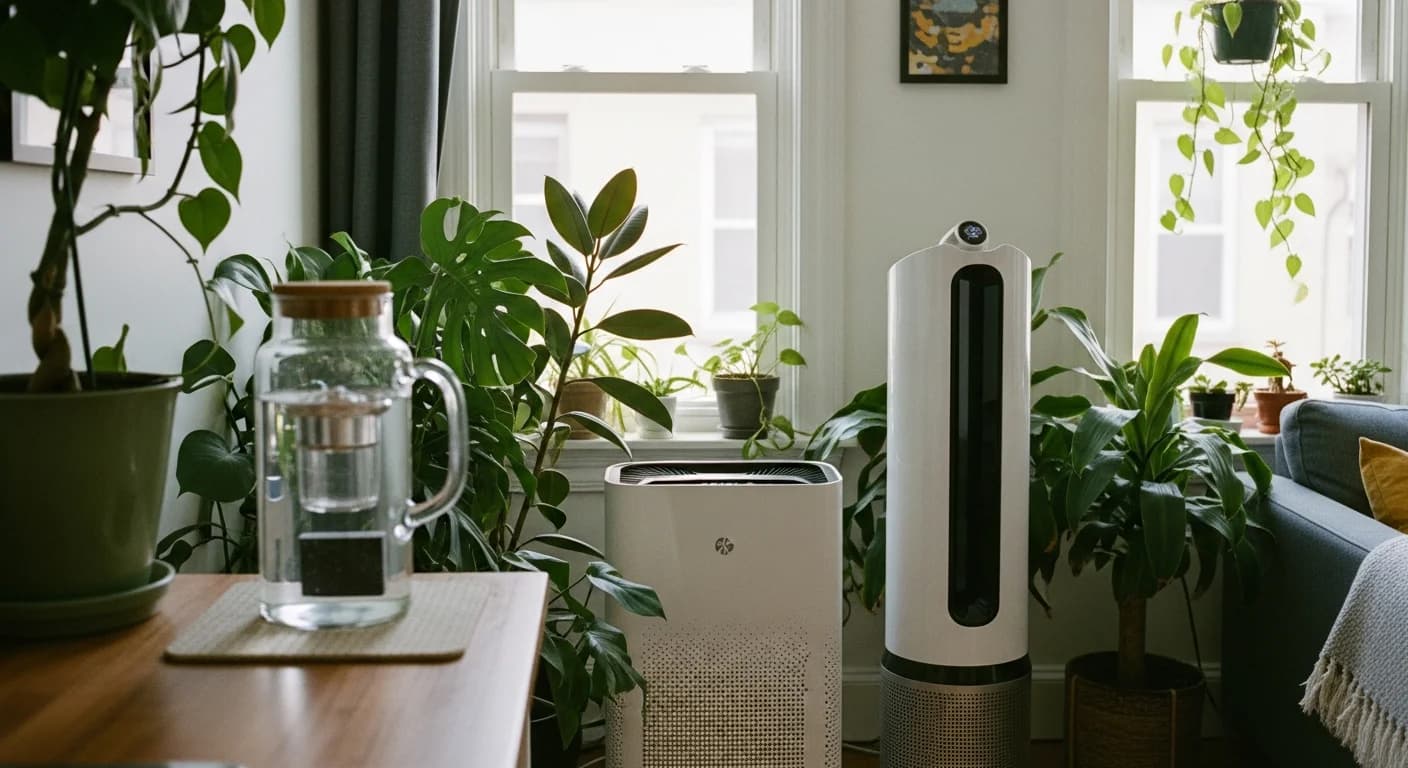
- HEPA air purifier in the bedroom. You spend more concentrated time there than anywhere else. CADR-matched to room size; run it on continuous moderate rather than high for an hour.
- Windows closed during peak hours. Open them in the early morning or late evening only if the live pollen is low.
- Run AC instead of opening windows during the day in summer. The cabin filter on a car AC catches pollen too; use it instead of rolling the windows down.
- Doormat + shoes-off + outerwear off at the door. A surprising amount of household pollen rides in on coats and shoes.
- Shower at night and wash hair on heavy-pollen days. Pollen sticks to hair and skin; 8 hours of breathing it next to your pillow is the avoidable mistake.
For the deeper indoor-air playbook including PM2.5 and wildfire smoke, see the AQI guide.
When to involve an allergist
Most people manage seasonal pollen allergy with the medication and indoor-air playbook above. When that is not enough, formal allergy work changes the trajectory:
- Skin prick testing identifies which specific pollens you react to, so the pre-treatment timing can be calibrated to your trees vs. your grasses vs. your weeds.
- Allergy shots (immunotherapy) are a 3-5 year course that truly desensitizes the immune system. Multiple readers, patients, and clinicians describe shots as the single thing that ended decades of seasonal misery for them.
- Sublingual immunotherapy (SLIT) tablets are an at-home alternative to shots for some pollens (currently grass and ragweed in the United States), taken under the tongue daily.
We can refer to local allergy and immunology specialists when this is the right next step. The National Allergy Bureau's find-a-specialist tool is also publicly searchable.
Actionable Steps
- Identify your worst window. Tree (Feb-May), grass (May-Aug), weed (Sep-Nov). If you can't tell, the pattern from the last 2-3 years usually makes it obvious.
- Start meds 2-4 weeks ahead. Daily second-generation antihistamine plus daily nasal corticosteroid spray. Add eye drops if eye-dominant.
- Install a MERV 13 HVAC filter. Replace every 3 months during your worst window.
- HEPA in the bedroom on continuous moderate.
- Shower at night during peak weeks.
- Watch the badge. The Pollen Watch on the homepage surfaces the dominant pollen at a sensitivity-tuned threshold; act when it lights up.
- Loop in your primary care doctor or an allergist if any of: rescue inhaler more than twice a week, sleep disruption from symptoms, eye involvement that needs more than drops, no improvement after 2 weeks of consistent pre-treatment.
Key Takeaways
- Pollen in Philadelphia runs in three overlapping waves: tree (Feb-May), grass (May-Aug), weed (Sep-Nov).
- The single highest-leverage move is starting daily antihistamine + daily nasal steroid 2-4 weeks before your season begins, rather than after symptoms start.
- Indoor air matters more than outdoor avoidance. MERV 13 HVAC filter year-round captures both pollen (10-100 µm) and PM2.5; HEPA in the bedroom is the high-value add-on.
- Pollen seasons are lengthening; the AAAAI specialist survey shows the majority of allergists are seeing this in their own practices.
- If the medication and indoor-air playbook is not enough, allergy testing and immunotherapy (shots or SLIT) often resolve seasonal symptoms for years at a time.
Deeper Questions
My pollen is "supposed to be" tree but my worst window is September. What's going on?
Three possibilities: (1) you also have a weed allergy and the tree allergy is present but secondary; (2) you have a perennial allergen (dust mite, mold) and the fall window is when humidity drops and indoor mites flare; (3) ragweed sensitivity that was missed on a previous test. Skin prick testing or component-resolved blood testing clarifies which.
Can pollen cause chronic sinusitis?
Pollen drives flares of chronic sinusitis in people who have it, and prolonged untreated rhinitis can predispose to sinus problems. Treating the allergic rhinitis upstream often quiets the chronic sinus picture.
I have asthma and my inhaler use climbs during pollen season. Should I be worried?
Yes, in the sense that it is a signal worth acting on. Inhaler use more than twice a week is a marker for asthma that is not under control. The pre-season pre-treatment for allergies is also the pre-season tuning for asthma; loop your prescriber in if you are running on rescue alone.
What about cross-reactive food allergy (oral allergy syndrome)?
Birch-pollen-allergic people often have oral allergy symptoms to apples, peaches, carrots, celery. Ragweed-allergic people often react to bananas, melons, zucchini. The food proteins resemble the pollen proteins. Usually mild and limited to mouth/throat itching; if it escalates, allergist evaluation is appropriate.
Is alpha-gal syndrome related?
Different mechanism. Alpha-gal is a tick-bite-driven red-meat allergy from the lone star tick, and pollen has nothing to do with it. But ticks share the warm-weather window with pollen, and we screen for both in patients with new-onset reactions in spring and summer.
Does it matter where I live in Philly?
Slightly. Tree-rich neighborhoods (Fairmount, Chestnut Hill, much of the Main Line and Bucks suburbs) carry higher tree pollen load in spring. Center City dense urban blocks carry slightly less. East-of-the-river neighborhoods with I-95 adjacency carry higher particulate (PM2.5) on top of pollen. Indoor air remediation is what evens those differences out.
Do I need to repeat allergy testing if I tested years ago?
If your symptoms have changed (new patterns, different timing, new triggers, new severity) yes. Sensitization profiles change over years. If your symptoms have been stable and your testing is more than 5 years old but the picture hasn't changed, repeating is lower-yield.
What if I don't want to be on daily medication for half the year?
Two options: (1) skin testing + allergy shots or SLIT for the durable fix; (2) tight pre-treatment timing with the shortest medication window that controls symptoms. We can usually narrow most patients' med use to the 6-10 week peak of their season rather than the full 4-5 months.
I get itchy all over whenever I stop Zyrtec. What's going on?
This is a recognized phenomenon: long-term daily cetirizine (Zyrtec) or levocetirizine (Xyzal) use can cause severe rebound pruritus (itching) when stopped suddenly. The FDA issued a formal warning about it. The fix is to taper instead of stopping cold (every other day for 2-4 weeks, then every third day, then off), or to switch to fexofenadine (Allegra), which does not show the same withdrawal pattern. If the itching is severe enough that the only thing that quiets it is restarting cetirizine, that loop is a good reason to bring us or an allergist into the picture.
Scientific References
- Sarfaty M, et al. Views of Allergy Specialists on the Health Effects of Climate Change: Membership Survey of the American Academy of Allergy, Asthma & Immunology. George Mason University & AAAAI; 2015. The source for the prevalence data on allergist-reported increases in pollen season length and severity.
- American Academy of Allergy, Asthma & Immunology. Hay Fever / Rhinitis. AAAAI patient resource. The reference standard for diagnostic and treatment framing.
- American Academy of Allergy, Asthma & Immunology. Controlling Hay Fever Symptoms with Accurate Pollen Counts. AAAAI patient resource. Source for pollen-counting methodology.
- National Allergy Bureau (NAB) station network: pollen.aaaai.org. The certified pollen and mold counting network across roughly 80 US stations.
- Dapul-Hidalgo G, Bielory L. Climate Change and Allergic Disease. Annals of Allergy, Asthma & Immunology. 2013;111(2):134-140.
Related at Fishtown Medicine
- Philadelphia AQI: what to do - the practical playbook for air quality days in Philly
- Microplastics in Philadelphia - the five highest-leverage moves to lower your exposure
- UV Index in Philadelphia - the daily UV calculus for skin and eye protection
- Severe Weather in Philadelphia - heat, cold, and storm preparedness for chronic disease patients
- Philadelphia Environmental Health (overview) - the city-wide environmental health framework
- The Philly Throat - why the same allergies feel worse in this city than they did where you grew up
- April in Philly - the middle of the tree-pollen window, and what else the month brings
Medical Disclaimer
This page is provided for educational purposes. Allergic disease is highly individual and the right combination of testing, medication, and indoor-air strategy depends on your specific picture. Consult your primary care physician or an allergy and immunology specialist before starting or changing any medication, particularly if you have chronic health conditions, take prescription medications, are pregnant or nursing, or have known asthma or other respiratory disease.

Fishtown Medicine | Longevity
Frequently Asked Questions
Common Questions
Ready when you are
The chat is our AI assistant, answering from our published guides. To talk it through with Dr. Ash himself, start with the intake.